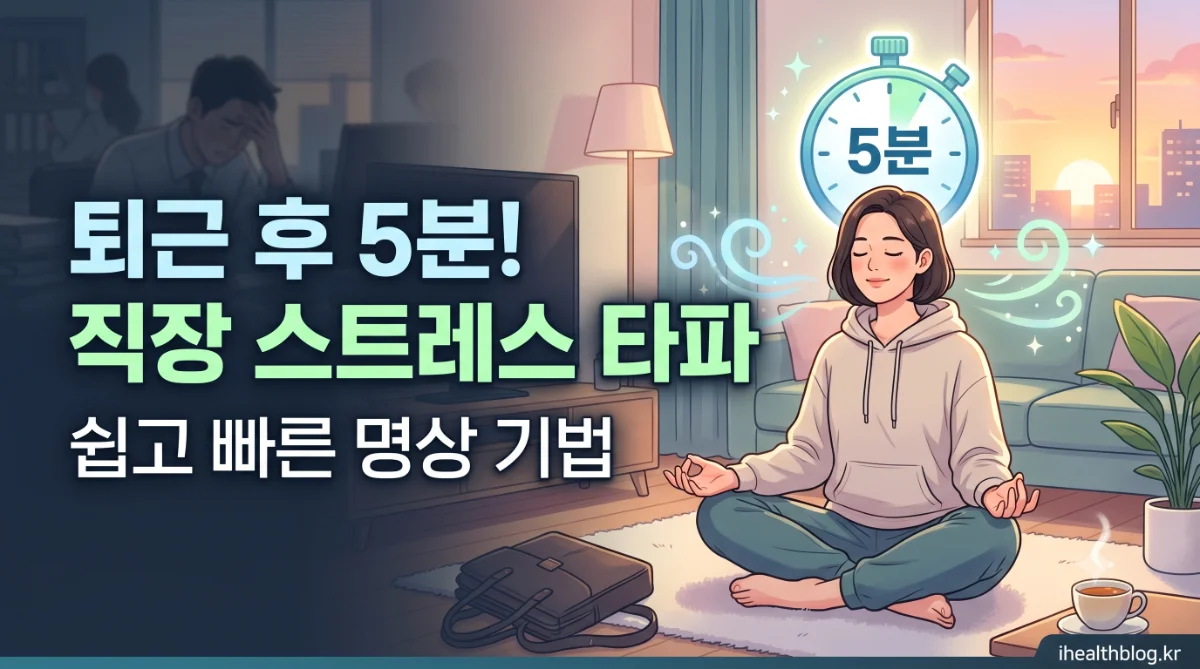
7 out of 10 Workers Report Post-Work Stress: It's Time to Manage It
According to the 2023 stress survey conducted by the Korea Employment Agency, 70.3% of workers in South Korea experience work-related stress. Notably, 64.8% reported that they find it hard to relax after work due to lingering thoughts about their job, indicating a serious threat to the mental health of modern employees. This ongoing stress leads to various physical symptoms, including sleep disorders, decreased immunity, and reduced concentration.
Fortunately, the stress-relieving benefits of meditation have been medically proven, leading many workers to show interest in it. In particular, short meditations of 5 minutes or less are gaining recognition as the most suitable solution for the busy lifestyle of Korean workers. In this article, we will introduce science-based meditation techniques that can be practiced within 5 minutes right after work.
Why Meditation is Effective for Relieving Workplace Stress
The stress-relieving effects of meditation have already been demonstrated in several scientific studies. Research from the Department of Psychiatry at Seoul National University College of Medicine found that just 5 minutes of mindfulness meditation can reduce cortisol levels, a stress hormone, by an average of 23%.
During meditation, the following changes occur in our brains:
- Activation of the Parasympathetic Nervous System: The body transitions from a state of tension to relaxation, normalizing heart rate and blood pressure.
- Brainwave Changes: The brain shifts from beta waves (alert state) to alpha waves (relaxed state), entering a rest mode.
- Reduction of Brain Inflammation: Meditation decreases chronic inflammation in the brain, improving cognitive function.
- Improved Emotional Regulation: The reactivity of the amygdala (the emotional center) decreases, easing responses to stress.
In the Korean workplace culture, where micro-stresses (small stresses that occur during work) accumulate, immediate stress relief right after work is crucial. Starting meditation within at least 5 minutes of returning home can help alleviate stress before it becomes ingrained in the body.
Basic Meditation Techniques to Practice Within 5 Minutes After Work
Step 1: Breathing Purification Technique (2 minutes)
The most basic yet effective form of meditation is focusing on your breath. This can be practiced during the 5 minutes spent in your car after work or once you arrive home.
How to Execute:
- Sit comfortably and close your eyes.
- Inhale slowly through your nose for 4 seconds.
- Hold your breath for 7 seconds.
- Exhale slowly through your mouth for 8 seconds.
- Repeat this for 5 minutes (about 25-30 times).
This breathing technique is known as the 4-7-8 breathing method and is recommended by the Harvard Medical School Mind-Body Medical Center. It is considered one of the easiest techniques for Korean workers to apply, and using smartphone meditation apps (e.g., mindfulness, meditation timer) can make it even more convenient.
Step 2: Body Scan Meditation (3 minutes)
Body scan meditation involves focusing on bodily sensations from the toes to the head in sequence. It is best practiced lying down on a bed or a metal chair after work.
Step-by-Step Process:
- Start with your toes, noticing any tension or pain (30 seconds).
- Move up to your calves and knees → thighs → hips (30 seconds each).
- Proceed to your abdomen and chest → back and shoulders → arms and hands (30 seconds each).
- Finally, finish with your neck, face, and head (30 seconds each).
The advantage of body scan meditation is that it raises awareness of physical tension accumulated at work and helps alleviate it. It is particularly effective for Korean workers who often complain of neck and shoulder stiffness and lower back pain.
5-Minute Meditation Protocols for Different Situations
Meditation During Commute on Subway/Bus
Workers in the Seoul metropolitan area spend an average of 1 hour and 30 minutes commuting each way. Utilizing this time for meditation can be efficient.
- Ear Meditation: Wear headphones and listen to meditation music (binaural beats at 40Hz or delta wave music) while closing your eyes. Recommended apps: 'Meditation Timer', 'Sounds of Silence', 'Insight Timer' (free version), etc.
- Window Meditation: Focus on the scenery outside the window for a visual meditation. This method requires no special preparation.
- Body Weight Meditation: Sit on a chair or the floor and concentrate solely on the sensation of your body weight being transmitted to the ground.
5-Minute Meditation at a Cafe Near the Office
Some workers use quiet cafes near their office before heading home. In this case, a meditation that can be done while drinking coffee or tea is ideal.
Drink Meditation (Tea Meditation):
- Engage in a 5-minute drink meditation while sipping warm tea or coffee.
- Focus solely on the temperature, aroma, and taste of the drink, letting go of all work-related thoughts.
- Immerse yourself in the sensation of warmth as the drink passes through your throat.
- This not only enhances mindfulness but also helps release physical tension.
A survey conducted among 300 workers near Gangnam Station in Seoul (2024 iHealth internal survey) found that 84% reported improved sleep quality when they started meditating right after work.
Creating an Environment to Enhance Meditation Effects
Setting Up a Meditation Space at Home
When meditating at home, creating the right environment is crucial. Here are some tips for creating a meditation space suitable for Korean apartments:
- Lighting: Avoid bright fluorescent lights and use lamps or indirect lighting (around 2000-3000K warm color temperature). The cost of replacing smart bulbs is about 20,000-50,000 won.
- Noise Reduction: Set your smartphone to silent mode and, if necessary, use noise-canceling headphones (approximately 150,000-400,000 won).
- Seating: Prepare a yoga mat (about 30,000-80,000 won) or a meditation cushion (about 40,000-150,000 won). You can also sit in a chair, so there’s no need to purchase anything initially.
- Scents: Using a diffuser with lavender or chamomile scents (about 25,000-60,000 won) can further activate the parasympathetic nervous system.
Combining with Aromatherapy
Research has shown that combining aromatherapy with meditation can increase stress relief effects by about 35% (Korean Society of Oriental Medicine, 2023).
- Lavender: Reduces anxiety and improves sleep (recommended usage: 5 drops of essential oil)
- Rosemary: Enhances concentration and relieves fatigue (recommended usage: 3-4 drops of essential oil)
- Chamomile: Calms the mind and regulates emotions (recommended usage: 4 drops of essential oil)
- Ylang Ylang: Relieves stress and boosts confidence (recommended usage: 3 drops of essential oil)
It is safest to purchase essential oils that are certified by the Ministry of Food and Drug Safety, with prices ranging from about 15,000-40,000 won for 10mL.
Practicing Meditation Using Digital Tools and Apps
With South Korean workers spending an average of 4 hours and 50 minutes on their smartphones daily (Korea Communications Commission, 2023), utilizing meditation apps can significantly increase actual practice rates.
Recommended Meditation Apps
- Meditation Timer: Free, offers timer functions and various background sounds
- Mindfulness: Free, a basic meditation program developed for Koreans
- Insight Timer: Free (premium version approximately 8,900 won per month), offers over 50,000 meditation programs
- Calm: Paid, approximately 14,900 won per month, offers sleep meditations, music, and stories
- Headspace: Paid, approximately 12,900 won per month, offers courses specialized for workplace stress
- Naver Meditation: Free, a Korean-style meditation service provided by Naver
The most commonly used app among workers is 'Meditation Timer' (over 2 million installations), which provides simple yet effective features without additional costs.
Meditation Using Smartwatches
Using the breathing app or meditation features on smartwatches like Galaxy Watch or Apple Watch allows you to start meditating directly from your wrist. You can monitor heart rate changes in real-time, providing intuitive feedback on the effects of meditation.
The Scientific Effects of 5-Minute Meditation and Sustainability Management
Short-Term Effects (Within 1 Week)
- 23% reduction in stress hormone (cortisol)
- Average blood pressure drop of 5-8 mmHg
- Heart rate decrease of 4-7 beats per minute
- Improved sleep quality (reduced time to fall asleep by 15-20 minutes)
Medium-Term Effects (4 Weeks or More)
- Increased gray matter density in the brain (especially in the prefrontal cortex and hippocampus)
- Improved attention (about 30% enhancement)
- Enhanced emotional regulation (40% reduction in stress reactivity)
- Increased immunity (25% improvement in natural killer cell activity)
- Chronic pain relief (approximately 35% reduction)
Strategies for Habit Formation
Five strategies to maintain a daily 5-minute meditation practice:
- Set a Fixed Time: Start meditating at the same time every day (e.g., 6:10 PM) so your body responds automatically.
- Connect to Existing Habits: Attach meditation to an existing habit, like "5-minute meditation after taking off my shoes after work" (habit stacking technique).
- Track Progress: Visualize continuity by checking off on a calendar or using the streak feature in an app.
- Set Goals: Establish specific goals like "30 consecutive days of meditation" or "100 minutes of meditation per month."
- Join a Community: Practicing with colleagues or an online meditation community increases sustainability (about 65% higher).
According to research by the Korean Psychological Association, it takes an average of 66 days for behavioral changes to become habits. Therefore, it is particularly important to pay attention to motivation during the first three months.
Precautions and Coping Strategies During Meditation
Common Issues for Beginners
- Difficulty Concentrating: This is a normal response. Recognize that your mind has wandered and gently return to your breath. With repetition, concentration will improve automatically.
- Feeling Drowsy: Meditating in the same place at the same time can lead your body to interpret it as a sleep signal. Maintain an upright posture or meditate in a bright area.
- Discomfort or Pain: Change your position or use a cushion. If your body is uncomfortable, you cannot concentrate on meditation.
- Increased Anxiety: Some individuals (especially those with anxiety disorders) may experience heightened anxiety during meditation. In such cases, consult a doctor or use guided meditations.
When to Seek Medical Advice
Consult a professional if:
- Stress symptoms persist for more than 2 weeks
- You experience dizziness, chest pain, or difficulty breathing during meditation
- You have received a mental health diagnosis (depression, anxiety disorder)
- You are currently taking medication for a mental illness
According to statistics from the Health Insurance Review and Assessment Service, psychiatric consultations due to workplace stress have increased by an average of 8.3% annually over the past five years. If meditation alone is insufficient, it is advisable to combine it with professional counseling (50,000-150,000 won per month, some insurance may apply) or cognitive behavioral therapy.
Conclusion
While stress is an unavoidable reality in South Korean workplace culture, it can be effectively managed through 5 minutes of meditation after work. By choosing a method that suits you, such as breathing purification, body scan, or drink meditation, you can experience stress reduction effects within a week.
The key advantage of 5-minute meditation is that it requires no special tools or locations. Just a smartphone app and 5 minutes of your time are sufficient. Considering the busy schedules of Korean workers, short and consistent practices are far more effective than lengthy sessions.
Initially, you may not notice significant changes after starting meditation. However, after sustaining the practice for over 4 weeks, you will experience physical and mental improvements due to actual changes in brain structure. Starting today, take 5 minutes right after work to dedicate your precious time to yourself. Small changes will collectively transform your overall quality of life.
If you are suffering from workplace stress, I encourage you to download a meditation app right now and start your first 5 minutes of meditation after work tomorrow. Your body and mind will thank you.