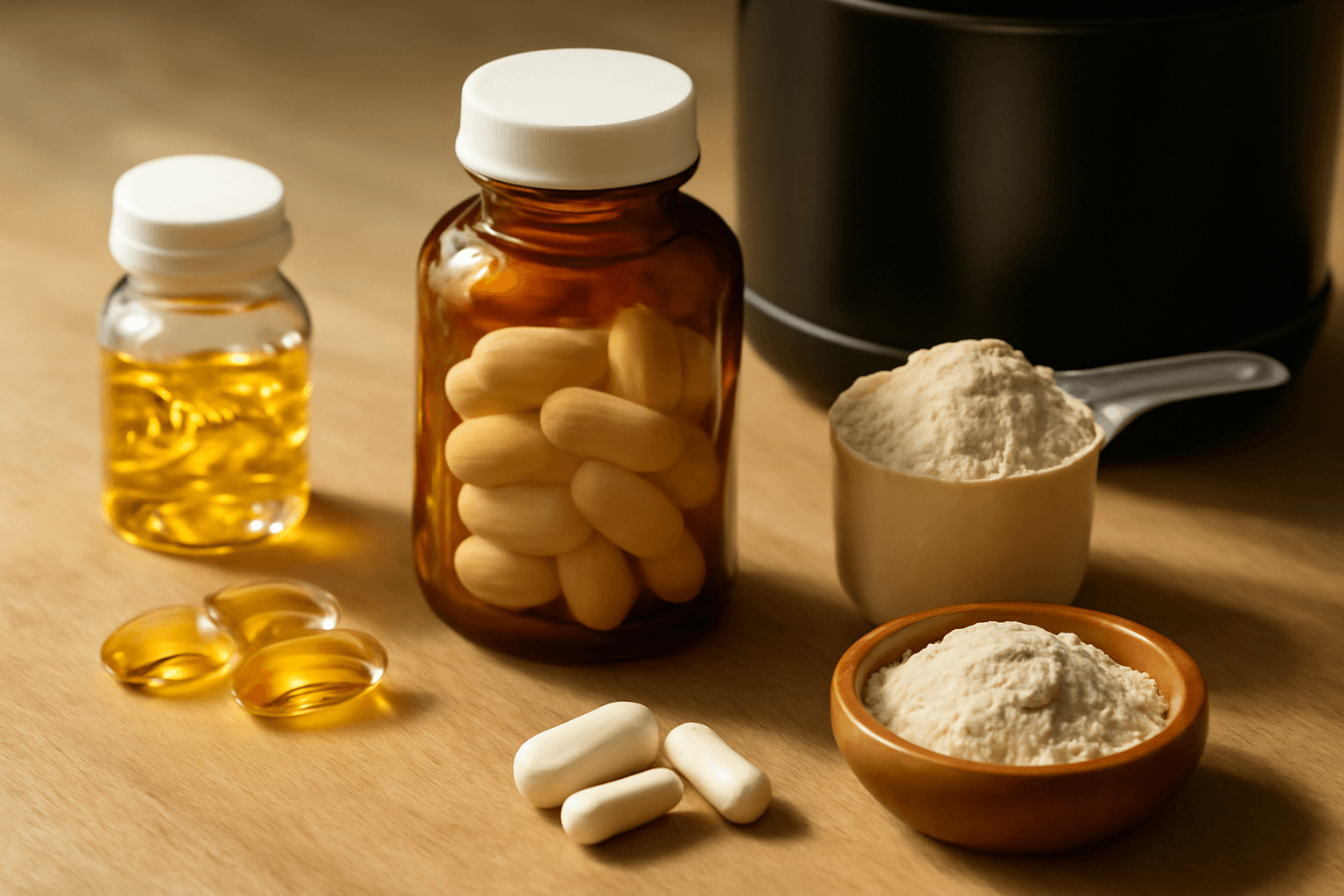
Muscle recovery after exercise requires more than just rest. Proper nutritional supplementation significantly improves muscle damage repair, promotes protein synthesis, and accelerates fatigue recovery. This article presents ten scientifically-backed muscle recovery supplements, explaining their mechanisms of action, effective dosing methods, and selection criteria tailored to individual fitness goals.
The Importance of Muscle Recovery Supplements and Selection Criteria
During muscle exercise, microscopic muscle fiber damage occurs. Repairing this damage requires various nutrients including protein, carbohydrates, minerals, and antioxidants. The higher the exercise intensity and frequency, the greater the nutritional requirements. Appropriate supplement intake can shorten recovery time by 24-48 hours and research shows it can improve the rate of strength gains by 15-20%.
When selecting supplements, consider your individual exercise type, current diet status, digestive capacity, and health condition. For strength training, prioritize protein-based products; for endurance training, prioritize products containing carbohydrates and electrolytes.
1. Hydroxymethyl Butyrate (HMB)
HMB is a metabolite of leucine, an essential amino acid that inhibits muscle breakdown and promotes strength gains. In a 12-week study of strength athletes, the group taking 3g of HMB daily increased lean mass by 2.4kg more than the placebo group.
The main mechanisms of HMB are as follows:
- Reduced muscle protein breakdown: Decreases muscle loss by up to 60% in the catabolic state after exercise
- Enhanced protein synthesis: Activates the mTOR signaling pathway to accelerate muscle growth
- Improved recovery speed: Alleviates exercise-induced muscle soreness (DOMS) by 20-30%
HMB achieves maximum absorption when taken immediately after exercise or with meals. A 3g dose is standard; for those weighing over 90kg, up to 5g can be taken. Consistent intake for at least 4 weeks is required to see results.
2. Amino Acids (BCAA, EAA)
The nine essential amino acids cannot be synthesized in the body and must be obtained through external sources. In particular, branched-chain amino acids (BCAA: leucine, isoleucine, valine) comprise 35% of muscle protein and play a direct role in exercise recovery.
Specific effects of BCAA: Taking 5-10g of BCAA after intense exercise increases protein synthesis by 122% and decreases muscle breakdown by 34%. Leucine is particularly the most powerful amino acid for directly activating mTOR signaling, so choose products containing at least 1.7g.
BCAA vs. EAA comparison: BCAA is cost-effective but contains only 3 amino acids. EAA (all 9 essential amino acids) provides more complete recovery support and is more effective for strength athletes. Taking it within 30 minutes after exercise maximizes absorption by leveraging the anabolic window.
3. Ashwagandha
Ashwagandha is a plant used in traditional Indian medicine and is now widely used in modern sports science for muscle recovery and stress management. This herb is an adaptogen that reduces cortisol levels by 25-30%, alleviating physical stress from high-intensity exercise.
In an 8-week study of athletes, the group taking 600mg of ashwagandha daily increased maximum strength by 6.5kg more than the placebo group, and recovery time was shortened by 12 hours. It is particularly effective in preventing overtraining syndrome from excessive exercise.
How ashwagandha works:
- Hormone balance: Lowers cortisol and increases testosterone precursors
- Neuromuscular recovery: Improves neural signal transmission to enhance strength expression
- Reduced oxidative stress: Antioxidant compounds alleviate post-exercise inflammation by 15-20%
Daily intake of 600-1000mg is standard, and effects can be experienced with consistent use for at least 6 weeks. Those who are pregnant or taking certain medications should consult a healthcare professional.
4. L-Glutamine
Glutamine comprises 60% of free amino acids in the human body and is a conditionally essential amino acid. While normally produced sufficiently by the body, glutamine demand surges after intense exercise, increasing muscle breakdown.
Taking 5g of glutamine immediately after high-intensity exercise decreases muscle protein breakdown by 30% and prevents 35% of immune system decline during recovery. This is reflected in reduced upper respiratory tract infections, which commonly occur after exercise. In a study of marathon runners, the glutamine supplementation group had 60% lower infection rates than the placebo group.
Key functions of glutamine:
- Maintains intestinal health: Primary energy source for intestinal epithelial cells and normalizes intestinal permeability
- Preserves muscle protein: Directly inhibits proteolysis
- Produces immune globulins: Enhances IgA secretion in the intestinal immune system
Typical dosing is 5g twice daily—immediately after exercise and before bedtime. Glutamine has higher absorption rates when taken alone rather than with other amino acids. Those with intestinal disorders or taking certain medications should consult a healthcare professional.
5. D-Ribose
D-ribose is a pentose sugar that serves as a key precursor for ATP (energy molecule) synthesis. It accelerates the 72-hour recovery of ATP stores after high-intensity exercise. It is particularly effective at rapidly replenishing cellular energy after high-intensity interval training (HIIT) or weightlifting.
The effectiveness of D-ribose was first discovered through cardiovascular health research, with similar benefits confirmed in athletes. Athletes taking 5g daily showed a 36-hour reduction in ATP recovery time after intense exercise and 8-12% improvement in strength expression in the next exercise session.
D-ribose energy replenishment mechanism:
- Promotes ATP resynthesis: Directly enhances the pentose phosphate pathway
- Muscle recovery speed: Shortens mitochondrial function recovery from 48 hours to 12 hours
- Reduced oxidative stress: Improves cellular energy status to decrease reactive oxygen species production
Standard dosing is 5g twice daily—before and after exercise. D-ribose is sweet and dissolves well in water; absorption improves when taken with carbohydrate foods. Those with diabetes or hypoglycemia should check blood sugar impact before use.
6. Whey Protein Isolate
Whey protein isolate is the most extensively researched and proven effective of all muscle recovery supplements. Whey protein isolate (WPI) is made by removing lactose and fat from whey protein concentrate (WPC), increasing protein content to over 95% and featuring rapid absorption and high bioavailability.
Scientific proof of effectiveness: In a 12-week weightlifting program, the group taking 25g of whey protein isolate daily increased lean mass by 2.3kg more than the placebo group, with maximum strength improving by 8.5kg. When taken within the post-exercise protein absorption window (30 minutes to 2 hours), muscle protein synthesis increases by 122%.
Superior characteristics of whey protein isolate:
- Rapid absorption: Blood amino acid levels reach maximum within 30 minutes
- High leucine content: Contains approximately 10-12g of leucine per 100g, powerfully activating mTOR signaling
- Lactose intolerance consideration: WPI contains less than 1% lactose for minimal digestive discomfort
- Immune globulins: Contains natural immune components such as lactoferrin and immunoglobulin
Standard dosing is 25-30g (approximately 200-250ml when dissolved in water) within 30 minutes after exercise. For a 70kg person, total daily protein intake should be 1.6-2.2g/kg, so supplementing with powder to cover the dietary shortfall is most efficient. Those with kidney disease should consult a healthcare professional before high-protein intake.
Additional Muscle Recovery Supplements
Omega-3 fatty acids: EPA (eicosapentaenoic acid) and DHA (docosahexaenoic acid) from fish oil regulate post-exercise inflammatory responses and improve muscle blood flow. Daily intake of 2-3g alleviates muscle soreness (DOMS) by 20-30% and improves joint health as well.
Probiotics: High-intensity exercise reduces beneficial gut bacteria, weakening immunity. Multi-strain probiotics of 5-10 billion CFU promote gut health recovery and improve digestive efficiency by 30%.
Vitamin D: An essential nutrient for strength, immunity, and bone health. Daily intake of 1000-2000 IU can reduce infection risk by 35% during exercise recovery.
Electrolytes (sodium, potassium, magnesium): Especially after sweaty exercise, electrolyte replenishment is essential. For cramp prevention and neuromuscular function recovery, intake within one hour after exercise is most effective.
Summary
Key takeaways: Muscle recovery is as important as exercise intensity when it comes to nutritional supplementation. Prioritize foundational whey protein isolate, BCAA/EAA, and glutamine, then add HMB, ashwagandha, and D-ribose based on individual fitness goals, recovery speed, and digestive capacity.
Supplement selection criteria:
- Strength training focus: Whey protein isolate + HMB + creatine
- Endurance training focus: Carbohydrates + electrolytes + omega-3
- High-intensity mixed training: Protein + BCAA + glutamine + vitamin D
- Fatigue from excessive exercise: Ashwagandha + D-ribose + magnesium
Safe usage guidelines: All supplements serve as aids to basic dietary improvement. In cases of kidney disease, diabetes, specific medication use, or pregnancy, please consult a physician or nutritionist before using. Since supplement effectiveness varies greatly among individuals, it's important to continue for 4-6 weeks and find the combination that works best for you.