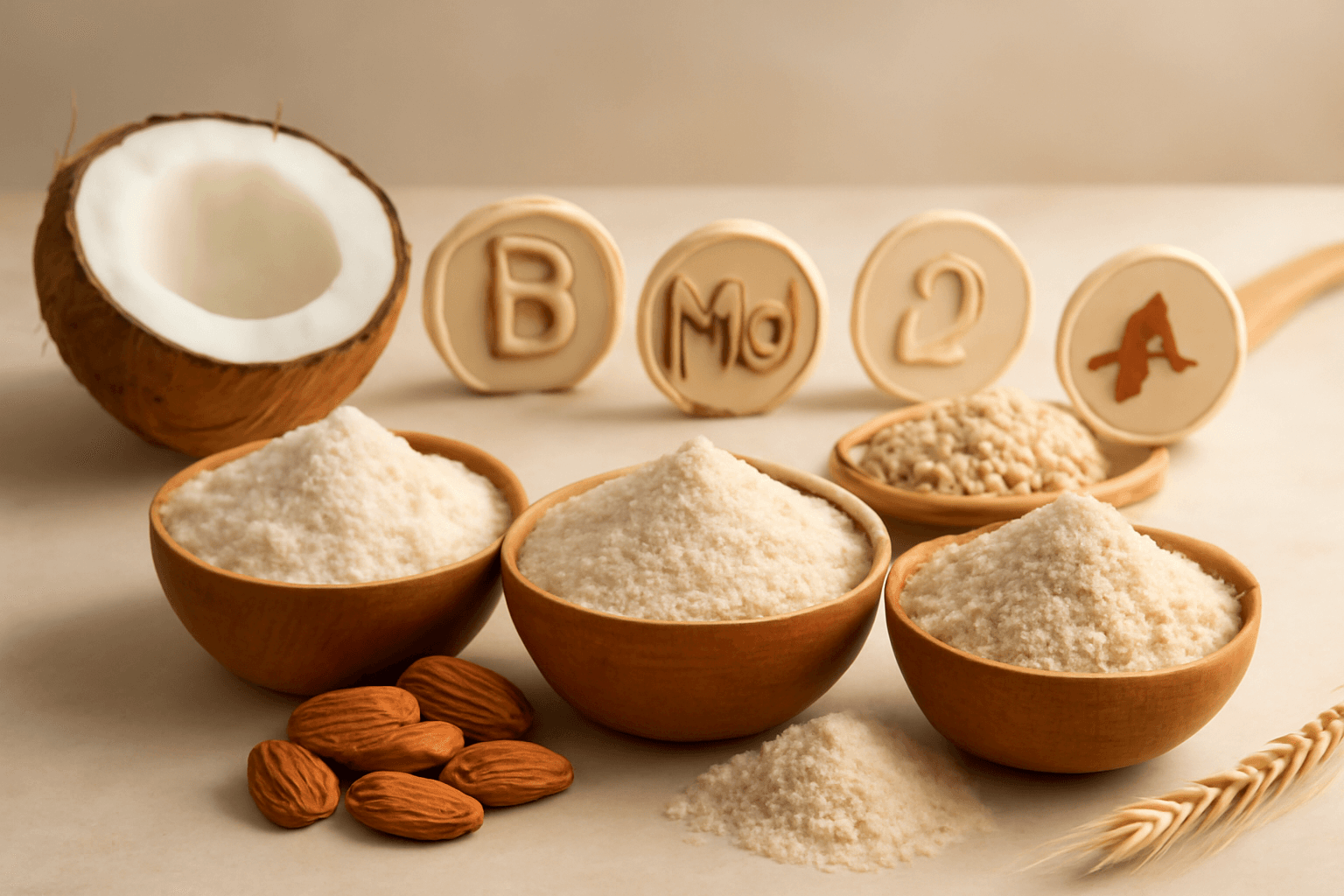
As gluten-free foods continue to gain popularity, many people are seeking flour alternatives to replace wheat flour. Beyond simply avoiding gluten, consumers are increasingly looking for higher nutritional value. This article introduces the nutritional benefits of three gluten-free flours—coconut flour, almond flour, and brown rice flour—along with practical recipes utilizing each. These flours are rich in essential nutrients such as protein, magnesium, and B vitamins, and can help with blood sugar management and cholesterol improvement.
1. Coconut Flour
Coconut flour is made by drying and grinding coconut flesh, and it has gained attention in the global health food market. It contains approximately 9g of protein per 100g, which is about three times that of regular wheat flour. In particular, the dietary fiber abundant in coconut flour is about 9g per 100g, making it effective for maintaining long-lasting satiety.
From a blood sugar management perspective, coconut flour's glycemic index (GI) is relatively low at around 51. This is advantageous for people with diabetes or those wanting to manage blood sugar, as it doesn't cause rapid spikes. Coconut flour also contains medium-chain fatty acids such as lauric acid and myristic acid, which have the characteristic of being quickly converted to energy in the body.
The magnesium content is also noteworthy. Coconut flour contains approximately 32mg of magnesium per 100g, which helps with muscle relaxation, nervous system stability, and energy production. However, due to its high fat content, coconut flour is calorie-dense (approximately 354kcal per 100g), so intake should be moderated accordingly.
Gluten-Free Chocolate Coconut Cake with Hot Fudge Sauce
This recipe combines the nutty flavor of coconut flour with the deep taste of chocolate. It boasts a higher protein content than traditional wheat flour cakes, and healthy fats from coconut oil add richness to the flavor.
Ingredients (serves 6):
- Coconut flour 150g
- Unsalted butter 100g
- Coconut oil 2 tablespoons
- Dark chocolate (70% or higher) 100g
- Eggs 3
- Coconut sugar 80g
- Vanilla extract 1 teaspoon
- Baking powder 1 teaspoon
- Salt, a pinch
Hot Fudge Sauce Ingredients:
- Dark chocolate 100g
- Unsalted butter 50g
- Coconut oil 1 tablespoon
- Maple syrup 3 tablespoons
- Salt, a pinch
Directions:
Preheat the oven to 180°C and line an 8-inch round cake pan with parchment paper. Melt the dark chocolate, unsalted butter, and coconut oil together using a double boiler. In a separate bowl, whisk the eggs and coconut sugar for about 3 minutes until foamy. This foam is important as it determines the cake's tender texture. Mix the vanilla extract into the egg mixture and pour in the melted chocolate.
Sift the coconut flour, baking powder, and salt together to combine the dry ingredients. This removes any lumps from the coconut flour and distributes the baking powder evenly. Slowly add the dry ingredients to the chocolate mixture while gently folding with a spatula.
Pour the batter into the prepared pan and smooth the surface. Bake in the oven for 35-40 minutes until a toothpick inserted in the center comes out with moist crumbs. Overbaking can result in a dry cake.
Prepare the hot fudge sauce while the cake cools. Melt the dark chocolate, unsalted butter, and coconut oil together using a double boiler, then mix in the maple syrup and salt. Pour the warm sauce over the baked cake and let it cool for 2 minutes so the sauce soaks in. Serve with creamy vanilla ice cream for contrasting temperature and texture that's even more delicious.
Nutritional Benefits: One slice (approximately 120g) contains 8g of protein and 3g of dietary fiber, with about 150mg of polyphenols, the antioxidant compound in dark chocolate. The medium-chain fatty acids in coconut oil promote metabolism and help improve brain function.
2. Almond Flour
Almond flour is classified as an alkaline food, which helps maintain the body's pH balance. It contains approximately 21.5g of protein per 100g, boasting the highest protein content among the three gluten-free flours. This is an essential nutrient for muscle maintenance and recovery.
The abundant magnesium content in almond flour (approximately 270mg per 100g) plays an important role in nerve transmission, muscle contraction, and energy production. According to research, people with sufficient magnesium levels score 5-10% higher on cognitive function tests compared to those who don't. Additionally, the vitamin E content in almond flour (approximately 26mg per 100g) provides powerful antioxidant action to prevent cell damage.
It's also noteworthy from a cholesterol management perspective. Unsaturated fatty acids in almonds, particularly oleic acid, help lower low-density cholesterol (LDL) while maintaining high-density cholesterol (HDL). In one study, participants who consumed about 45g of almonds daily showed approximately 7% reduction in LDL cholesterol after 12 weeks. Almond flour has a very low glycemic index of around 10, barely raising blood sugar.
Almond Flour Blueberry Bread
This bread contains more than three times the protein of traditional wheat flour bread and is a healthy choice that combines the antioxidant benefits of fresh blueberries with the nutrition of almond flour.
Ingredients (serves 8):
- Almond flour 200g
- Unsalted butter 100g
- Eggs 4
- Stevia or coconut sugar 100g
- Greek yogurt (unsweetened) 150g
- Baking powder 1.5 teaspoons
- Baking soda 1/4 teaspoon
- Vanilla extract 1.5 teaspoons
- Lemon zest 1 teaspoon
- Fresh blueberries 200g
- Salt, a pinch
Directions:
Preheat the oven to 175°C and line a pound cake pan (approximately 9x5 inches) with parchment paper and butter. Using an electric mixer, whisk room-temperature unsalted butter and stevia (or coconut sugar) for about 3 minutes until creamy. During this process, air is incorporated into the butter, making the bread fluffy.
Add the eggs one at a time, whisking for about 30 seconds after each addition until completely incorporated. Add the Greek yogurt and vanilla extract and mix. Greek yogurt not only adds abundant protein to the bread but also helps maintain a moist texture.
Sift the almond flour, baking powder, baking soda, and salt together. Add the dry ingredients to the wet mixture and gently fold with a spatula. Be careful not to overmix, as this can result in a tough bread texture. Mix the lemon zest in last to add a fresh flavor.
Lightly coat the fresh blueberries with 1 tablespoon of room-temperature almond flour. This prevents the blueberries from sinking into the batter and ensures even distribution. Carefully fold the coated blueberries into the batter.
Pour the batter into the prepared pan and bake for 55-65 minutes. Bake until a toothpick inserted in the center comes out clean. Let cool in the pan for 10 minutes, then turn out onto a plate to cool completely. Garnish the top with a few fresh blueberries for a nice presentation.
Nutritional Benefits: One slice (approximately 80g) contains 7g of protein, 2.5g of dietary fiber, and 72mg of magnesium. The anthocyanins in blueberries help prevent neurodegenerative diseases, and when combined with the vitamin E in almond flour, they enhance antioxidant action. Greek yogurt provides additional protein and probiotics to support digestive health.
3. Brown Rice Flour
Brown rice flour is made by grinding whole grain rice including the bran and germ layers, offering significantly higher nutritional value than refined rice flour. It contains approximately 8g of protein and 4.5g of dietary fiber per 100g, which are excellent figures among whole grains.
The B vitamin content in brown rice flour is particularly noteworthy. Especially vitamin B1 (thiamine) at approximately 0.19mg per 100g is essential for carbohydrate metabolism and nervous system function. Vitamin B3 (niacin) is present at about 3mg, promoting energy production. These B complex vitamins help with stress management and fatigue improvement.
In terms of blood sugar management, brown rice flour's glycemic index is around 68-70, which is moderate. However, due to its high dietary fiber content, digestion is slowed, preventing rapid blood sugar spikes. The magnesium (approximately 114mg per 100g) and pantothenic acid in brown rice flour help regulate cholesterol synthesis and particularly prevent oxidation of bad cholesterol.
Brown rice flour is also rich in essential trace elements like manganese and phosphorus, supporting bone health and metabolic function. Approximately 1.3mg of manganese per 100g is important for bone formation and antioxidant defense.
Brown Rice Zucchini Fritters
This dish combines the mild flavor of brown rice flour with the freshness of zucchini for a healthy appetizer. It's gluten-free compared to traditional wheat flour fritters while offering significantly higher nutritional value.
Ingredients (serves 4):
- Medium zucchini 2
- Brown rice flour 150g
- Eggs 2
- Milk (or unsweetened almond milk) 100ml
- Parmesan cheese (grated) 50g
- Garlic powder 1.5 teaspoons
- Dried parsley 1 teaspoon
- Salt 0.5 teaspoon
- Black pepper 0.5 teaspoon
- Olive oil (for frying) 500ml
- Baking powder 0.5 teaspoon
Directions:
Cut the zucchini in half lengthwise, then slice into sticks approximately 0.5cm thick. Place the zucchini on paper towels, sprinkle with a little salt, and let sit for 10 minutes to remove moisture. Pat dry the moisture released from the zucchini with paper towels for crispier results when frying.
In a shallow bowl, mix eggs and milk to create an egg wash. In another bowl, combine brown rice flour, Parmesan cheese, garlic powder, dried parsley, salt, black pepper, and baking powder. The baking powder makes the coating crispier.
Dip the prepared zucchini sticks first in the egg wash, then coat evenly in the brown rice flour mixture. When coating, gently press with your fingers so the mixture adheres well to the zucchini surface.
Heat the olive oil to 170°C. If you don't have a thermometer, the temperature is right when small bubbles slowly rise to the surface when a wooden skewer is dipped in the oil. If the temperature is too high, the outside will burn while the inside remains undercooked. Be careful not to add too many zucchini sticks at once (as this lowers the oil temperature) and fry for about 2-3 minutes.
When the zucchini fritters turn golden brown, remove them with a slotted spoon and place on paper towels to drain the oil. They're best enjoyed while still warm. Serve with a yogurt-based dipping sauce or tamari sauce (gluten-free) for even better flavor.
Nutritional Benefits: A serving of about 100g (approximately 4-5 sticks) contains 5g of protein, 2g of dietary fiber, and approximately 40mg of magnesium. The B complex vitamins in brown rice flour promote energy metabolism, while zucchini is very low in calories yet provides satiety. The oleic acid in olive oil supports cardiovascular health.
Summary
Gluten-free flours are not merely gluten-avoidance products but food ingredients offering exceptional nutritional value. Coconut flour provides satiety and energy through high dietary fiber and medium-chain fatty acids, while almond flour is rich in protein and magnesium, making it ideal for strength athletes and those seeking cognitive improvement. Brown rice flour is abundant in B complex vitamins and trace elements, supporting energy metabolism and overall health.
Understanding each flour's characteristics allows you to choose based on your individual nutritional needs. For those prioritizing blood sugar management, coconut and almond flours are suitable, while brown rice flour can be considered if energy boost is needed. If cholesterol improvement is the goal, the unsaturated fatty acids in almond flour are particularly beneficial.
The three recipes presented are designed to maximize each flour's characteristics while satisfying both taste and texture. The chocolate coconut cake serves as a special occasion healthy dessert, the blueberry bread is perfect for breakfast or snacking, and the zucchini fritters work well as a healthy appetizer.
Medical Disclaimer: If you have specific health conditions, particularly diabetes, nut allergies, or digestive issues, please consult a healthcare professional before introducing new flours into your diet. Some people may have allergies to tree nuts (almond flour), so caution is necessary. Additionally, since gluten-free foods are not necessarily low-calorie, please consider your total caloric intake and adjust portions accordingly.