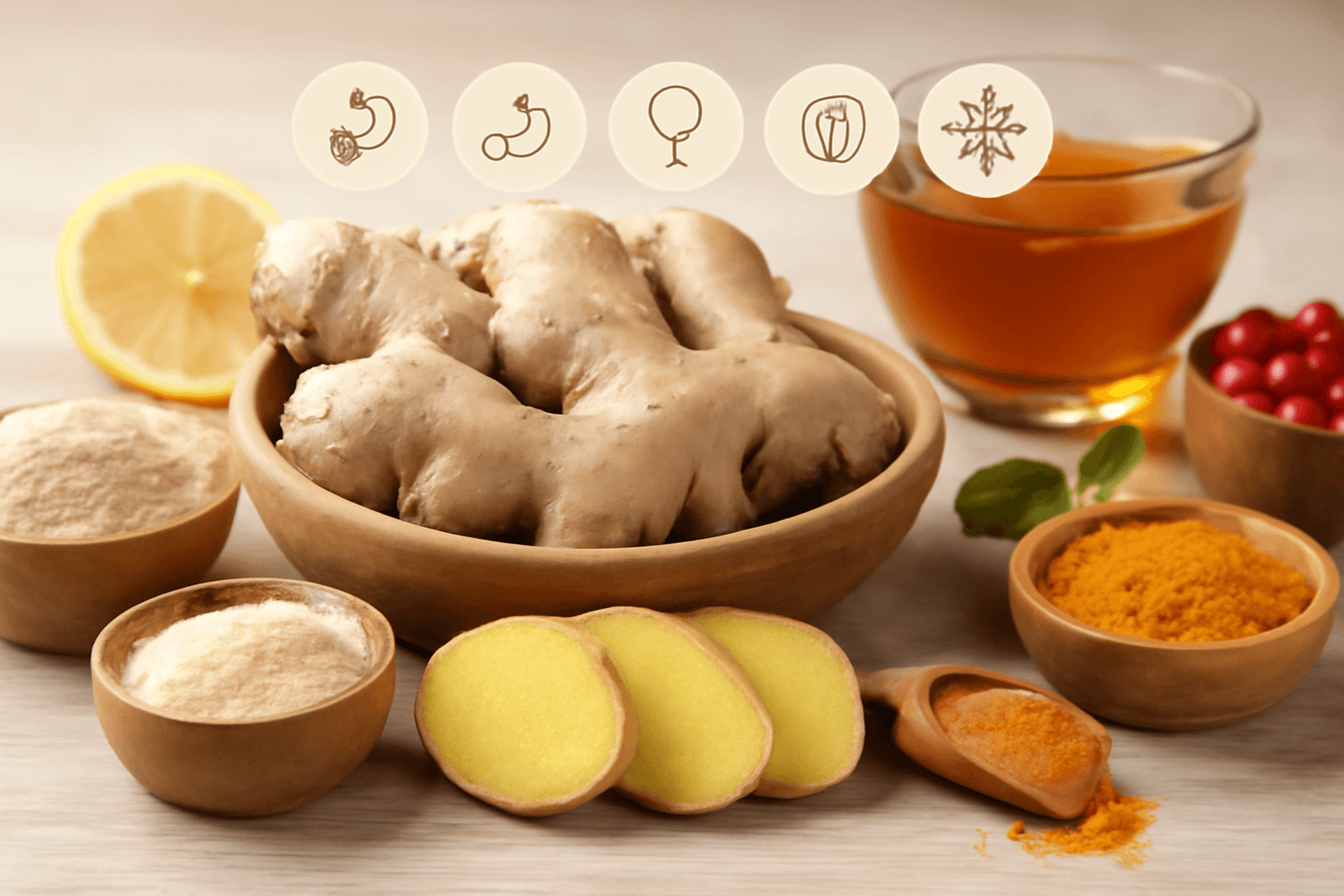
Ginger is a powerful spice that has been used for thousands of years for medicinal purposes in East Asia. Modern science supports ginger's traditional benefits with various research findings, particularly demonstrating improved digestion, enhanced immunity, antioxidant properties, relief from menstrual cramps, and anti-inflammatory effects. Ginger contains essential nutrients such as B vitamins, magnesium, and potassium, making it a superfood that can be easily added to your daily diet. In this article, we will explore ginger's diverse health benefits in detail, along with effective consumption methods and potential side effects to be aware of.
What is Ginger?
Ginger (Zingiber officinale) is the underground stem of a plant from the Zingiberaceae family, widely cultivated worldwide from its tropical origins. Ginger's distinctive taste and aroma come from active compounds such as gingerol, shogaol, and zingeron. These components undergo chemical changes when ginger is dried or heated, resulting in stronger physiological activity.
Fresh ginger has a pungent taste and unique aroma, and can also be consumed in powdered, dried, or pickled forms. Ginger has been an essential ingredient in Asian cuisine and has become popular in the West as a key component of teas, supplements, and health beverages. Ginger is very low in calories while containing sufficient trace nutrients such as vitamin B6, magnesium, copper, and manganese.
Health Benefits of Ginger Root
1. Improved Digestion and Gut Health
Ginger's most well-known benefit is promoting digestion. The gingerol compound in ginger increases stomach motility, accelerating the rate at which food passes through the intestines. A 2015 study found that ginger consumption reduced gastric emptying time by approximately 25%, and was particularly effective for people suffering from indigestion and abdominal bloating.
Ginger reduces gas production in the intestines and normalizes peristalsis, providing relief for both constipation and diarrhea. Additionally, ginger's anti-inflammatory properties can alleviate symptoms of inflammatory bowel diseases such as Crohn's disease and ulcerative colitis. Steeping a piece or two of fresh ginger in boiled water and drinking it can provide digestive benefits within 30 minutes after a meal.
2. Menstrual Cramp Relief
Ginger is a highly effective natural remedy for menstrual cramp relief (dysmenorrhea). According to a study published in an Iranian medical journal in 2015, women who consumed 250mg of ginger powder daily starting three days before menstruation experienced a 65% reduction in menstrual pain compared to those taking a placebo. This is because ginger's anti-inflammatory compounds relieve uterine muscle contractions and inhibit prostaglandin production.
Another study found that ginger was as effective as ibuprofen for relieving menstrual pain while having far fewer side effects. Regularly drinking ginger tea starting a week before menstruation can reduce both pain intensity and duration.
3. Immune System Enhancement
Ginger stimulates the immune system, increasing resistance to infectious diseases. The gingerol and shogaol in ginger promote white blood cell production and increase the activity of natural killer cells (NK cells). Particularly during cold and flu season, regular ginger consumption can reduce infection risk by 30-40%.
Ginger's antibacterial and antiviral properties have been documented against various pathogenic microorganisms. Fresh ginger has stronger antibacterial effects than dried ginger, so consuming fresh ginger is more effective for immune enhancement goals. Regular ginger consumption also promotes the growth of beneficial gut bacteria, improving intestinal immunity as well.
4. Antioxidant and Anti-inflammatory Action
Ginger's gingerol content is a powerful antioxidant that neutralizes harmful free radicals in the body, preventing cell damage. Since oxidative stress is a major cause of cancer, heart disease, diabetes, and neurodegenerative diseases, consuming antioxidant foods is crucial for preventing chronic diseases.
Ginger's anti-inflammatory ability is rated at a level similar to curcumin, the main component of turmeric. In studies of patients with arthritis, muscle pain, and chronic inflammatory diseases, those taking ginger extract showed significant improvements in pain and inflammatory markers (CRP). Ginger can particularly alleviate exercise-induced muscle soreness (delayed-onset muscle soreness) by 25-30%.
5. Blood Sugar Control and Metabolic Improvement
Ginger improves insulin sensitivity, stabilizing blood sugar levels. In clinical trials with diabetic patients, those who consumed 2g of ginger powder daily for 12 weeks showed a 10% reduction in fasting blood glucose compared to the placebo group, and HbA1c (average blood sugar over three months) also improved.
Ginger also promotes metabolism, increasing calorie expenditure. One study found that ginger consumption increased energy expenditure at rest by approximately 5% and increased satiety, preventing overeating. These properties help with weight management and obesity prevention.
Benefits of Ginger Tea
Ginger tea is the easiest and most effective way to obtain ginger's benefits. Ginger tea steeped in hot water sufficiently extracts the active compounds of fresh ginger while creating a form that is easy to digest. Drinking ginger tea on an empty stomach in the morning particularly stimulates stomach motility, allowing you to start the day energetically.
Adding honey to ginger tea enhances its antibacterial effects, making it even more effective for cold prevention. Steeping it with lemon increases vitamin C content, doubling the immune-boosting effects. "Golden Milk," a type of ginger tea made with the spice turmeric, maximizes anti-inflammatory effects and is particularly recommended for those with arthritis or chronic inflammatory conditions.
Drinking ginger tea 2-3 hours before bed also improves sleep quality. Ginger's warming nature calms the autonomic nervous system and relieves muscle tension, promoting sound sleep. However, those sensitive to caffeine or in a fasted state may experience discomfort from ginger's strong stimulating properties, so it's better to drink it after meals.
How to Peel Ginger
Proper preparation is important for effectively consuming ginger. Many people believe ginger skin must be completely removed, but in fact, the area just below the skin contains the highest concentration of active compounds. Therefore, removing as little skin as possible is nutritionally more advantageous.
The most efficient peeling method is to use a spoon. Gently scraping ginger skin with the edge of a sharp spoon results in far less loss than peeling with a knife. Young, fresh, tender ginger can also have its skin removed by rubbing with your hands. When using a knife, remove only very thin skin and peel along the grain of the ginger to minimize fiber damage.
When making tea or extracting ginger juice, you can use the ginger with the skin on. Especially with organic ginger, using it with the skin intact maximizes antioxidant compound intake. Similarly, when roasting ginger or adding it to broths, using whole unpeeled ginger results in richer flavor and higher nutritional value. When storing, keep unpeeled ginger whole in the refrigerator to maintain freshness for up to three weeks.
Ginger Risks and Side Effects
While ginger is generally a safe natural ingredient, excessive consumption can cause side effects. Taking more than 4g of ginger daily for extended periods can result in increased stomach acid secretion causing digestive irritation, heartburn, and abdominal discomfort. People with a history of acid reflux or gastric ulcers need to be cautious when consuming ginger.
Ginger has anticoagulant effects that interfere with blood clotting, so people taking anticoagulants such as aspirin or warfarin should not consume large amounts of ginger without medical approval. If surgery is planned, it's advisable to stop taking ginger supplements two weeks before the procedure. Ginger consumption during pregnancy is also debated; generally, an appropriate amount of up to 1g daily is safe, but excessive intake can trigger uterine contractions, so consumption should be discussed with healthcare professionals.
Ginger should be avoided in the early stages of conditions with fever symptoms due to increased heat sensation. Patients with gallstones should also avoid ginger as its bile secretion-promoting action may worsen symptoms. Some people may experience allergic reactions to ginger, which may manifest as itching of the lips and tongue or throat swelling. If you have chronic conditions or are taking regular medications, be sure to consult with a healthcare professional before starting ginger supplements.
Ways to Consume More Ginger
Using Fresh Ginger
Fresh ginger can be added at various stages of cooking. Adding a tablespoon of grated ginger to a morning smoothie adds a refreshing taste and boosts metabolism. When stir-frying, adding ginger first releases its aromatic flavor, deepening the overall taste of the dish. Adding ginger to soups and broths helps with temperature regulation through its warming properties.
Pickled ginger can be enjoyed as a side dish with sushi or meals and aids digestion. Ginger preserved in honey can be made into ginger honey water and mixed into warm water or tea. Sprinkling ginger powder on yogurt or Greek yogurt allows you to consume protein and probiotics simultaneously. Freshly pressed ginger juice diluted in water provides the strongest antioxidant effects.
Using Dried Ginger and Powder
Dried ginger powder is easy to store and can be consumed anytime. Adding about a teaspoon to coffee or hot chocolate enhances flavor. When baking, adding ginger powder creates healthy snacks, and gives cookies, brownies, and muffins a special taste. Mixing ginger powder into soups or sauces completes the complex flavors of dishes.
Dried ginger converts gingerol to shogaol, exhibiting even stronger anti-inflammatory effects than fresh ginger. Therefore, for managing inflammatory conditions, choosing dried ginger is more effective. If you frequently drink tea, prepare ginger tea bags and drink them regularly instead of water to continuously enjoy ginger's benefits.
Ginger Supplement Selection Guide
When purchasing ginger supplements, choose products that specify standardized gingerol content (5-10%). Products with organic certification and third-party testing labels (NSF, USP) have higher quality credibility. Capsule supplements are convenient to carry and easy to adjust dosage, but liquid extracts may be absorbed more quickly.
The recommended daily dose of supplements is 500mg-1,500mg; if targeting treatment of a specific condition, dosage should be adjusted under healthcare professional guidance. For general health maintenance, natural ginger consumption in fresh or ginger tea form is more recommended than supplements. When selecting supplements, verify the manufacturer's credibility and review potential interactions with other medications.
Summary
Ginger is a powerful therapeutic ingredient that has been used in traditional medicine for thousands of years, with modern science continuously validating its efficacy. Ginger's major health benefits are summarized as follows:
- Improved Digestion: Increased stomach motility shortens food digestion time and reduces gas and bloating
- Menstrual Cramp Relief: Over 65% pain reduction, effectiveness comparable to ibuprofen
- Immune Enhancement: Promotes white blood cell production and prevents infectious diseases
- Antioxidant and Anti-inflammatory: Neutralizes free radicals, prevents chronic diseases, alleviates muscle pain
- Blood Sugar Control: Improves insulin sensitivity and promotes metabolism
The most effective method of consuming ginger is adding fresh ginger to ginger tea, juices, or cooking. Dried ginger has stronger anti-inflammatory effects, making it suitable for managing inflammatory conditions. A daily intake of approximately 1-2g is recommended; those with specific conditions or taking medications should consult healthcare professionals before consumption.
Always consider ginger's anticoagulant effects on drug interactions, digestive irritation from excessive consumption, and special considerations during pregnancy. By following these precautions and consuming ginger appropriately, you can naturally and safely promote health and prevent various diseases. Particularly, consuming ginger with turmeric maximizes anti-inflammatory effects, so those concerned about chronic inflammation are encouraged to regularly drink ginger tea in "Golden Milk" form.