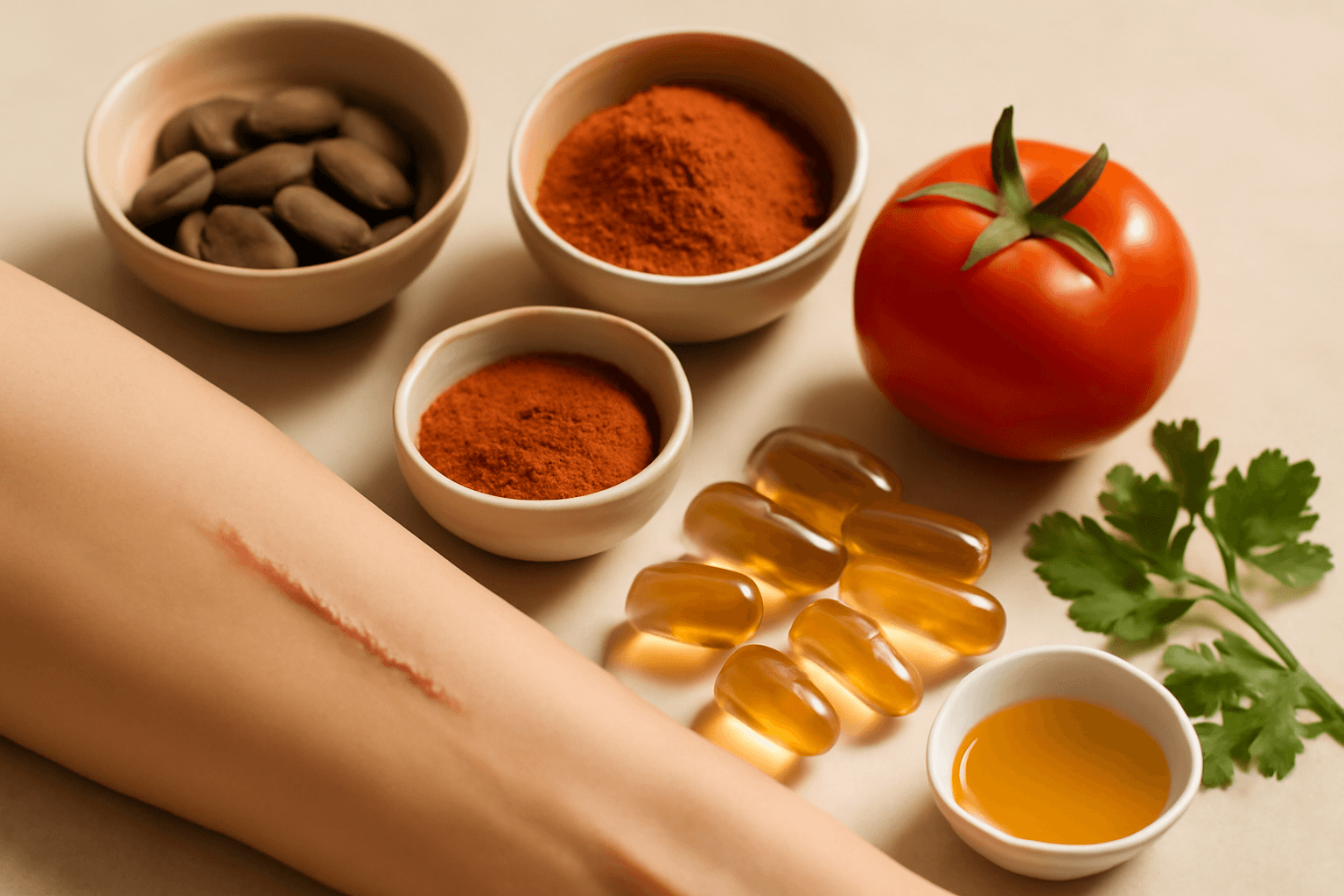
Scars are a common result of the skin's natural healing process after injury. Formed by various causes such as deep wounds, surgery, acne, and burns, scars can affect not only appearance but also confidence. Fortunately, scars can be significantly improved through proper nutrition and lifestyle changes without medical procedures. This article introduces 5 natural methods that promote collagen formation and support skin regeneration.
How Scars Form
Scar formation occurs in three stages. First, during the inflammatory stage, blood clots form in the damaged area and the immune system becomes active, lasting about 2 weeks. Blood vessels dilate during this phase, giving the area a red appearance.
Next comes the proliferative stage, when large amounts of collagen are produced to fill in the damaged skin. This stage lasts from 3 weeks to several months, and scars tend to appear thick and raised. Finally, entering the remodeling stage, collagen becomes aligned and skin color normalizes. This process can take 1 to 2 years.
Without sufficient protein and trace elements like vitamin C, iron, and zinc during this process, collagen synthesis doesn't occur properly and scars can become more pronounced. Therefore, proper wound care and nutrition in the early stages greatly determine the final appearance of the scar.
Types of Scars
Scars are classified into several types based on their shape and characteristics. Atrophic scars are indented below the surrounding skin, typically caused by acne or chickenpox. In contrast, hypertrophic scars are thick and raised at the scar site and often develop after surgery or trauma.
Keloids are a more severe type of scar that extends beyond the original wound boundary and spreads into surrounding skin. They are particularly common in people with darker skin tones. Among atrophic scars, "ice pick" scars appear as deep, narrow holes and require especially important collagen regeneration.
Red or purple scars are fresh scars with dilated blood vessels. Nutrition management and sun protection during this stage are most effective. Accurately identifying the scar type allows you to choose a customized treatment method, so it's recommended to consult with a dermatologist.
Natural Products for Improving Scars
1. Turmeric (Curcumin): Powerful Anti-inflammatory Effects
Curcumin found in turmeric is a powerful anti-inflammatory and antioxidant compound that excels at suppressing inflammation during the early stages of scar formation. Research shows that curcumin can reduce inflammatory cytokine levels such as TNF-α and IL-6 by more than 50%.
To see effective scar management results, consuming 500-1000mg of curcumin daily is recommended. Rather than simply adding turmeric to food, absorption increases up to 2000 times when consumed with black pepper (piperine). Additionally, mixing turmeric with honey and applying it directly to the wound area can promote collagen reshaping along with antibacterial effects.
However, if you are taking blood thinners or have gallbladder disease, consult a specialist before consumption.
2. Omega-3 Fatty Acids: Promoting Cellular Regeneration
Omega-3 fatty acids are a major component of cell membranes while also exerting powerful anti-inflammatory effects. EPA and DHA regulate prostaglandin metabolism to control excessive inflammatory responses during scar formation.
According to clinical research, a group that consumed 2000mg of omega-3 daily for 12 weeks showed a 23% improvement in skin elasticity and a 25% brightening of scar color. Omega-3 also improves blood flow, increasing oxygen and nutrient supply to damaged skin areas.
In addition to fish oil supplements, consuming fatty fish such as mackerel, salmon, and sardines 2-3 times per week is effective. Vegetarians can obtain ALA (alpha-linolenic acid) from flaxseeds, chia seeds, and walnuts, but these are not efficiently converted to EPA and DHA in the body, so taking supplements is worth considering.
3. Protein: The Basic Building Block of Collagen
Collagen is made of protein, and adequate protein intake is essential to improve scars. The healing speed of fresh wounds is directly proportional to protein intake, and collagen synthesis decreases by 40-50% with protein deficiency.
Consuming 1.2-1.6g of protein per kilogram of body weight is optimal for skin regeneration. For example, if you weigh 60kg, you need 72-96g of protein. This is equivalent to about 12 eggs, 300g of chicken breast, or 400g of Greek yogurt.
In particular, you should choose complete proteins that contain all 9 essential amino acids, such as eggs, milk, yogurt, beef, chicken, fish, and legumes. Increasing protein intake during the first 3 months of scar formation allows for more balanced collagen alignment and significantly improves the final appearance of the scar.
4. Vitamin C and Iron: Helpers in Collagen Synthesis
Vitamin C (ascorbic acid) is an essential cofactor for collagen synthesis. For proline and lysine to stabilize into collagen, vitamin C is required, and vitamin C deficiency reduces collagen stability by 70%.
Consuming 500-1000mg of vitamin C daily is effective for scar improvement. It can be obtained from oranges, kiwis, bell peppers, broccoli, and black currants, and since it is destroyed by heat, it's best consumed raw. Additionally, topical 15-20% vitamin C serum improves scar color and promotes collagen reshaping.
Iron is an essential element of collagenase enzymes that form collagen. Iron deficiency delays wound healing and makes scars more pronounced. Women should consume 18mg of iron daily while men need 8mg, and choose iron-rich foods such as beef, oysters, spinach, and lentils. Heme iron from animal sources has 2-3 times higher absorption rate than plant-based iron.
5. Bone Broth and Collagen Peptides: Direct Collagen Supply
Bone broth and collagen peptides provide already-broken-down collagen, allowing the body to absorb it directly without additional breakdown processes. Research shows that a group taking 10g of collagen peptides daily increased skin moisture by 28% and improved elasticity in scar areas by 19% after 8 weeks.
Bone broth contains type I, II, and III collagen along with glycine, proline, and hydroxyproline, directly supporting collagen synthesis in the body. Consuming 200-300ml, 4-5 times per week, shows results. Collagen peptide powder easily dissolves in water, coffee, or smoothies, and typically 10-15g is consumed 1-2 times daily.
However, not all collagen peptides are the same. You should choose hydrolyzed collagen peptides with low molecular weight (2000 Da or less) for higher absorption rates. It's important to check product labels for molecular weight and type (type I collagen recommended).
Scar Prevention
The Importance of Early Wound Care
To effectively prevent scars, proper care is essential immediately after a wound occurs. Within the first 24 hours of injury, consuming sufficient protein, vitamin C, and zinc can optimize the initial collagen synthesis process.
The wound area should be kept in a moist environment, which promotes the migration of new skin cells and minimizes scar tissue formation. Using antibiotic ointment and silicone-based dressings maintains moisture while preventing infection. Leaving a wound in a dry state increases the likelihood of forming thicker, darker scars.
For at least 2 weeks, gently cleanse the wound daily and apply fresh dressing. Before the wound completely heals, it's important to avoid irritating chemicals and rough friction.
Sun Protection and Hormone Management
UV rays accelerate scar discoloration. When new scars are exposed to UV rays, melanin production increases and color can darken up to 3 times. Therefore, after wound healing for at least 1 year, especially during the first 3 months, apply sunscreen with SPF 30 or higher daily.
Hormones also affect scar formation. Androgens (male hormones) in particular worsen acne and make acne-related scars more prominent. In women, sebum production increases at certain points in the menstrual cycle, worsening acne and increasing scar risk. Adequate sleep (7-9 hours daily) and stress management maintain hormonal balance and can reduce acne occurrence by 30%.
Proper Diet and Skin Care
High-glycemic foods and inflammatory foods delay wound healing. Refined carbohydrates and fried foods increase inflammatory cytokine production, interfering with the collagen reshaping process. Conversely, anti-inflammatory foods such as berries, leafy greens, and fish minimize scar formation.
When caring for skin, avoid excessive irritation of the scar area. Irritating ingredients such as hydrating lotions, retinol, and AHA are safest to use at least 6 months after wound healing. Instead, during the early stages, use gentle moisturizing ingredients such as ceramides, hyaluronic acid, and glycerin.
Additionally, joint health is also indirectly important. Cartilage health components such as glucosamine and chondroitin increase growth factors that promote collagen production. Hyaluronic acid found in bone broth improves skin moisture and elasticity, optimizing the scar reshaping process.
Summary
Scar improvement is not resolved in the short term, but significant improvement is possible through proper nutrition and lifestyle habits. The key points are as follows:
- Turmeric (curcumin) suppresses initial inflammation and promotes collagen reshaping. Consume 500-1000mg daily with black pepper.
- Omega-3 fatty acids promote cellular regeneration and improve blood flow. Aim for 2000mg daily consumption.
- Adequate protein is the basic element of collagen. You should consume 1.2-1.6g per kilogram of body weight daily.
- Vitamin C and iron are essential for collagen synthesis and stabilization. Choose raw fruits and vegetables and animal-based foods.
- Collagen peptides and bone broth provide direct collagen supply and offer faster results.
- Proper care from the early stages of wound formation and sun protection greatly determine the final appearance of scars.
- Hormonal balance and stress management are important for preventing acne scars.
Medical Disclaimer: If scars are in keloid form or extensive, or if they have not improved with the above methods for more than 6 months, consult a dermatologist. Combining medical procedures (laser, microneedling, filler injections, etc.) with natural remedies can be even more effective. If you have certain conditions or are taking medications, consult with a healthcare professional before making new supplement or diet changes.
Scars are a result of the body's natural healing process, but there are plenty of ways to minimize and improve them. With patience and consistent care, you can experience noticeable improvement within 3-6 months. Starting today with proper nutrition and improved lifestyle habits, we hope you regain healthier, clearer skin.