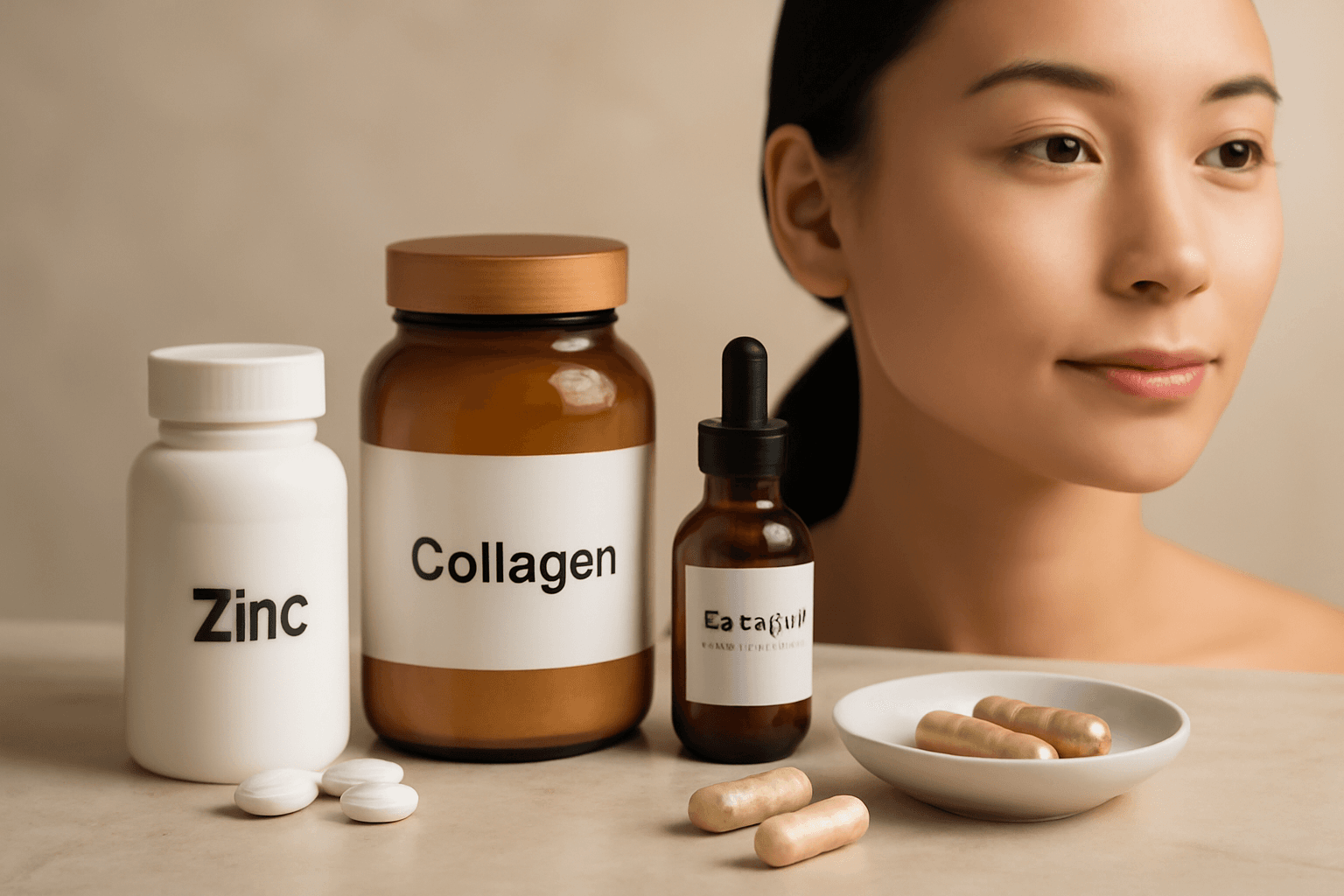
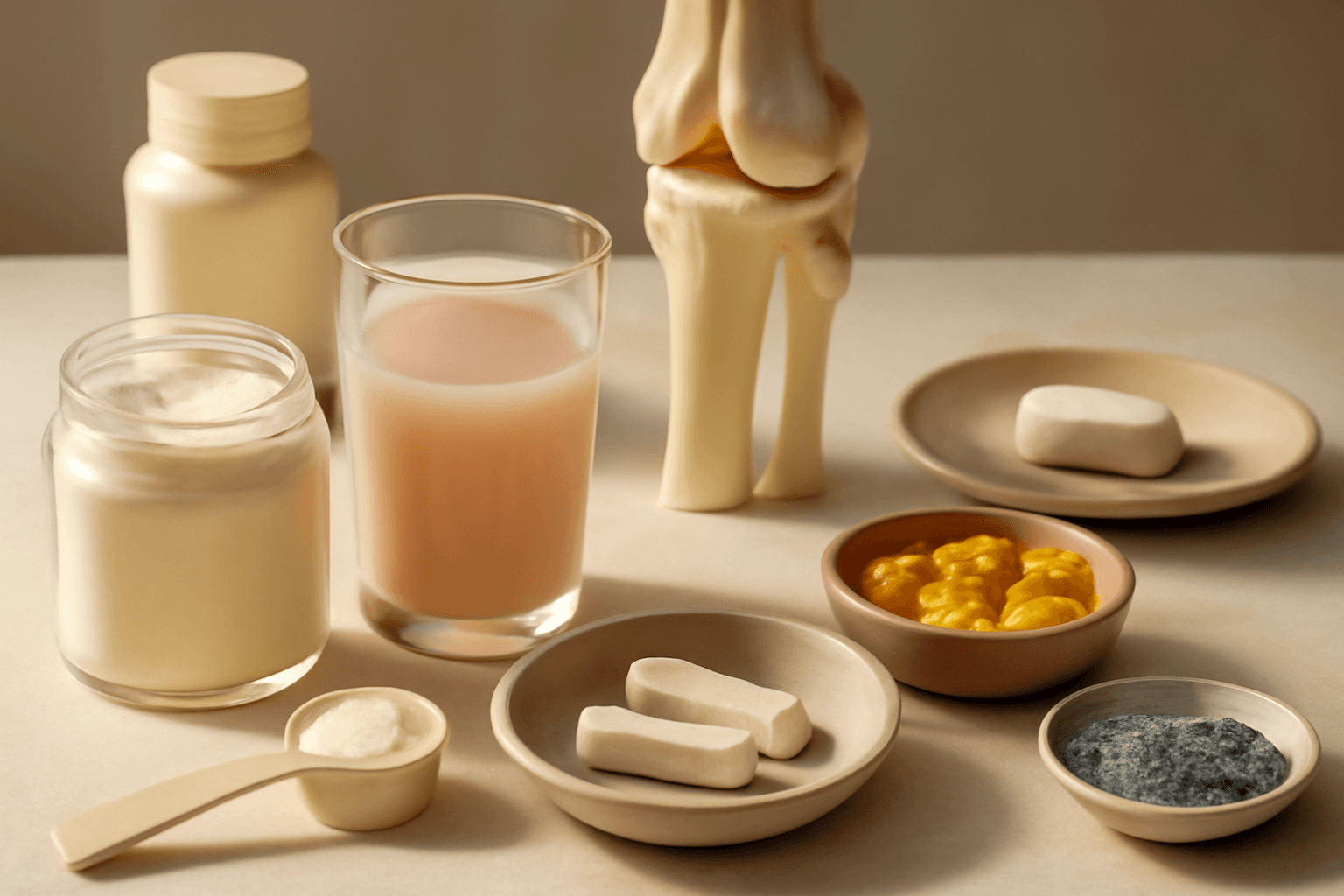
Skin is the largest organ in our body and the first line of defense protecting us from the external environment. As time passes, skin undergoes a natural aging process, which manifests as collagen reduction, decreased elasticity, and wrinkle formation. However, with the right nutritional supplements, you can restore your skin's health and maintain a youthful appearance. This article introduces 6 essential supplements for skin health, their scientific basis, and practical ways to take them.
How Does Skin Change as We Age?
Human skin reaches its peak collagen production in the early twenties, with collagen generation decreasing by approximately 1% annually. As people enter their thirties, this decline accelerates, leading to noticeable changes such as wrinkles, dullness, and loss of elasticity. Additionally, the cell regeneration cycle lengthens, delaying exfoliation, and accumulated oxidative stress from UV exposure accelerates skin damage.
Skin aging is not merely about external changes. As we age, the skin's ability to retain moisture decreases, and hormonal imbalances in sebum production simultaneously increase dryness and sensitivity. In particular, hormonal changes increase inflammatory responses in the skin and diminish its recovery capacity. Cumulative sun exposure disrupts melanin production, intensifying dullness and age spots.
Interestingly, skin aging is influenced not only by genetic factors but also significantly by lifestyle, diet, and environmental exposure. People of the same age who consume sufficient antioxidant foods and pay attention to skincare can have skin conditions that differ by 5 to 10 years compared to those who don't.
Proper Nutrient Supply Is Important for Skin Health
External skincare for skin health only affects the epidermis, but internal nutrient supply directly supports collagen and elastin regeneration in the dermis layer. Skin cells regenerate daily, and if necessary nutrients are insufficient during this process, damaged cell regeneration becomes incomplete.
In particular, protein, vitamins, minerals, and antioxidants are key elements for maintaining skin structure and repairing damage. Protein is a major component of collagen and elastin, vitamin C is essential for collagen synthesis, and zinc regulates skin inflammation. Antioxidants protect skin cells from free radicals and prevent premature aging.
According to interesting research results, a group of women who consumed collagen peptides for 8 weeks showed a 7% increase in skin elasticity and an 8% increase in skin moisture content compared to the control group. This is evidence that internal nutrient supply improves not just the external appearance but the skin's physiological functions. Therefore, systematic supplement intake serves as an essential element of anti-aging.
The Best Supplements for Skin
Among the numerous skin health supplements sold on the market, it is important to select products with sufficient scientific evidence. Effective supplements commonly undergo clinical trials and have proven effects at specific dosages.
The 6 essential supplements for skin health are as follows: multivitamins, flavonoids, dietary sulfur, protein/collagen, omega-3 fatty acids, and probiotics. Each supports skin health through different mechanisms, and when taken together, they create synergistic effects.
1. Multivitamins Can Supplement Missing Nutrients
Due to modern people's irregular eating habits, deficiencies in essential micronutrients are common. Multivitamins are the most efficient way to fill these nutritional gaps. In particular, vitamins A, C, E, and B complex directly impact skin health.
Vitamin A (retinol) promotes skin cell differentiation and exfoliation while inhibiting collagen-degrading enzymes. Daily intake of 700-900 mcg of vitamin A improves skin brightness and smoothness. Vitamin C acts as an essential coenzyme in collagen synthesis, and 75-90 mg daily intake increases skin elasticity. Vitamin E is a powerful antioxidant that protects skin from UV damage, and B vitamins support energy metabolism and cell regeneration.
When selecting multivitamins, you should check for ingredients in forms with high bioavailability. For example, tocotrienol form of vitamin E is more effective than tocopherol form, and active forms of B vitamins (such as methylcobalamin) are better absorbed than standard forms. Choose products within the recommended daily allowance to ensure safety.
2. Flavonoids Help Maintain Collagen Levels
Flavonoids are natural antioxidants extracted from plants and are abundant in berries, chocolate, and green tea. They inhibit the activity of enzymes that break down collagen (matrix metalloproteinases), protecting existing collagen.
In particular, proanthocyanidins (berry polyphenols) and epigallocatechin gallate (EGCG, green tea extract) excel at maintaining collagen. Research participants who consumed flavonoid supplements for 12 weeks experienced a 5-10% reduction in skin wrinkles and a 6% increase in skin elasticity. Additionally, flavonoids provide UV protection, defending skin against tanning damage.
Flavonoid supplements on the market are mainly sold as grape seed extract, cocoa flavanol, and green tea extract. Daily intake of 150-300 mg of flavonoids is recommended, and through food consumption, it can be met with a handful of blueberries or 2-3 cups of green tea. When consuming supplements and food together, adjust intake to avoid overconsumption.
3. Dietary Sulfur Enhances Skin Strength
Dietary sulfur, known as methylsulfonylmethane (MSM), is an essential mineral for connective tissue formation. It is necessary for forming disulfide bonds in collagen, keratin, and elastin, and determines the structural strength of these compounds.
Sulfur content in the skin decreases dramatically with age. In the twenties, sulfur content in skin peaks, but by the forties, it decreases by more than half. Daily intake of 1000-3000 mg of MSM supplements improves skin elasticity and reduces wrinkles. In an 8-week clinical trial, the MSM supplement group showed a 13% improvement in skin roughness and a 9% increase in elasticity.
MSM also has anti-inflammatory effects, helping to alleviate inflammatory skin conditions such as acne, eczema, and rosacea. This ingredient also benefits joint health, supporting overall body health in addition to skin. When selecting supplements, it's good to choose products with 99% or higher purity.
4. Collagen Peptides Support Direct Structural Regeneration
Collagen accounts for over 70% of our skin's dry matter. Collagen peptides (hydrolyzed collagen) have small molecular sizes that are easily absorbed during digestion and stimulate new collagen synthesis in the body.
In a study of women who consumed 10g of collagen peptides for 12 weeks, skin elasticity improved by 7%, skin moisture by 8%, and wrinkle depth by 10%. Collagen peptides also improve gut health, promoting overall nutrient absorption. This alleviates "leaky gut" and reduces systemic inflammation, indirectly benefiting skin health as well.
Collagen peptides are sold in powder, capsule, and liquid forms. Daily intake of 10-15g is recommended, and collagen synthesis efficiency increases by 30% when consumed with vitamin C. Products derived from marine organisms (fish) or land animals (cattle, pigs) are available, and vegan users can choose plant-based alternatives such as plant peptides.
5. Omega-3 Fatty Acids Provide Skin Moisturization and Inflammation Control
Omega-3 fatty acids are components of cell membranes and are essential for maintaining skin barrier integrity. EPA and DHA prevent skin moisture loss and suppress inflammatory cytokines.
Participants who consumed 1000-2000 mg of omega-3 daily for 12 weeks experienced improved skin dullness and relief from extreme dryness. Additionally, the severity of acne and other inflammatory skin conditions decreased by 20-30%. Omega-3 improves blood flow, enhancing nutrient delivery to the skin and facilitating the absorption of antioxidants.
Omega-3 can be obtained from fish oil, krill oil, flax oil, and walnuts, and as supplements is available in fish oil or plant-based algae oil forms. Daily intake of 1000-2000 mg combined EPA and DHA is recommended, and those taking blood coagulation medications should consult with a doctor.
6. Probiotics Improve Skin Health Through the Gut-Skin Axis
Gut health and skin health are connected through a biological mechanism called the "gut-skin axis." A healthy gut microbiota regulates the immune system and reduces inflammatory cytokine production.
In a group that consumed specific probiotic supplements (Lactobacillus plantarum, Bifidobacterium longum, etc.) for 8 weeks, acne decreased by 35% and rosacea symptoms by 25%. Additionally, as gut microbiota diversity increased, skin barrier function improved and moisture-retention capacity increased. When gut health improves, systemic levels of lipopolysaccharide (LPS), an inflammation-triggering substance, decrease, alleviating the skin's overall inflammatory state.
Probiotics vary by product in terms of included strains and CFU (colony-forming units) count. For effectiveness, products containing at least 1 billion CFUs daily with diverse strains are recommended. They can also be obtained through fermented foods (yogurt, kimchi, kefir), and when consumed alongside prebiotics (dietary fiber), probiotic effectiveness is doubled.
Additional Recommendations: Precautions When Taking Supplements
The effects of supplements vary depending on an individual's current nutritional status, genetics, and lifestyle. Not all supplements guarantee the same results for everyone.
Drug Interactions: If you are taking blood coagulation medications (warfarin), diabetes medications, or thyroid medications, you must consult a doctor before consuming certain supplements (omega-3, high-dose vitamin E, dietary sulfur).
Appropriate Dosage Selection: The effectiveness of supplements is determined by dosage, and higher doses do not necessarily yield better results. Rather, excessive intake can cause side effects (nausea, gastrointestinal discomfort, liver damage).
Consistency and Patience: Supplement effects are not immediate. Continuous consumption for at least 8-12 weeks is necessary, and noticeable skin changes appear only after 3 months or more of use.
Medical Consultation: If you have skin conditions or high sensitivity, or if you are pregnant or breastfeeding, you must consult a dermatologist or nutrition specialist before selecting supplements.
Summary: A Comprehensive Approach to Skin Health
Key Points Summary:
- Multivitamins: Choose products rich in vitamins A, C, E, and B complex, following daily recommended amounts
- Flavonoids: Consume 150-300 mg daily in the form of grape seed extract or green tea extract
- Dietary Sulfur (MSM): Take 1000-3000 mg daily to enhance skin strength and elasticity
- Collagen Peptides: Consume 10-15g daily; absorption rate increases by 30% when combined with vitamin C
- Omega-3: Take 1000-2000 mg daily for skin moisturization and inflammation control
- Probiotics: Choose products containing at least 1 billion CFUs daily with diverse strains, improving skin through gut health
Skin aging is an unavoidable phenomenon, but with proper nutritional supplementation, its rate can be significantly slowed. Supplements work most effectively when combined with external skincare. By systematically consuming the 6 supplements mentioned above alongside a balanced diet, sufficient sleep, stress management, and sun protection, you can maintain smooth and youthful-looking skin.
When choosing supplements, always select products from trusted manufacturers and prioritize those with published clinical trial results. Most importantly, a customized approach suited to your individual health status is essential. Through consultation with a dermatologist or nutrition specialist, I recommend finding the supplement combination that works best for you.