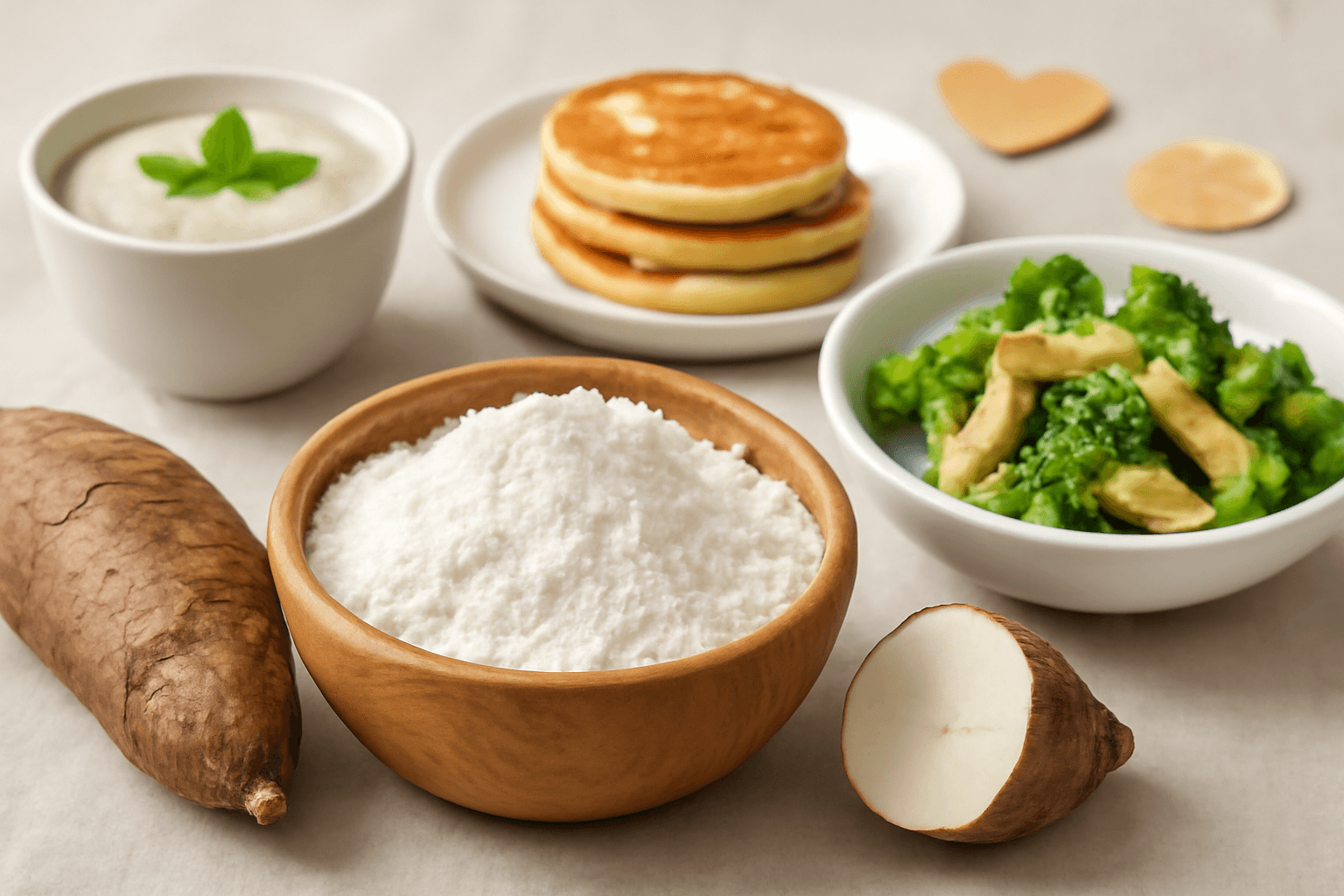
Cassava flour is a gluten-free food derived from cassava roots that have been cultivated for thousands of years in tropical regions, making it an excellent alternative ingredient for modern healthy eating habits. We'll explore the various health benefits of cassava flour in detail, from digestive health to blood sugar management and immune system enhancement, and introduce 3 easy-to-make gluten-free recipes you can prepare at home.
What is Cassava Flour?
Cassava flour is a fine white powder made by drying and grinding the roots of the cassava (Manihot esculenta) plant. It has been used as a basic carbohydrate source for centuries in Africa, South America, and Southeast Asia, and in recent years has gained worldwide attention due to increased interest in gluten-free foods.
The most distinctive feature of cassava flour is that it's a completely gluten-free food. People with celiac disease or gluten intolerance can consume it with confidence, and it serves as an excellent substitute for regular wheat flour. Per 100g, it contains approximately 358 calories, 85g carbohydrates, 1.5g protein, 0.3g fat, and important minerals such as vitamin B6, potassium, and manganese.
Cassava flour retains its nutritional value even during high-heat cooking processes, is easy to store, and has a long shelf life, making it a practical food choice. With its subtle sweetness and neutral flavor, it can be used in a variety of dishes and baking applications.
Differences Between Cassava Root, Tapioca, and Cassava Flour
Cassava products are sold in various forms depending on processing methods, and understanding each form's characteristics allows you to make appropriate choices for your cooking needs.
Cassava root is cassava in its raw state, with a dark brown exterior and white interior. It can be cooked like potatoes and is only available fresh with a short storage period. When boiled or baked, it offers a soft, tender texture.
Tapioca is made by extracting only the starch from cassava roots and is sold in pearl form or as a powder. Containing pure starch only, it has lower nutritional value but is frequently used in beverages and desserts for its unique chewy texture. It has a high glycemic index (GI).
Cassava flour is made by drying and grinding the entire cassava root, providing more nutrients than tapioca. In addition to starch, it contains dietary fiber, vitamins, and minerals, making it nutritionally superior and highly versatile for baking and cooking. It has a slower blood sugar elevation rate compared to tapioca.
Health Benefits of Cassava Flour
Cassava flour goes beyond being a simple carbohydrate source, offering multiple health benefits. It's particularly rich in components that support digestive health and metabolic function.
Improved Digestive Health: The resistant starch found in cassava flour reaches the colon and acts as a prebiotic, serving as food for beneficial bacteria. This maintains healthy gut microbiota composition and improves digestive efficiency. Research shows that resistant starch helps improve colon health and alleviate constipation symptoms.
Blood Sugar Management: The resistant starch in cassava flour is digested more slowly than regular carbohydrates, preventing rapid blood sugar spikes. Individuals with diabetes can minimize blood sugar fluctuations when consuming appropriate amounts.
Heart Health: Cassava contains no cholesterol and includes adequate potassium, which contributes to blood pressure regulation. Particularly when consumed alongside coconut oil, it can have a positive impact on cardiovascular health.
4 Amazing Benefits of Cassava Flour
1. Prebiotic Food for Improved Gut Microbiota
The resistant starch in cassava flour is not digested in the small intestine and reaches the colon, where it promotes selective growth of beneficial bacteria such as Lactobacillus and Bifidobacterium. This is a natural way to improve the gut environment without taking artificial prebiotic supplements. Regular consumption leads to enhanced immunity, reduced inflammation, and improved digestive stability.
2. Perfect Substitute for Gluten-Free Baking
Cassava flour is the perfect substitute for wheat flour for those with gluten intolerance or celiac disease. It can be substituted on a 1:1 basis and creates a light, moist texture when baking. You may need slightly more liquid than usual, requiring minor recipe adjustments, but it's easy to learn.
3. Energy Supply for Aerobic Exercise and Yoga Practitioners
Cassava flour is rich in complex carbohydrates that provide sustained energy, making it suitable for pre- and post-workout nutrition. People who engage in prolonged physical activities such as marathons, yoga, and pilates can consume cassava flour pancakes or energy balls to maintain stable blood sugar and sustained energy levels.
4. Immune Enhancement and Antioxidant Effects
Cassava flour contains essential nutrients for normal immune system function, including vitamin C, vitamin B6, and manganese. Vitamin C is particularly important for white blood cell production and antibody formation, and regular consumption increases resistance to colds and infectious diseases.
Cooking with Cassava Flour
When using cassava flour in cooking, it's helpful to know a few practical tips. Cassava flour tends to absorb more moisture than regular wheat flour, so when using it for the first time, it's a good idea to increase the liquid amount in the recipe by 10-20%.
Baking Applications: You can use cassava flour instead of wheat flour when making cookies, cakes, and bread. Substituting all wheat flour with cassava flour creates a lighter, softer texture. It works well with moisture-rich ingredients like eggs, bananas, and yogurt.
Cooking Applications: It can also be used as a thickening agent in pancakes, pan-fried dishes, and stews. Used together with coconut oil, it adds tropical flavor, and it's also effective for adjusting consistency in curries and soups.
Storage Method: Cassava flour can be stored for over 6 months at room temperature in an airtight container. In high-humidity environments, freezer storage is recommended to prevent mold growth.
3 Gluten-Free Cassava Recipes
Recipe 1: Cassava Pancakes (Serves 2-3, About 15 minutes)
- Cassava flour: 1 cup (120g)
- Eggs: 2
- Milk (or almond milk): 3/4 cup (180ml)
- Baking powder: 1.5 teaspoons
- Coconut oil: 2 tablespoons
- Honey or maple syrup: 2 tablespoons
- Vanilla extract: 1 teaspoon
- Salt: a pinch
Preparation: Mix cassava flour, baking powder, and salt together. In a separate bowl, mix eggs and milk, then add coconut oil, honey, and vanilla extract. Combine the two mixtures to create a smooth batter. Heat a non-stick pan over medium heat, lightly coat with coconut oil, and drop batter by the spoonful, cooking until both sides are golden brown. Serve topped with fresh berries or nuts.
Tip: For a finer texture, let the batter rest for 5 minutes after mixing to create moister pancakes. Perfect as an energy-replenishing food after aerobic exercise.
Recipe 2: Cassava Energy Bars (Makes 10 bars, About 25 minutes)
- Cassava flour: 1.5 cups (180g)
- Coconut oil: 1/2 cup (120ml)
- Almond butter: 1/2 cup (130g)
- Honey: 1/3 cup (80ml)
- Raisins or dark chocolate chips: 3/4 cup (120g)
- Vanilla extract: 1 teaspoon
- Salt: a pinch
Preparation: Preheat oven to 180°C (350°F). Melt coconut oil and almond butter together. Mix honey and vanilla into the melted mixture, then add cassava flour and salt, stirring well. Mix in raisins or chocolate chips. Spread the batter in a greased 8x8-inch baking pan and bake for 20 minutes. Once completely cooled, cut into 10 bar-shaped pieces.
Tip: Consume these energy bars 30 minutes before a yoga or pilates session for stable energy. Keep in an airtight container for up to 3 days, or freeze for up to 2 weeks.
Recipe 3: Cassava Flour Smoothie Bowl (Serves 1, About 10 minutes)
- Cassava flour: 3 tablespoons (30g)
- Coconut milk: 1/2 cup (120ml)
- Greek yogurt: 1/2 cup (120g)
- Banana: 1
- Frozen berries: 1/2 cup (75g)
- Almond butter: 1 tablespoon (16g)
- Honey: 1 tablespoon (15ml)
- Toppings: granola, coconut flakes, nuts
Preparation: Add cassava flour, coconut milk, Greek yogurt, banana, frozen berries, almond butter, and honey to a blender and blend until smooth. Adjust consistency to achieve a thick smoothie. Pour into a bowl and top with granola, coconut flakes, and nuts. Eat with a spoon.
Tip: Consuming this smoothie bowl after a morning yoga session provides both protein for muscle recovery (from Greek yogurt) and sustained energy (from cassava flour). It's also rich in prebiotics, so you can simultaneously support gut health.
Medical Precautions
Cassava flour is generally a safe food, though there are a few considerations. While raw cassava roots contain cyanogenic compounds, commercially sold cassava flour is safe as these compounds are removed during processing.
Diabetic patients should regulate their cassava flour intake and monitor their blood sugar response. Due to its high carbohydrate content, cassava flour can raise blood sugar, so it's advisable to include protein and healthy fats in your meals to slow the rate of blood sugar elevation.
Cassava allergies are very rare, but when trying new foods for the first time, it's recommended to start with small amounts and check for adverse reactions. If you experience digestive issues, abdominal bloating, or allergic reactions, discontinue use and consult with a healthcare professional.
If you have any special health conditions or are taking medications, it's wise to consult with a doctor or nutritionist before regularly incorporating cassava flour into your diet.
Summary
Cassava flour is a completely gluten-free food that offers various health benefits including digestive health, blood sugar management, heart health, and immune enhancement. It's particularly rich in resistant starch, which acts as a prebiotic and improves gut microbiota.
Key Points:
- Cassava flour is a more nutritious gluten-free ingredient than tapioca
- Its resistant starch content supports digestive health and blood sugar stability
- It's suitable as an energy-replenishing food for aerobic exercise and yoga practitioners
- Using it with coconut oil is even more beneficial for heart health
- The 3 provided recipes (pancakes, energy bars, smoothie bowls) can be easily incorporated into daily life
- Diabetic patients need to regulate intake and consult with healthcare professionals
By including cassava flour in your diet, you can enjoy a gluten-free lifestyle while simultaneously reaping the benefits of improved digestive health, better energy management, and enhanced immunity.