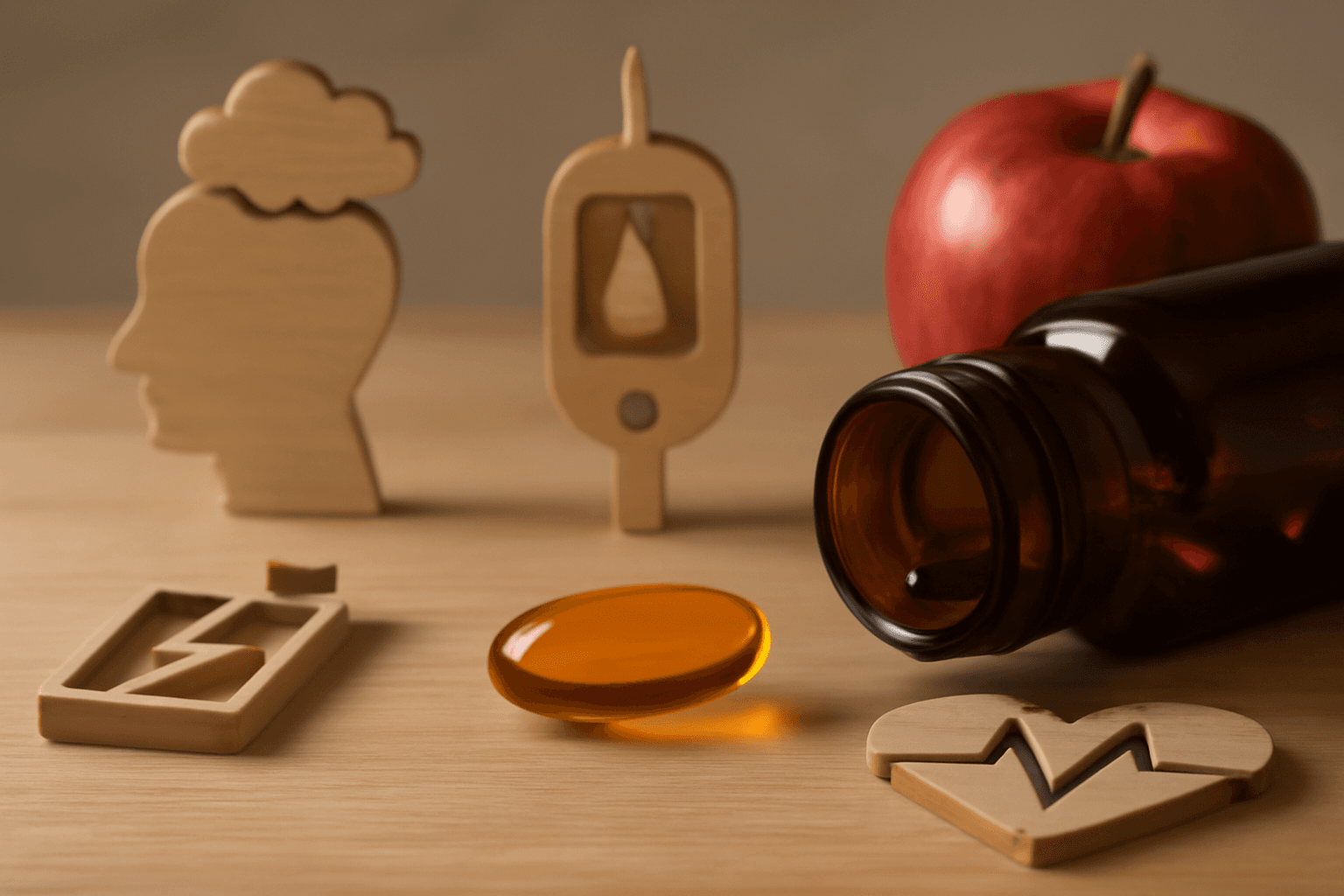
The heart is one of the most vital organs in our body. Beating approximately 100,000 times daily while supplying blood throughout the entire body, maintaining this organ's health requires an adequate supply of specific nutrients. Coenzyme Q10 (CoQ10) is a key nutrient that directly participates in cellular energy production and protects heart health through powerful antioxidant effects. In particular, as we age, CoQ10 levels in the body decrease, making intentional supplementation necessary. This post will explain in detail how CoQ10 works for heart health, where to obtain it, and which form is most effective for consumption.
The Role of CoQ10 in Heart Health
CoQ10 is showing remarkable results in the prevention and management of heart disease. The heart muscle, being the organ with the highest energy demands in the human body, is extremely rich in mitochondria. CoQ10 promotes ATP (adenosine triphosphate) production in these mitochondria, optimizing the heart's pumping function.
Multiple clinical studies on heart health have demonstrated positive results from CoQ10 supplementation. Notably, patients taking statins (cholesterol-lowering medications) tend to have lower CoQ10 levels, which can lead to diminished heart function. Research is increasingly reporting that CoQ10 supplementation can improve cardiac output and alleviate symptoms of heart failure.
Additionally, CoQ10 improves endothelial function in blood vessels, promoting blood flow and helping to regulate blood pressure. In studies of hypertensive patients, daily CoQ10 intake of 100-200mg resulted in systolic blood pressure reductions of approximately 5-10mmHg. While this is not equivalent to antihypertensive medications alone, it represents meaningful improvement as a complementary therapy.
What is CoQ10?
Coenzyme Q10 (CoQ10, ubiquinone) is a fat-soluble vitamin-like substance that exists in all cells of the human body. It is particularly concentrated in organs with high energy demands, such as the heart, brain, liver, and kidneys. This molecule with the chemical formula C59H90O4 plays an essential role in ATP production within the electron transport chain of mitochondria.
Although CoQ10 is produced within the body from the amino acid tyrosine, this endogenous synthesis capacity decreases dramatically with age. As we move from our twenties to our forties, CoQ10 concentrations in the body decline by approximately 25%, and in those over 60, the decline exceeds 50%. Additionally, certain medications, particularly statin-class cholesterol-lowering drugs, directly inhibit CoQ10 synthesis.
CoQ10 exists in two forms: the oxidized form (ubiquinone) and the reduced form (ubiquinol). The reduced form, ubiquinol, has superior bioavailability in the body and is absorbed more efficiently. For this reason, ubiquinol-form CoQ10 is becoming increasingly popular in the health supplement market.
What Are the Health Benefits of CoQ10?
Enhanced Energy Production: CoQ10 is a key coenzyme in ATP production at the mitochondria, the energy factory of cells. Maintaining adequate CoQ10 levels can improve chronic fatigue and restore daily vitality. Particularly for those who regularly practice yoga or aerobic exercise, sufficient energy supply leads to improved athletic performance and enhanced recovery.
Powerful Antioxidant Action: As a fat-soluble antioxidant, CoQ10 protects cells from reactive oxygen species (ROS). Heart muscle and vascular endothelial cells are especially vulnerable to oxidative stress, making CoQ10's antioxidant effects crucial. It also helps mitigate increased oxidative stress caused by stress.
Reduced Inflammation: Research shows that CoQ10 suppresses chronic inflammation, which is foundational to atherosclerosis development. By reducing blood CRP (C-reactive protein) levels, cardiovascular disease risk can be lowered.
Improved Vascular Health: CoQ10 enhances endothelial cell function, promoting vasodilation and reducing vascular resistance. This ultimately leads to improved blood pressure control and blood flow.
Cholesterol Management: While CoQ10 does not directly lower LDL cholesterol levels, it prevents LDL oxidation, reducing its harmful effects on blood vessels. Since oxidized LDL is a major cause of atherosclerosis, CoQ10 effectively prevents this.
Why Is CoQ10 Important for Heart Health?
The heart is the organ with the highest energy consumption in the body. With approximately 1,000-10,000 mitochondria per ventricular myocyte, it is optimized for energy production. As the heart beats over 100,000 times daily, it must receive a stable energy supply, and CoQ10 deficiency directly leads to diminished heart pumping function.
Numerous clinical trials in heart failure patients have shown that CoQ10 supplementation improves LVEF (left ventricular ejection fraction) by an average of 3.7%, alleviates symptoms, and reduces hospitalization risk. Particularly significant improvements were observed in patients with IDC (idiopathic dilated cardiomyopathy).
Special attention is needed for patients taking statins. Statins are HMG-CoA reductase inhibitors that block not only cholesterol synthesis but also CoQ10 synthesis. As a result, statin users can experience muscle pain, fatigue, and even cardiomyopathy. For these patients, CoQ10 supplementation is not an option but an essential consideration.
Furthermore, CoQ10 plays an important role in blood pressure regulation. High blood pressure is a major risk factor for heart disease, and CoQ10's blood vessel relaxation-promoting effect contributes to blood pressure reduction. It may be particularly helpful for modern individuals under high stress in mitigating stress-induced blood pressure elevation.
Dietary Sources of CoQ10
It is difficult to obtain sufficient CoQ10 through diet alone. To obtain the recommended daily CoQ10 intake (approximately 100-200mg) solely from food, you would need to consume large quantities of specific foods.
Meat and Fish: Beef liver is the most abundant animal source of CoQ10, containing approximately 40mg per 100g. Fatty fish such as sardines, mackerel, and salmon are excellent sources. Beef and pork contain CoQ10 but at significantly lower levels than liver.
Fermented Foods: Among traditional fermented foods, tempeh (fermented soy product) contains approximately 20-30mg of CoQ10 per 100g. Japanese natto (fermented soybeans) is also a good source of CoQ10 produced during the fermentation process. Microorganisms produce CoQ10 during fermentation.
Nuts and Seeds: Sesame seeds, sunflower seeds, and pistachios contain CoQ10 but at relatively low levels. However, they have the advantage of being consumed alongside other healthy nutrients.
Vegetables: Green vegetables such as broccoli and spinach, as well as orange vegetables like carrots, contain small amounts of CoQ10. However, the content is very low compared to animal products, making supplement supplementation more practical.
Grains and Oils: Whole grains and oils such as olive oil and sesame oil contain CoQ10, but the content is modest relative to intake.
Nutritionist's Advice: To obtain sufficient CoQ10, consider taking dietary supplements. This is especially true if you are taking statins or are over 40 years old. However, making every effort to obtain CoQ10 naturally through diet should be your foundation.
What Is the Best Form of CoQ10?
Ubiquinone vs. Ubiquinol: CoQ10 supplements come in two main forms. Ubiquinone (the oxidized form) has a long history and is inexpensive, but has lower bioavailability. Ubiquinol (the reduced form), on the other hand, is in a form directly usable by the body, with bioavailability up to 8 times higher than ubiquinone. For older individuals or those with certain conditions, choosing the ubiquinol form is more efficient.
Nanoparticle and Water-Soluble Forms: Recently, nanoparticle technology and water-soluble form products have been released to increase CoQ10 absorption rates. Standard CoQ10 is fat-soluble, so absorption decreases when taken on an empty stomach. These improved form products greatly enhance absorption rates when consumed with meals.
Daily Recommended Intake: For general health maintenance, 100-200mg daily is recommended; for heart disease prevention, 200-300mg; and for managing already-diagnosed heart failure, 300-600mg. However, the appropriate dose varies depending on individual health status, medications, and age, so consulting with a healthcare professional is important.
Methods to Promote Absorption: To maximize CoQ10 absorption, it must be consumed with meals containing fat. Ideally, take it with healthy fats such as olive oil, nuts, or fish. Additionally, divided dosing (100mg two to three times daily) shows better absorption rates than taking a large amount all at once.
Considerations for Product Selection: Choose products from reputable manufacturers and prioritize those that have undergone third-party verification (USP, NSF, ConsumerLab, etc.). It is safer to make selections based on healthcare professional recommendations rather than personalized health information.
Summary: Protecting Heart Health with CoQ10
CoQ10 is not merely a nutrient but an essential component for heart health. It protects the heart through various mechanisms, from cellular energy production to antioxidant action, improved vascular function, and reduced inflammation.
Key Points Summary:
- As we age, CoQ10 concentrations in the body decline rapidly, making intentional supplementation necessary.
- Patients taking statins should particularly consider CoQ10 supplementation.
- Ubiquinol-form CoQ10 has higher bioavailability.
- Meeting recommended intake through food alone is difficult, so consider dietary supplements.
- Absorption rates are greatly enhanced when consumed with meals containing fat.
- Combining regular exercise such as yoga and aerobic activity with CoQ10 supplementation can produce synergistic effects.
- Reducing oxidative stress through stress management and antioxidant nutrient intake is important.
- Including fermented foods in your diet allows you to obtain natural CoQ10.
Heart health is best protected through prevention. We encourage you to comprehensively protect your heart health through CoQ10 supplementation combined with stress management, regular aerobic exercise, and antioxidant-rich food consumption. Particularly if you have a personal or family history of heart disease, we strongly recommend consulting with a healthcare professional to establish a personalized CoQ10 supplementation plan.
Recommendation to Consult Healthcare Professionals: This information is provided as general health information, and appropriate measures may differ depending on individual health status. Particularly if you have been diagnosed with heart disease or are taking medications, be sure to consult with your doctor before beginning CoQ10 supplementation.