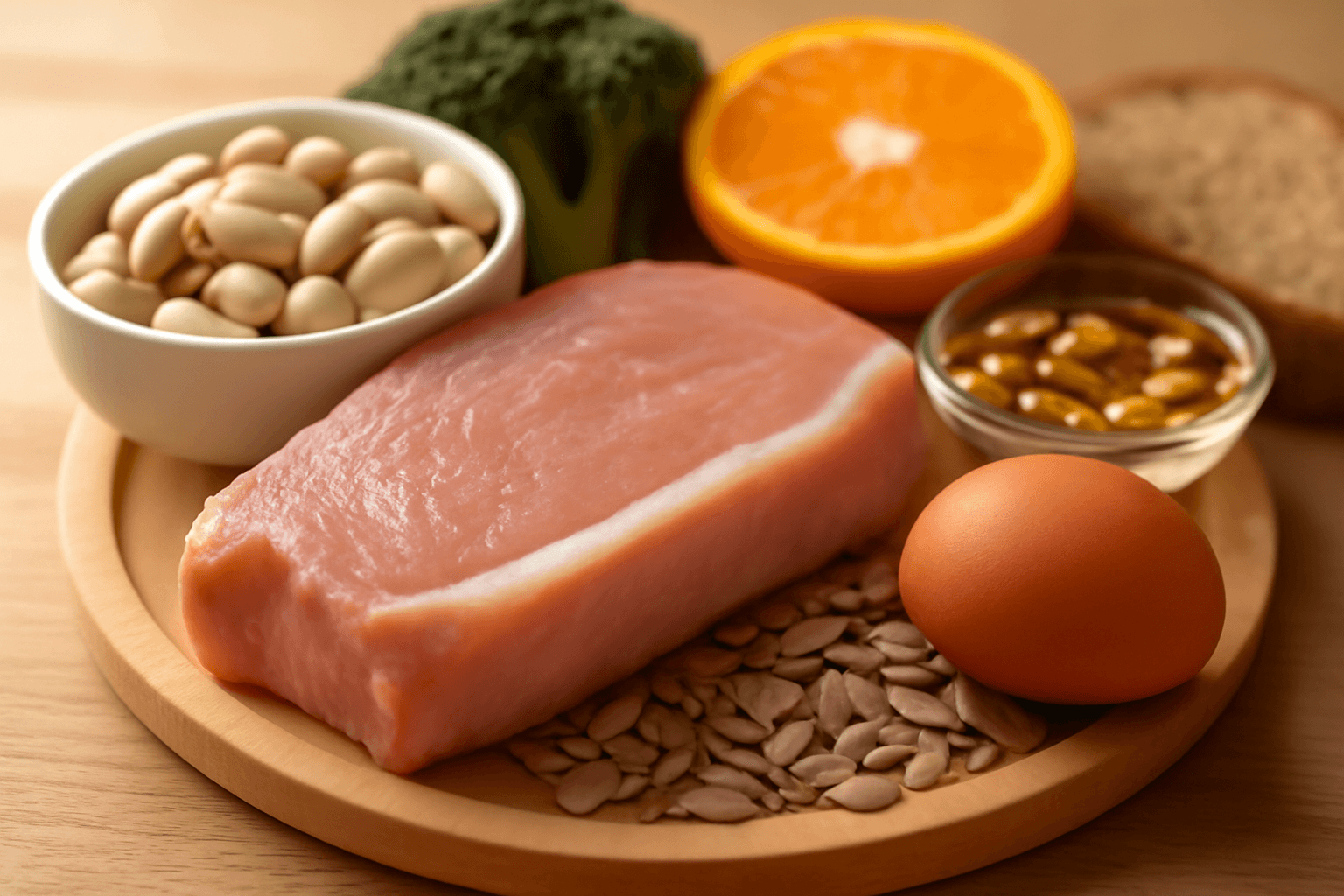
B-complex vitamins are essential nutrients for energy production in the body, playing a critical role in protein metabolism, nervous system function, and maintaining healthy hair and skin. The eight B vitamins each perform unique functions, serving as important coenzymes in the process of converting food into energy. B-vitamin intake is especially important for those who engage in aerobic exercise or have active metabolisms. This article will examine specific foods rich in each type of B vitamin and their health benefits in detail.
Thiamine (Vitamin B1)
Thiamine is the most important vitamin in carbohydrate metabolism and is essential for nervous system function and muscle contraction. Adult males need 1.2mg daily, while females need 1.1mg. Thiamine deficiency can cause symptoms such as fatigue, muscle weakness, and neuralgia, and in severe cases can progress to Wernicke-Korsakoff syndrome.
Foods rich in thiamine include:
- Pork: Contains approximately 0.8mg per 100g, the most abundant source among B vitamins
- Sunflower seeds: 1.5mg per 100g, the highest content among plant-based foods
- Brown rice: Contains more than 8 times the thiamine of white rice
- Nuts (almonds, cashews): Easy to consume as snacks
- Legumes (lentils, black beans): Contains 0.4-0.6mg per 100g
- Oysters: 0.05-0.1mg per 100g, among the top seafood sources
Thiamine is unstable to heat and water, so significant loss occurs during cooking. When soaking brown rice in water or making pork in broth-based dishes, nutrients can dissolve into the liquid, so consuming the broth as well is efficient. People with high alcohol consumption are at higher risk of thiamine deficiency due to reduced absorption, so conscious intake is necessary.
Riboflavin (Vitamin B2)
Riboflavin is a coenzyme of oxidoreductase involved in cellular respiration and energy production. Adult males are recommended 1.3mg daily, while females need 1.0mg. Riboflavin plays an important role in eye health, antioxidant function, and protein and fat metabolism. Deficiency can cause chapped lips, mouth ulcers, and eye fatigue.
Major food sources of riboflavin are concentrated in animal-based foods:
- Eggs: 0.4mg per 100g (approximately 2 eggs), the most accessible source
- Milk and dairy products: 0.15-0.2mg per 100ml of yogurt, cheese contains even more
- Liver: 3.6mg per 100g of beef liver, the highest content food
- Mackerel, salmon: 0.3-0.4mg per 100g
- Mushrooms (dried shiitake): 1.3mg per 100g, the highest among plant-based sources
- Spinach, broccoli: 0.2mg per 100g of cooked spinach
Riboflavin is highly sensitive to light, so milk stored in clear containers rapidly loses nutritional value when exposed to sunlight. It is important to store milk in opaque containers. Additionally, riboflavin is concentrated in egg yolks, so when consuming eggs, the yolk should not be discarded to achieve maximum benefits.
Niacin (Vitamin B3, Niacinamide)
Niacin is a vitamin essential for DNA repair, energy production, and nervous system function, and also exists in niacinamide form. Adult males need 16mg daily, while females need 14mg. Niacin is effective in improving cholesterol levels, increasing HDL cholesterol and lowering LDL cholesterol, which benefits cardiovascular health. It also contributes to skin health and improved blood circulation.
Foods with high niacin content include:
- Chicken breast: 7.3mg per 100g, a protein-rich source
- Tuna: 5.1mg per 100g, also provides omega-3
- Peanuts and peanut butter: Approximately 13mg per 100g, the highest content
- Mushrooms (shiitake, oyster): 3-4mg per 100g
- Turkey meat: 5.1mg per 100g, higher than chicken
- Brown rice, whole grains: Contains more than 3 times that of white rice
- Avocado: 1.7mg per 100g, the highest among fruits
Niacin can also be synthesized in the body from tryptophan amino acids. Therefore, partial supplementation is possible by consuming high-protein foods alone. For managing high cholesterol, consuming niacin-rich foods in combination with aerobic exercise is more effective. However, high-dose niacin intake can cause skin flushing and itching side effects, so consultation with a healthcare provider is recommended.
Pantothenic Acid (Vitamin B5)
Pantothenic acid is a component of coenzyme A and is essential for energy production in all cells. The recommended daily intake for adults is 5mg, and it is widely contained in most foods, making deficiency rare. Pantothenic acid is important for maintaining hair health, supporting adrenal function, and producing stress hormones, and promotes skin regeneration and wound healing.
Major food sources of pantothenic acid are varied:
- Egg yolks: 5.3mg per 100g, the most concentrated source
- Mushrooms (dried shiitake): 9.2mg per 100g
- Avocado: 1.4mg per 100g, the highest among fruits
- Chicken: Approximately 1mg per 100g
- Sweet potato: Approximately 0.8mg per 100g when cooked
- Broccoli: 1.2mg per 100g when boiled
- Cheese and yogurt: 0.3-0.5mg per 100g each
Pantothenic acid is a water-soluble vitamin, so excess intake generally causes no side effects. However, people under extreme stress or engaged in high-intensity exercise experience increased pantothenic acid consumption, so conscious intake is helpful. Consuming eggs and mushrooms together is particularly effective for efficient pantothenic acid supply.
Vitamin B6 (Pyridoxine)
Vitamin B6 is essential for amino acid metabolism, neurotransmitter synthesis, and hemoglobin formation. Adult males need 1.3-1.7mg daily, while females need 1.2-1.5mg. Vitamin B6 plays an important role in enhancing immune function, regulating homocysteine levels, and brain development and function. The more protein someone consumes, the greater their vitamin B6 requirement.
Foods with high vitamin B6 content include:
- Chicken: Approximately 0.9mg per 100g, the highest among meats
- Salmon, mackerel: 0.8-1.0mg per 100g
- Chickpeas: 0.6mg per 100g when cooked
- Potatoes: 0.3mg per 100g when cooked with skin
- Bananas: 0.4mg per medium banana (approximately 118g)
- Pistachios: 1.1mg per 100g, the highest among nuts
- Eggplant: 0.1mg per 100g when cooked, but consumed with other foods
Vitamin B6 is relatively stable to heat, but loss occurs with prolonged cooking. Cooking raw chicken for the minimum time or consuming raw foods like bananas and pistachios together is efficient. Menopausal women and pregnant women have increased vitamin B6 requirements and should pay special attention to intake. High-dose supplements can cause nerve damage side effects, so natural intake through food is recommended.
Biotin (Vitamin B7)
Biotin is a coenzyme essential for protein, carbohydrate, and fat metabolism, and plays a particularly important role in hair, skin, and nail health. The recommended daily intake for adults is 30 micrograms (mcg). While biotin deficiency is rare, when it occurs, it can cause hair loss, dermatitis, nail weakness, and nervous system abnormalities. Recent research has reported that biotin has positive effects on blood sugar control and cholesterol management.
Foods rich in biotin include:
- Egg yolks: Approximately 65mcg per 100g, the highest content
- Liver: Approximately 27mcg per 100g of beef liver
- Almonds: Approximately 14.1mcg per 100g
- Mushrooms (dried shiitake): Approximately 16.2mcg per 100g
- Salmon: Approximately 5.4mcg per 100g
- Eggs: Approximately 65mcg per 100g whole egg
- Sweet potato: Approximately 1.2mcg per 100g
Biotin is very abundant in eggs, but avidin protein found in raw egg whites binds to biotin and prevents absorption. Therefore, eggs must be cooked to effectively absorb biotin. For hair health and hair loss prevention, comprehensive nutritional management including biotin intake along with protein, iron, and zinc is necessary. For hair loss requiring medical treatment, consultation with a healthcare provider is recommended.
Summary
B-complex vitamins are essential nutrients for body energy production, with each type having unique functions and food sources. Most B vitamins can be obtained from animal-based foods (eggs, meat, liver, dairy products), while plant-based foods such as whole grains, nuts, mushrooms, and legumes provide plant sources.
Key intake strategies:
- Consume diverse foods to obtain all types of B vitamins in balance
- Minimize loss from heat and water during cooking (especially thiamine)
- Choose brown rice and whole grains instead of white rice for natural intake
- Increase intake when metabolism is active through aerobic exercise
- Eggs, liver, and chicken are efficient sources of B vitamins
- For hair health, balance biotin with protein and iron management
- Prefer natural intake through food over high-dose supplements
If B-vitamin deficiency symptoms persist, or if you have specific conditions (diabetes, autoimmune disease, digestive disorders), or are considering high-dose supplements, consultation with a healthcare professional is recommended. The amount of B vitamins needed can vary depending on individual health status, dietary restrictions, and medication use. Naturally consuming B vitamins through a balanced diet is the best way to maintain healthy energy metabolism and overall well-being.