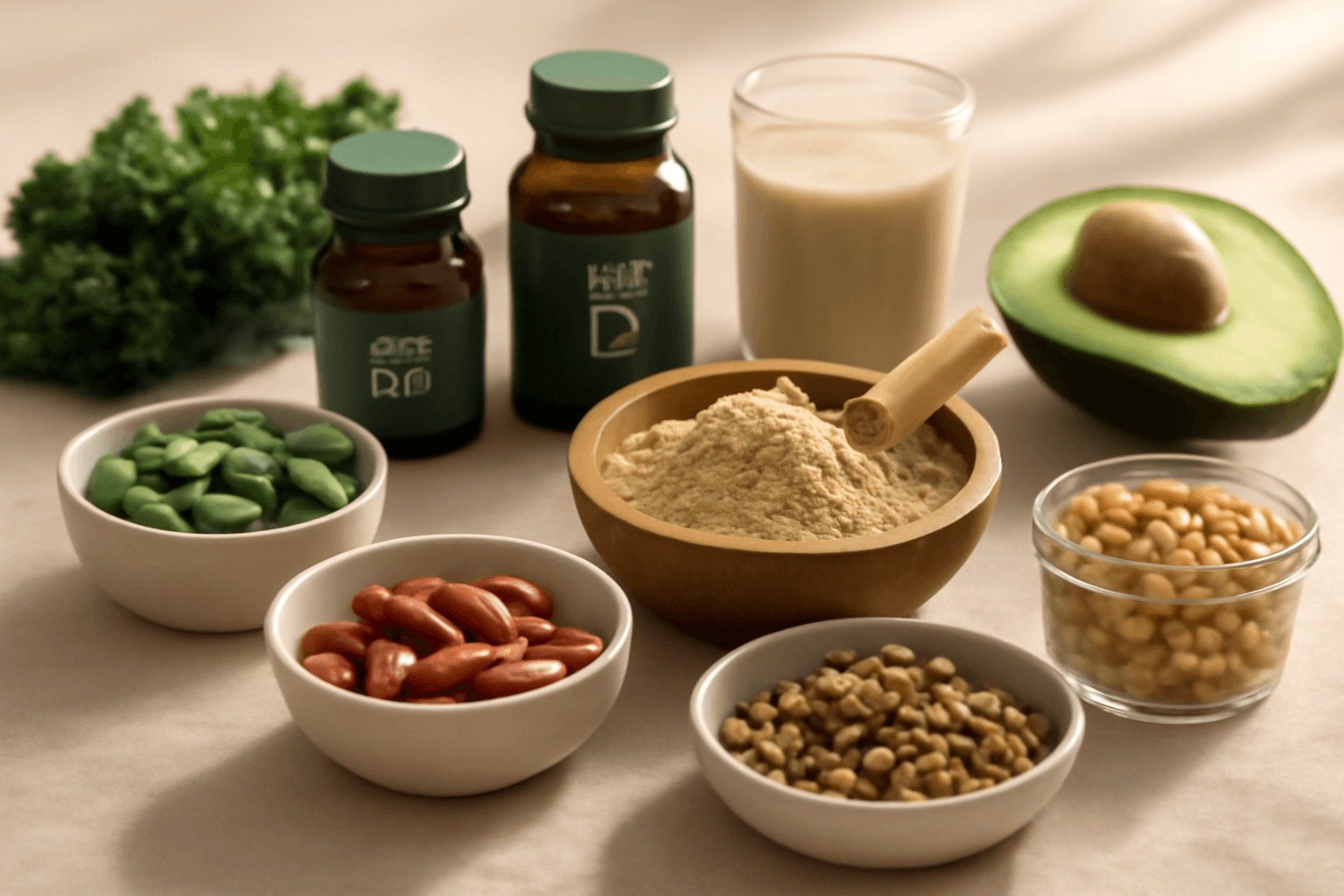
Vitamin D is an essential nutrient that strengthens our immune system and maintains bone health. Many people expose themselves to sunlight to get enough vitamin D, but due to the risks of UV damage and skin cancer, a safe intake method is necessary. This article will introduce various ways to effectively obtain vitamin D without sunburn.
Vitamin D and Immunity
Vitamin D is not simply a bone health nutrient but rather a key regulator of the immune system. T cells and B cells, the immune cells in our body, cannot function properly without calcitriol, the active form of vitamin D. Vitamin D receptors are widely distributed on the surface of immune cells, through which vitamin D regulates immune responses.
Specifically, vitamin D performs the following immune functions:
- Antimicrobial peptide production: Vitamin D promotes the generation of antimicrobial substances like cathelicidin and beta-defensin, strengthening the first line of defense against bacterial infections
- Inflammation regulation: It suppresses excessive inflammatory responses and reduces the risk of autoimmune diseases
- Regulatory T cell activation: It prevents immune overreaction and maintains immune homeostasis
According to research, people with vitamin D deficiency have a 40% higher probability of contracting respiratory infections, and in particular, populations with low vitamin D levels in winter show a tendency for increased flu incidence.
Vitamin D Receives More Attention During the COVID-19 Period
Following the pandemic, the medical community has rapidly highlighted the importance of vitamin D. Multiple epidemiological surveys have confirmed that patients with vitamin D deficiency have a higher risk of severe COVID-19 progression. In particular, when measuring vitamin D levels in patients admitted to intensive care units (ICU), the majority were found to be in a deficient state below normal range.
These observations can be explained by the following mechanisms:
- Angiotensin-converting enzyme 2 (ACE2) expression regulation: Vitamin D affects gene expression that regulates viral entry pathways
- Cytokine storm suppression: It controls excessive inflammatory responses and prevents severity
- Lung function protection: It plays an important role in maintaining the integrity of lung epithelial cells
The U.S. NIH (National Institutes of Health) cited research showing that the COVID-19 mortality rate in groups with vitamin D levels of 30 ng/mL or higher was 50% or more lower than those below that level, emphasizing the importance of maintaining adequate vitamin D.
How Much Vitamin D Should You Take?
Appropriate vitamin D intake standards vary depending on age and health status. According to the American Institute of Medicine (IOM) guidelines:
- Infants (0-12 months): 400 IU (10 μg) recommended
- Children (1-18 years): 600 IU (15 μg) recommended
- Adults (19-70 years): 600 IU (15 μg) recommended
- Older adults (71 years and older): 800 IU (20 μg) recommended
- Pregnant and nursing women: 600 IU (15 μg) recommended
In terms of serum vitamin D levels, 30 ng/mL or higher is considered sufficient. 20-29 ng/mL is considered insufficient, and below 20 ng/mL is considered deficient. However, in cases of specific conditions or when immune system enhancement is needed, it is important to determine individualized doses through consultation with healthcare professionals.
Excessive intake can cause adverse effects, so daily intakes of 4,000 IU (100 μg) or more should be done under the supervision of healthcare professionals.
The Process of Vitamin D Generation Through Sunlight
Our body converts 7-dehydrocholesterol into vitamin D3 when the skin is exposed to ultraviolet B (UVB) rays. This process is very efficient but is influenced by multiple variables including duration and intensity of UV exposure, skin tone, season, and geographic location.
Sunlight exposure conditions for effective vitamin D synthesis:
- Exposure duration: For those with lighter skin tones, 10-30 minutes of midday sun exposure 3 times per week is sufficient for adequate vitamin D production
- Exposed areas: The larger the skin area exposed, such as arms, legs, back, and face, the greater the vitamin D synthesis
- UV index: Effective vitamin D synthesis occurs when the UVI (UV index) is 3 or higher, with spring through fall being the most efficient
- Impact of skin tone: The darker the skin tone, the more sunlight exposure time is needed (people with dark skin may need 3-6 times longer)
Caution when using sunscreen: Using sunscreen with SPF 15 or higher blocks 99% of vitamin D synthesis. Therefore, brief sunlight exposure without sunscreen is essential for vitamin D synthesis. The recommended approach is brief exposure of 5-15 minutes between 10 a.m. and 3 p.m., followed by sunscreen application.
Getting Vitamin D From Food
The most natural way to obtain vitamin D while minimizing UV exposure is to consume foods rich in vitamin D. However, since food alone makes it difficult to meet daily recommended amounts, a multi-layered approach is necessary.
Foods with high vitamin D content (per serving):
- Fatty fish: Salmon (570-645 IU per 100g), mackerel (345 IU per 100g), sardines canned (232 IU per 100g)
- Eggs: Approximately 37 IU per egg yolk (organic pasture-raised eggs contain more)
- Mushrooms: Sun-exposed portobello mushrooms (446 IU per 100g), regular mushrooms also increase vitamin D content with sun exposure
- Fortified foods: Fortified milk (100-200 IU per 200mL), fortified yogurt, fortified soy milk (80-100 IU per 200mL)
- Salted fish: Herring (680 IU per 100g), canned salmon with bones (570 IU per 100g)
To promote vitamin D absorption, it is important to consume it with fat. Since vitamin D is a fat-soluble nutrient, consuming it with olive oil, avocado, and nuts enhances bioavailability. Additionally, consuming it with calcium can provide a synergistic effect on bone health.
Taking Vitamin D Through Supplements
Supplements are the most reliable method when you cannot obtain sufficient vitamin D through sun exposure and food intake. Vitamin D supplements are provided in two main forms: vitamin D2 (ergocalciferol) and vitamin D3 (cholecalciferol).
- Vitamin D3 is more effective: At the same dosage, vitamin D3 increases serum vitamin D levels more effectively than vitamin D2
- Dosage selection: For healthy adults without deficiency, 1,000-2,000 IU daily intake is appropriate, and for those with deficiency, 4,000-10,000 IU can be used under medical supervision
- Optimize absorption: Absorption improves when taken with foods high in fat
- Supplement forms: Available in various forms such as capsules, tablets, liquids, and powders, with liquid forms absorbing faster
Precautions when choosing supplements:
- Verify quality: Choose products that have undergone third-party verification (NSF, USP, ConsumerLab, etc.)
- Check for allergens: Confirm the product contains no allergenic ingredients such as gluten, dairy, or eggs
- Review interactions: Check for possible interactions with medications you are taking (especially calcium channel blockers and corticosteroids)
- Regular monitoring: When taking high-dose supplements, measure serum vitamin D levels every 3-4 months to ensure they remain in an appropriate range
For those with specific conditions (kidney disease, hypercalcemia, tuberculosis, sarcoidosis, etc.), you must consult with a healthcare professional before deciding to use supplements.
Summary
Vitamin D is an essential nutrient for immune enhancement and bone health maintenance and plays an important role especially in preventing infectious diseases. A comprehensive strategy for safely obtaining vitamin D without sunburn is as follows:
- Appropriate sun exposure: 10-30 minutes of midday sun exposure 3 times per week (adjusted according to skin tone), followed by sunscreen use
- Enhance food intake: Regularly consume fatty fish, eggs, fortified dairy products, and more
- Utilize supplements: If necessary, take vitamin D3 supplements at 1,000-2,000 IU daily (healthcare professional consultation recommended)
- Manage serum levels: Have vitamin D serum testing once per year to maintain adequate levels of 30 ng/mL or higher
- Take calcium alongside: Maximize bone health effects by consuming vitamin D and calcium together
Consultation with a healthcare professional is essential, especially when you have existing conditions or require high-dose supplementation. We encourage you to establish a personalized vitamin D intake strategy considering your individual health status, living environment, and eating habits to enhance immunity and promote overall health.