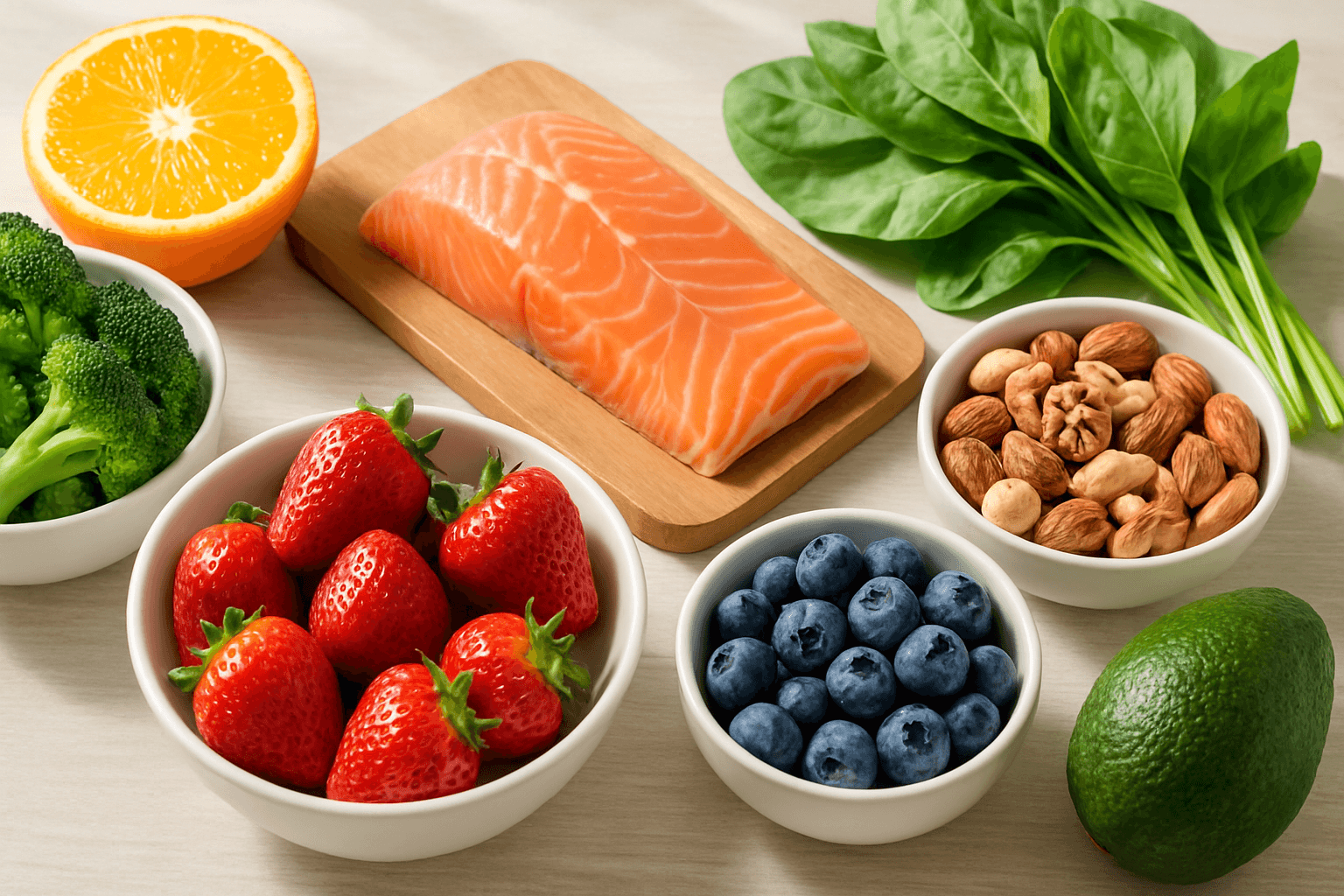
The Importance of Seasonal Diets for Strengthening Immunity
Immunity is the most important defense system that protects our bodies from diseases. Especially when the seasons change, various ailments such as colds, flu, and allergies increase, making proper dietary management according to the season essential for prevention.
According to the World Health Organization (WHO), over 60% of diseases worldwide are related to dietary factors, and particularly, 70% of infectious diseases caused by weakened immune function are primarily due to nutritional deficiencies. A study by the Korean Society of Nutrition found that individuals who consistently consume seasonal foods have immunity levels about 35% higher than those who do not.
This article will introduce eight superfoods that can effectively boost immunity by season, along with their scientific basis and practical consumption methods.
Spring Immunity Boost: Strawberries and Spring Greens
Strawberries - A Treasure Trove of Antioxidants
Strawberries, a representative fruit of spring, are extremely high in vitamin C. They contain about 60mg of vitamin C per 100g, which corresponds to 60% of the daily recommended intake (100mg). Notably, strawberries are rich in polyphenolic compounds like anthocyanins and ellagic acid, which prevent damage to immune cells through their powerful antioxidant effects.
A study by the Rural Development Administration (2021) found that the incidence of colds in groups consuming strawberries three times a week or more was 28% lower than in those who did not. It is best to consume strawberries raw, although frozen strawberries have nearly the same nutritional value.
Recommended Intake: 150–200g per day (about 10–15 strawberries)
Storage Method: Can be stored in the refrigerator for 3–4 days or frozen for 3 months
Price Range: About 3,000–5,000 won per pack during the spring season
Spring Greens - Capturing the Vitality of Spring
Spring wild greens like shepherd's purse, bracken, and wild garlic promote metabolism, which has slowed during winter, and quickly restore immunity. These vegetables are rich in folate, iron, and calcium, which stimulate the production of lymphocytes and white blood cells.
In particular, 100g of shepherd's purse contains about 90mg of vitamin C and approximately 160μg of folate, both essential for DNA synthesis and the proliferation of immune cells. According to a study by the Korean Society of Food and Nutrition, groups that consistently consumed wild greens in spring saw an average increase of 32% in blood vitamin C levels.
Recommended Preparation Method: Blanch briefly in boiling water, then season with sesame oil and salt
Frequency of Consumption: 2–3 times a week
Market Price: A mix of wild greens costs about 15,000–25,000 won per kg
Summer Immunity Boost: Garlic and Ginger
Garlic - A Natural Antibiotic
Garlic has long been known as a food that enhances immunity, referred to as "the medicine of Shennong" in traditional texts. Its efficacy has been scientifically proven, with its main active component, allicin, exhibiting strong antibacterial properties against bacteria and viruses.
A 2022 study from Seoul National University found that groups consuming garlic regularly had a 19% lower incidence of infectious diseases, particularly effective in preventing foodborne illnesses during summer. Allicin contained in one clove of garlic (about 3g) has been shown to possess antibiotic-level antibacterial power against E. coli and Salmonella.
The immune-boosting effects of garlic remain about 80% effective even when cooked, allowing for various cooking methods. However, for maximum effect, it is recommended to consume it about 15 minutes after cutting, as this increases allicin production.
Daily Recommended Amount: 2–3 cloves of garlic (about 6–9g)
Effective Consumption Methods: Raw garlic, roasted garlic, garlic pickles
Market Price: Domestic garlic costs about 8,000–12,000 won per kg
Ginger - The Key to Inflammation Suppression
The compounds that give ginger its spiciness, gingerol and shogaol, have powerful anti-inflammatory effects. They effectively alleviate systemic inflammation and digestive inflammation caused by the summer heat.
A 2021 study by a research team at Korea University found that the inflammation markers (IL-6, TNF-α) in the group administered ginger extract decreased by 38% and 42%, respectively, compared to the control group. Additionally, ginger promotes digestive function, increasing microbial diversity in the gut, which directly enhances gut immunity.
Daily Intake: Fresh ginger 10–20g or 1–2 cups of ginger tea
Storage Period: 2 weeks at room temperature, 1 month in the refrigerator
Purchase Price: Fresh ginger costs about 5,000–8,000 won per kg
Fall Immunity Boost: Mushrooms and Spinach
Mushrooms - Masters of Immune Regulation
Mushrooms such as shiitake, oyster, and matsutake are rich in a polysaccharide called beta-glucan. This component directly stimulates the activation of natural killer (NK) cells and macrophages.
A meta-analysis by Kyung Hee University College of Korean Medicine (2023) indicated that mushroom consumption increased NK cell activity by an average of 43%. This means that the body's ability to eliminate cancer cells and infected cells nearly doubles.
100g of shiitake mushrooms contains about 4,000 IU of vitamin D, and sun-exposed dried shiitake mushrooms can have over ten times that amount. This effectively compensates for the vitamin D deficiency that occurs as sunlight decreases in autumn.
Recommended Intake: 3–4 times a week, 100–150g per serving
Cooking Method: Lightly blanch or grill before consumption
Market Price: Fresh mushrooms cost about 4,000–8,000 won per 100g, dried mushrooms about 15,000–30,000 won per 100g
Spinach - A Source of Iron and Folate
Fall spinach has about 25% more iron than spring spinach. Iron is essential for increasing oxygen transport capacity through hemoglobin formation and for the differentiation and proliferation of immune cells.
Additionally, carotenoids such as lutein and zeaxanthin, which are abundant in spinach, act as powerful antioxidants. According to a study by the Korean Society of Nutrition, these components have been reported to promote lymphocyte proliferation by about 28%.
Daily Recommended Amount: Cooked spinach 70–100g (150–200g raw)
Maximizing Nutritional Cooking Method: Lightly stir-fry with sesame oil
Market Price: A bunch of spinach costs about 2,000–4,000 won
Winter Immunity Boost: Bell Peppers and Broccoli
Bell Peppers - A Source of Vitamin C in Winter
Domestic bell peppers in winter are higher in vitamin C the redder they are, containing about 80mg of vitamin C per 100g. This is 20% higher than oranges. They provide an easy way to supplement vitamin C during a time when fresh vegetable intake decreases.
The component capsaicin in bell peppers promotes heat production in the body, increasing the basal metabolic rate by about 5–10% in winter. This boosts the energy of immune cell activity, effectively preventing infectious diseases.
Recommended Intake: 3–4 times a week, half a pepper (about 75g) per serving
Storage Period: 2–3 weeks in the refrigerator
Market Price: Red bell peppers cost about 3,000–5,000 won each
Broccoli - A Treasure Trove of Sulforaphane
Broccoli contains a powerful phytochemical called sulforaphane. This component is known to enhance the function of T cells, which regulate the immune system's anti-inflammatory response, by 47% (Stanford University School of Medicine study, 2020).
A single head of broccoli (about 150g) contains over 200% of the daily recommended intake of vitamin K (about 120μg), which is essential for bone health and blood clotting regulation. It also contains antioxidant components such as vitamins C and E, and selenium, making it a perfect food for boosting immunity.
Optimal Consumption Method: Blanch in boiling water for 2–3 minutes before consumption
Weekly Target Amount: At least 3 times a week, 100–150g per serving
Market Price: Broccoli costs about 3,000–6,000 won each
Superfoods to Consume Year-Round: Red Ginseng and Soy Milk
Red Ginseng - Korea's Unique Immunity Booster
Red ginseng is made from fresh ginseng that is steamed and dried, containing a saponin compound called ginsenoside. These compounds have been shown to directly stimulate the activity of NK cells and macrophages.
According to clinical trial data from the Korea Ginseng Corporation (2023), a group that consistently consumed red ginseng for 12 weeks saw a 23% reduction in cold incidence, and the recovery period when they did catch a cold was shortened by an average of 3.2 days. Particularly, taking it during the transition from fall to winter and in the spring can yield high effects.
Recommended Intake: 2–3g per day (in powdered form)
Consumption Period: At least 8 weeks
Market Price: Red ginseng powder costs about 40,000–80,000 won per 100g, red ginseng sticks about 20,000–40,000 won for 30 pieces
Soy Milk - A Source of Plant Protein and Isoflavones
Soy milk is an excellent source of protein, a key component of immune cells, and the isoflavones found in soybeans play a positive role in immune regulation through estrogen-like actions. It is particularly effective in compensating for the decline in immunity during women's menopause.
A study by the Rural Development Administration found that groups consuming soy milk three times a week or more had 30% higher blood IgA (mucosal immunity) levels. Just 200ml of soy milk at breakfast can fulfill about 10% of daily protein needs.
Daily Intake: 200–250ml (about 1 cup)
Additional Nutritional Value: Consuming soy milk with nuts or strawberries creates a synergistic effect
Market Price: Unsweetened soy milk costs about 2,000–4,000 won per 200ml
Guide to Seasonal Diet Composition
Here are practical methods for composing seasonal diets that effectively utilize the eight superfoods introduced above:
Spring (March to May) Immunity Diet
- Breakfast: Spring greens salad + white rice + soybean paste soup
- Snack: 150g of strawberries or a strawberry smoothie
- Dinner: Basic side dishes with roasted garlic
- Twice a week: A cup of ginger tea
Summer (June to August) Immunity Diet
- Breakfast: A cup of soy milk + cereal
- Lunch: Garlic rice + seasoned vegetables with ginger sauce
- Dinner: Garlic-flavored soup or cold soup
- Once a week: A snack of pickled garlic
Fall (September to November) Immunity Diet
- Breakfast: Mushroom and egg rice bowl
- Lunch: Seasoned spinach + rice + mushroom soup
- Dinner: Grilled mushrooms and seasoned spinach
- Twice a week: Red ginseng tea
Winter (December to February) Immunity Diet
- Breakfast: A cup of soy milk + broccoli egg custard
- Lunch: Bell pepper curry rice or seasoned bell peppers
- Dinner: Broccoli soup or seasoned broccoli
- Daily: Red ginseng powder tea
Conclusion
Immunity is not built overnight. Through proper dietary management according to the season, noticeable improvements can be seen with about 6–8 weeks of consistent effort. The eight superfoods introduced in this article are all ingredients that can be easily purchased in the Korean market and can be consumed in everyday ways without special cooking techniques.
Revitalize your spring immunity with strawberries and spring greens, prevent foodborne illnesses with garlic and ginger in summer, prepare for cold season with mushrooms and spinach in fall, and maintain immunity with bell peppers and broccoli in winter. This is the wisdom of keeping our body's natural defense system at its best.
Particularly during transitional seasons (March, September) and winter (December to February), when immunity is most vulnerable, it is advisable to focus more on consuming immune-boosting foods. Additionally, consider individual body types, allergies, and underlying conditions to adjust appropriately, and consult a healthcare professional if necessary.
A healthy diet is the most economical and effective form of preventive medicine. The small changes that start today will accumulate to create significant improvements in immunity.