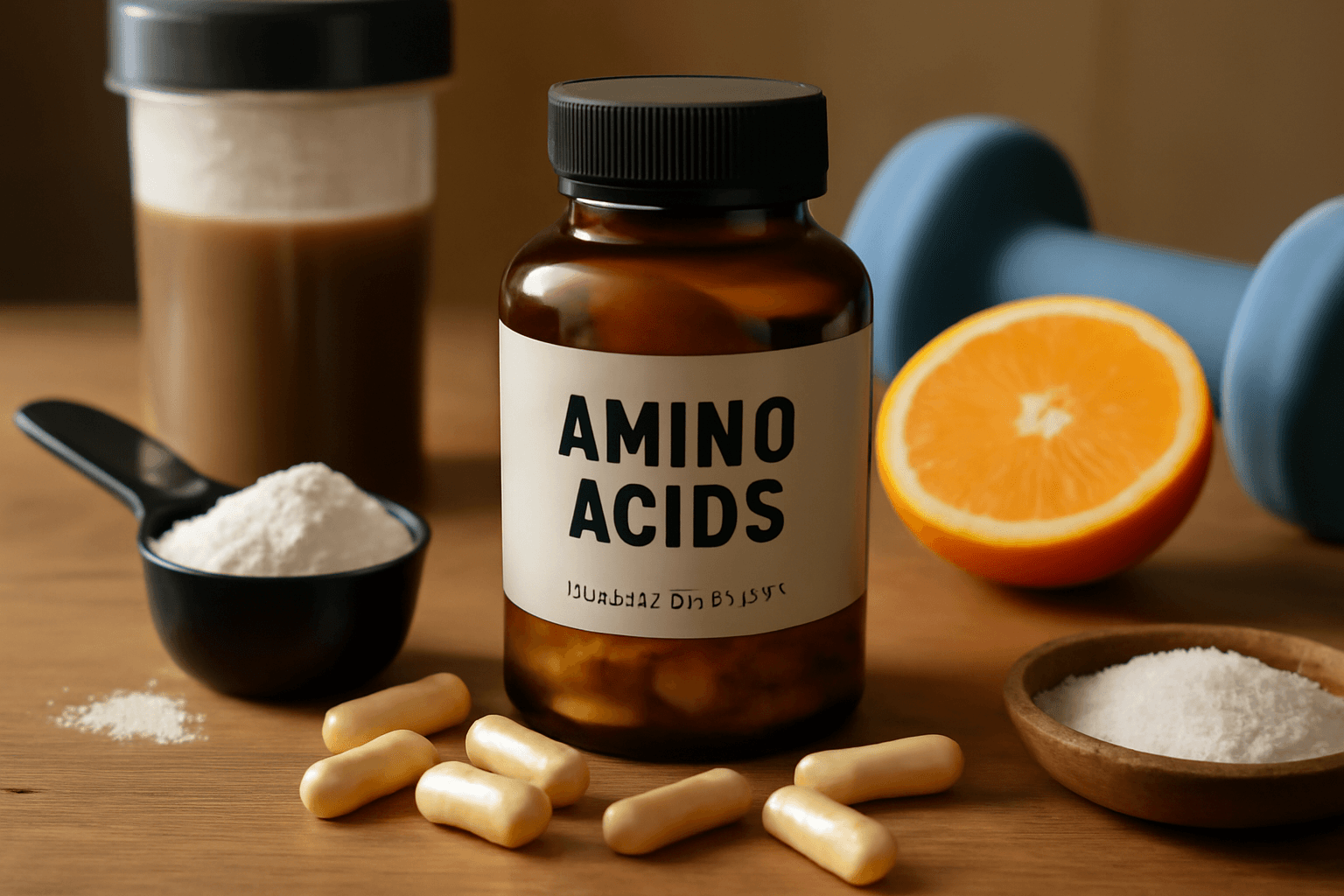
L-carnitine is an amino acid derivative that helps generate energy by transporting fatty acids within the body to the mitochondria. It has gained particular attention for weight management and energy enhancement, and also has positive effects on muscle growth and fatigue recovery. In this article, we'll comprehensively examine L-carnitine's mechanism of action, health benefits, and precautions.
L-Carnitine's Basic Principles and Energy Generation
L-carnitine is a substance synthesized in the body from two amino acids: lysine and methionine. Its primary role is to transport long-chain fatty acids across the inner mitochondrial membrane to promote ATP (energy) generation during the beta-oxidation (β-oxidation) process. In particular, when L-carnitine levels decline during a low-carbohydrate diet or exercise, fat-burning efficiency decreases.
The L-carnitine concentration in healthy adults is approximately 40–50 μmol/L. When this level drops below 20 μmol/L, symptoms such as fatigue, reduced muscle strength, and slowed metabolism may appear. Especially after prolonged aerobic exercise, L-carnitine consumption increases, which is why athletes pay attention to this nutrient.
Weight Management and Fat Loss
L-carnitine is useful for weight management because it directly promotes fat oxidation. According to a meta-analysis published in the 2019 International Journal of Obesity, the L-carnitine supplementation group recorded an average additional weight loss of 1.3 kg after 12 weeks. The effects were particularly pronounced when combined with a low-calorie diet.
The fat loss mechanism works as follows: When L-carnitine is insufficient, fatty acids cannot enter the mitochondria and are not utilized for energy, instead accumulating in the body. Conversely, maintaining adequate L-carnitine levels allows stored fat to burn efficiently, aiding weight loss. This effect is particularly useful during periods after the age of 30 when basal metabolic rate decreases.
However, weight loss cannot be achieved by L-carnitine alone. Regular exercise and balanced nutrition are essential. According to research, taking 2-4g of L-carnitine 30 minutes before aerobic exercise improves fat oxidation efficiency by approximately 15-30%.
Promoting Muscle Growth and Recovery
L-carnitine goes beyond being a simple energy substance and also influences muscle protein synthesis. This compound increases blood flow to muscle tissue, promoting oxygen and nutrient delivery. As a result, it contributes to preventing exercise-induced muscle wasting and improving recovery speed.
According to a 2020 Journal of Sports Nutrition study, participants performing resistance exercise who took 3g of L-carnitine daily for 8 weeks showed approximately 12% greater strength gains compared to the placebo group. Additionally, creatine kinase (CK), a marker of exercise-induced muscle damage, normalized more quickly.
In terms of fatigue recovery, L-carnitine reduces lactic acid accumulation and alleviates oxidative stress. The muscle fatigue athletes experience after intense training is not simply due to lactic acid buildup but rather mitochondrial energy deficiency. L-carnitine addresses this, shortening recovery time.
Blood Sugar Management and Metabolic Health
L-carnitine also plays a role in blood sugar stabilization. When this substance promotes fat oxidation, dependence on carbohydrates decreases, alleviating blood sugar fluctuations. It's particularly useful for people with insulin resistance.
In a 2018 clinical trial at the Diabetes Research Center involving 112 type 2 diabetes patients who received 2g of L-carnitine for 12 weeks, fasting blood glucose decreased an average of 8.3 mg/dL more compared to the control group. Additionally, HbA1c (long-term blood sugar control indicator) levels dropped by 0.5%.
These effects occur because L-carnitine improves mitochondrial function, increasing insulin sensitivity. When energy production efficiency is enhanced, cells utilize glucose more effectively.
Thyroid Function and Hormone Balance
L-carnitine supports the activation of T3 (triiodothyronine) thyroid hormone. Since thyroid hormones are key factors in determining basal metabolic rate, L-carnitine deficiency leads to reduced metabolism. In particular, L-carnitine supplementation can be helpful for hypothyroid patients attempting weight loss.
There is a positive correlation between blood L-carnitine concentration and basal metabolic rate (BMR). According to research, people with normal L-carnitine levels burn approximately 150-250 additional kcal/day compared to those with insufficient levels. This translates to a potential weight loss of approximately 1.5-2.5 kg per month.
In terms of hormone balance, L-carnitine also participates in regulating cortisol (stress hormone) levels. Adequate energy production suppresses excessive cortisol secretion caused by chronic stress, preventing body fat accumulation.
Dietary Sources and Daily Intake
L-carnitine is primarily found in meat, particularly beef and lamb. Beef contains approximately 95mg of L-carnitine per 100g, while lamb contains about 180mg per 100g. In contrast, chicken contains only 3-5mg per 100g, and fish contains very small amounts.
- Beef: approximately 95mg per 100g
- Lamb: approximately 180mg per 100g
- Pork: approximately 27mg per 100g
- Milk: approximately 8mg per 200ml
- Cheese: approximately 6mg per 100g
- Avocado: approximately 2mg per 100g
Generally, the daily L-carnitine requirement for healthy adults is approximately 300-500mg. While this can be met through an appropriate diet, supplementation may be recommended for vegetarians, athletes, and those with hypothyroidism. People with high exercise intensity may require 1-3g of additional daily intake.
Digestion and Nutrient Absorption
L-carnitine is absorbed in the upper small intestine, particularly at the end of the ileum. The absorption rate of L-carnitine from food is approximately 50-85%. Interestingly, as L-carnitine intake increases, absorption rates decrease, a phenomenon called reverse saturation.
Vitamin C, iron, and glucose are nutrients that promote L-carnitine absorption. Conversely, tannins (found in tea and coffee) inhibit absorption. Therefore, when taking L-carnitine supplements, consuming them with orange juice or iron-containing foods improves bioavailability by approximately 30-40%.
Gut microbiota also influences L-carnitine metabolism. Recent research shows that people consuming probiotic-rich diets absorb and utilize L-carnitine more efficiently. Particularly, beneficial strains such as Roseburia and Faecalibacterium play important roles.
Relationship with Protein Metabolism
L-carnitine plays an essential role in protein metabolism. When this compound is sufficient, muscle protein synthesis speed increases and protein breakdown is suppressed. Consequently, post-exercise muscle recovery efficiency improves.
In terms of muscle protein synthesis (MPS), L-carnitine activates the mTOR signaling pathway to promote protein synthesis. When 2-3g of L-carnitine is consumed with a high-protein meal (approximately 20-30g protein) within 2 hours after exercise, muscle anabolic efficiency is maximized.
Particularly in middle-aged and older adults, the anti-sarcopenia effect is pronounced when L-carnitine and protein are consumed together. In a study of adults aged 65 and older, the group combining L-carnitine supplementation with resistance exercise increased muscle mass by an average of 2.1kg after 12 weeks, while the resistance exercise-only group gained only 1.3kg.
Side Effects
L-carnitine is generally a safe substance, but excessive intake can cause side effects. The most common side effects are gastrointestinal symptoms, including abdominal bloating, diarrhea, and nausea. These symptoms tend to appear when taking 3g or more daily over extended periods.
A more significant side effect is increased TMAO (trimethylamine N-oxide) production. TMAO, generated when intestinal bacteria metabolize L-carnitine, can increase cardiovascular disease risk. According to 2019 American Heart Association research, people with high TMAO levels had a cardiovascular disease incidence rate approximately 2.4 times higher than the low-level group.
Patients with certain conditions must be especially cautious. Those with kidney disease face the risk of L-carnitine accumulation and must consult with healthcare professionals before taking it. Patients with hyperthyroidism should also be careful, as their basal metabolic rate is already elevated, and L-carnitine supplementation could worsen symptoms.
Rare side effects include muscle weakness, headaches, and skin rashes. In particular, people with Primary Carnitine Deficiency may experience muscle pain and weakness from excessive supplementation. If abnormal symptoms appear while taking L-carnitine supplements, discontinue immediately and consult with a healthcare professional.
Conclusion and Summary
L-carnitine provides multifaceted benefits for weight management, energy enhancement, muscle growth, blood sugar stabilization, and thyroid function improvement. It's particularly useful for athletes, middle-aged individuals, and those attempting weight loss. However, supplement consumption is not necessarily required, and it's important to first assess whether adequate amounts can be obtained through diet.
Key Points:
- L-carnitine promotes fatty acid oxidation to aid energy generation and weight loss
- Effects are maximized when combined with exercise and cannot induce weight loss alone
- It can be naturally obtained through meat such as beef and lamb
- It has positive effects on muscle recovery, blood sugar management, and hormone balance improvement
- Excessive intake can cause gastrointestinal side effects and increased TMAO-related cardiovascular risk
- Patients with certain conditions (kidney disease, hyperthyroidism, etc.) must consult healthcare professionals before taking it
- The recommended daily intake is approximately 300-500mg, and supplementation necessity is determined by individual diet and activity level
If you're considering L-carnitine supplementation, consult with a healthcare professional to determine the appropriate intake for your health status, current medications, and goals. Also remember that regular exercise, balanced nutrition, and adequate sleep form the foundation of overall health management, along with ensuring supplement quality.