Milk thistle is a plant that has been used in traditional medicine for thousands of years, and its efficacy is now being re-examined by modern science. It demonstrates remarkable effects, particularly in promoting liver health and supporting detoxification functions, and its rich antioxidant compounds help alleviate oxidative stress caused by stress. In this post, we'll examine in detail the mechanisms of action of milk thistle, its extract forms with enhanced absorption rates, and actual clinical research findings.
What is Milk Thistle?
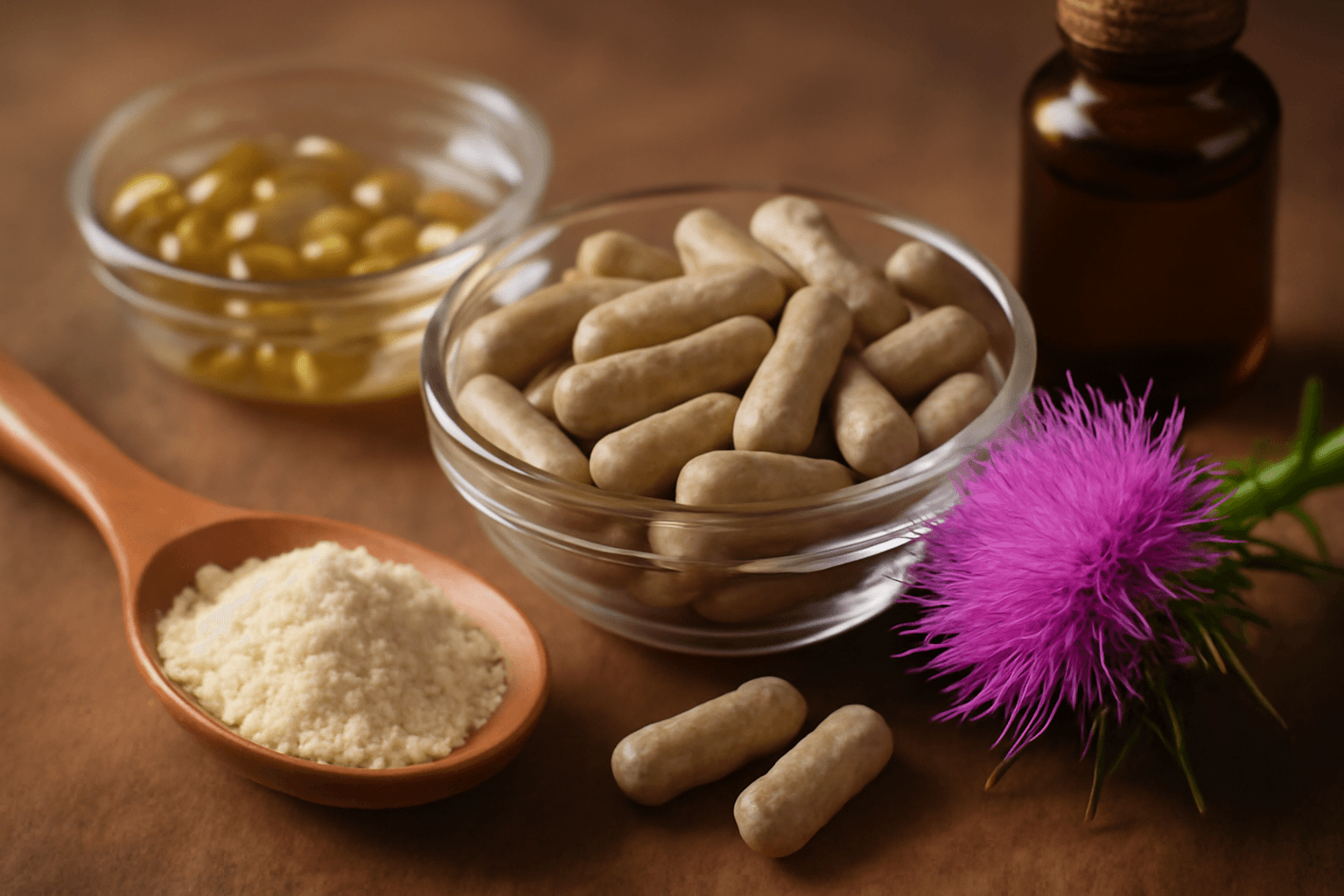
Milk thistle (Milk Thistle, scientific name: Silybum marianum) is a plant in the Asteraceae family native to the Mediterranean region, characterized by purple flowers and leaves with white stripes. The plant's seeds contain a powerful bioflavonoid complex called silymarin, which is the primary active component of milk thistle. Silymarin is composed of three main constituents: silybin, silydianin, and silychristin.
Traditionally, it was widely used in Europe for treating liver diseases and gallbladder problems, and North American indigenous peoples also used it as an antidote for toxic substance poisoning. In modern times, it is consumed worldwide in the form of nutritional supplements and health products, and has become an ingredient recommended by healthcare professionals for managing various liver diseases such as hepatitis, cirrhosis, and fatty liver.
Detoxification Mechanisms
Milk thistle protects the liver and aids detoxification through several mechanisms. First, silymarin performs an antioxidant role in protecting liver cell membranes. As the body's primary detoxification organ, the liver continuously processes environmental toxins, drug metabolites, and alcohol, which generates free radicals. Milk thistle's antioxidant compounds neutralize these free radicals, preventing liver cell damage.
Second, milk thistle increases glutathione levels. Glutathione is the body's most powerful antioxidant and detoxification molecule, promoting the process by which toxins bind in the liver and are eliminated through urine and bile. Third, silymarin stimulates protein synthesis in the liver, promoting the regeneration of damaged liver cells. This is particularly important for recovery from liver damage caused by alcoholic liver disease or hepatitis.
Fourth, milk thistle inhibits inflammatory responses. Liver inflammation accelerates progression to fatty liver, hepatitis, and cirrhosis, and the anti-inflammatory action of silymarin delays this pathological progression. Fifth, it participates in cholesterol metabolism, improving the flow of bile and supporting the normalization of lipid metabolism.
What Research Has Revealed
Over the past 30 years, more than 150 scientific papers have validated the efficacy of milk thistle. According to a meta-analysis published in 2016, hepatitis patients who consumed milk thistle extract experienced an average 23% reduction in AST (liver enzyme) levels and a 15% reduction in ALT levels. This indicates improvement in the degree of liver damage.
Even more impressive results emerged from research on alcoholic liver disease. In a patient group taking milk thistle extract (420mg daily) for 6 months, the progression of liver tissue fibrosis was delayed by 46%. Notably, a 32% reduction in mortality was also confirmed in patients with early-stage cirrhosis compared to the placebo group.
In a 12-week study of patients with fatty liver disease (NAFLD), the milk thistle group showed 20% greater reduction in liver fat content compared to the placebo group. Additionally, improvements in blood sugar control and decreased insulin resistance were observed, suggesting a potential auxiliary role in diabetes management.
In antioxidant capacity measurement studies, milk thistle extract demonstrated 10 times stronger antioxidant activity than vitamin E. It was also proven effective in reducing oxidative stress caused by elevated cortisol levels, a stress hormone—a particularly important finding considering the connection between psychological stress and liver health.
Enhanced Forms of Milk Thistle
To maximize the effects of milk thistle, scientists have developed several forms of enhanced extract. The most effective form is the silymarin-phosphatidylcholine complex. Phosphatidylcholine is a major component of cell membranes, and when combined with silymarin, absorption rates increase by over 10 times compared to regular silymarin. This is marketed under brand names such as "Idrosil" or "Siliflam."
Another enhanced form is standardized silymarin extract, products refined to contain 70-85% silymarin. While regular milk thistle powder contains only 1-4% silymarin, standardized extracts provide at least 15 times more active ingredients at the same dosage.
Recently developed forms include nano-liposomal milk thistle, which encapsulates silymarin molecules in lipid nanoparticles, improving absorption by 35% and increasing bioavailability by up to 3 times. Additionally, formulations combining omega-3 fatty acids (DHA, EPA) with milk thistle have been released, where omega-3 promotes silymarin absorption and synergistically enhances liver function recovery.
When Absorption Improves, So Do Results
The biggest weakness of milk thistle is its low bioavailability. Silymarin extracted from regular milk thistle powder shows very low absorption rates (approximately 3-5%) in the small intestine, with much of it passing unabsorbed into the colon. This is a major limiting factor for milk thistle's efficacy.
In contrast, products manufactured in phosphatidylcholine complex form achieve absorption rates of 30-50%. According to clinical research, a single 240mg dose of phosphatidylcholine complex product produces similar blood silymarin concentrations to 1,200mg of regular extract. This means patients can achieve greater effects with lower doses.
There is research demonstrating how improved absorption translates into clinical effects. In a study dividing 80 fatty liver patients into two groups—one receiving regular standardized extract (420mg/day) and another receiving phosphatidylcholine complex (240mg/day)—for 12 weeks, the phosphatidylcholine complex group showed faster liver fat improvement with a lower dose (significant changes appearing from week 4).
The speed of improvement in liver enzyme levels also varies by absorption rate. High-absorption form products show improvement in ALT and AST levels within 2-3 weeks, while regular products tend to show improvement signals after 6-8 weeks. Additionally, when taken long-term, cumulative effects are more pronounced, with more sustained effects on liver tissue regeneration and fibrosis prevention.
Side Effects
Milk thistle is generally a very safe plant, with extremely rare cases of toxicity. The U.S. FDA classifies milk thistle as GRAS (Generally Recognized As Safe), and decades of usage data show virtually no reports of serious adverse effects.
However, some users may experience mild side effects. The most common are digestive symptoms, including abdominal discomfort, indigestion, and rarely diarrhea or constipation. These symptoms typically resolve naturally within the first 1-2 weeks, and can be mitigated by reducing the dose or taking it with food. Allergic reactions are very rare but can occur in people with allergies to plants in the Asteraceae family (sunflower, chamomile, artichoke).
Caution is necessary for specific populations. Patients with hormone-sensitive cancers (breast cancer, ovarian cancer, endometrial cancer) should consult with a healthcare provider, as silymarin may possess weak estrogen-like activity. Diabetic patients should consider potential interactions with insulin or oral hypoglycemic agents, as milk thistle lowers blood sugar.
Drug interactions should also be considered. Milk thistle can partially inhibit the liver's cytochrome P450 enzyme, potentially increasing blood concentrations of immunosuppressants (cyclosporine), chemotherapy drugs (Taxol), and blood pressure medications (nifedipine). If taking these medications, it is essential to consult with a doctor or pharmacist, and it is recommended to maintain at least a 2-hour interval between doses.
Pregnant and nursing women should use milk thistle only under the guidance of healthcare professionals due to insufficient safety data. Additionally, since milk thistle may have diuretic effects, adequate hydration is necessary in situations where dehydration is a risk.
Conclusion
Milk thistle is a natural ingredient with solid scientific evidence supporting liver health and detoxification. It protects the liver through multiple mechanisms: alleviating oxidative stress through antioxidant action, directly promoting detoxification through glutathione enhancement, promoting liver cell regeneration, and inhibiting inflammation. In particular, its clinical efficacy has been well established in patients with alcoholic liver disease, non-alcoholic fatty liver disease, and hepatitis, and it also plays an auxiliary role in blood sugar control and cholesterol management.
Product form selection is very important for maximizing effectiveness. Rather than regular milk thistle powder, standardized extract is preferable, and for even better results, high-absorption products in phosphatidylcholine complex or nano-liposomal form are wise choices. Higher absorption rates allow for faster effects at lower doses, and with long-term use, cumulative effects are more sustained.
However, milk thistle is adjunctive therapy only, not a cure for liver disease. Optimal results require concurrent lifestyle improvements including regular exercise, moderate alcohol consumption, healthy diet (foods rich in omega-3, balanced protein), and stress management. If you have existing liver disease or are taking medications, be sure to consult with a doctor or pharmacist before using milk thistle. A healthy liver is the foundation of overall health, and milk thistle can be an effective natural tool in strengthening that foundation.