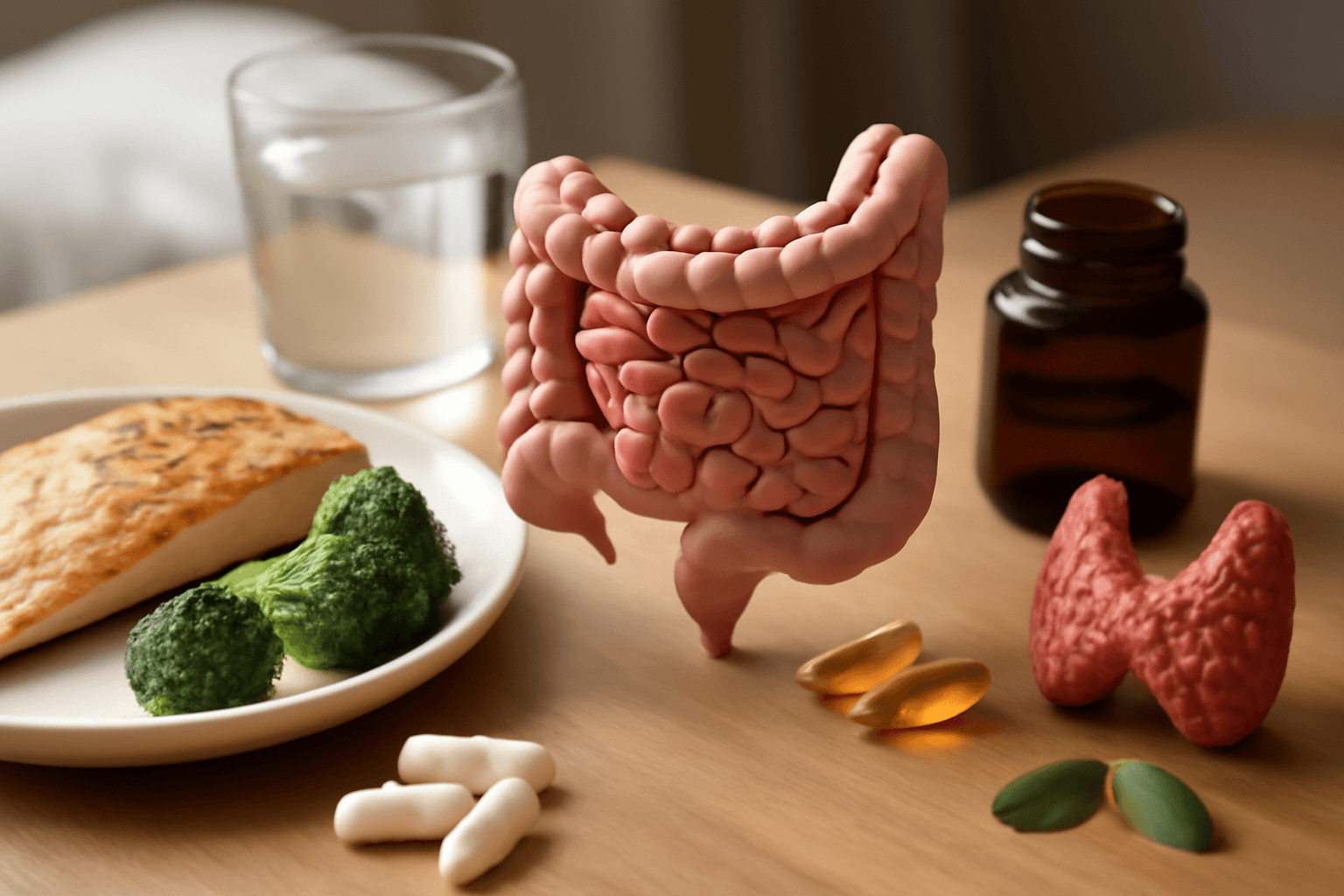
Small Intestinal Bacterial Overgrowth (SIBO) is a common condition threatening digestive health in modern adults. When bacteria that should normally exist only in the large intestine overgrow excessively in the small intestine, they trigger various symptoms including abdominal bloating, diarrhea, and constipation. This article comprehensively covers the definition of SIBO, diagnostic methods, root causes, and natural treatment approaches including protein intake, sleep improvement, stress management, probiotics, and omega-3 fatty acids. It introduces practical methods for fundamentally resolving SIBO through lifestyle modifications and nutritional management rather than pharmaceutical treatment alone.
What is SIBO?
Small Intestinal Bacterial Overgrowth (SIBO) is a condition in which the number of bacteria in the small intestine increases abnormally. Normally, the small intestine contains far fewer bacteria than the large intestine, but in SIBO patients, this number increases more than 1,000-fold. As nutrient absorption—a primary function of the small intestine—becomes impaired, various digestive symptoms appear.
The main symptoms of SIBO include:
- Abdominal bloating and increased gas
- Chronic diarrhea or constipation
- Abdominal discomfort and cramping
- Fatigue after eating
- Weight loss due to poor nutrient absorption
- Skin issues and joint pain
SIBO is not merely a digestive issue. As intestinal bacteria break down food, they generate excessive gas and toxic substances, which can increase intestinal wall permeability and develop into "leaky gut syndrome." This can trigger autoimmune diseases and systemic inflammation.
SIBO Diagnostic Methods
Breath testing is the standard method for accurately diagnosing SIBO. After patients consume a specific sugar (lactulose or glucose), hydrogen and methane levels in their breath are measured over a set period. This uses the principle that gases produced when bacteria break down sugars are included in the breath.
Breath Test Criteria: A diagnosis of SIBO is confirmed when hydrogen rises 20ppm or more above baseline levels and methane rises 10ppm or more.
Beyond breath testing, healthcare providers comprehensively evaluate patients' clinical symptoms, medical history, and existing conditions. Bowel sounds on examination, colonoscopy results, and thyroid function tests (TSH and T4 levels) also serve as supplementary diagnostic information. This is because 30–50% of SIBO patients have concurrent hypothyroidism.
Self-diagnosis should be avoided. Even with similar symptoms, the condition could be infectious gastroenteritis, IBS, inflammatory bowel disease, or other disorders. A proper diagnosis from a medical professional is essential.
Root Causes of SIBO
SIBO develops from a combination of multiple complex factors. It's not simply that there are too many bacteria, but rather that the small intestine has lost its ability to move bacteria back to their normal location.
Key causative factors:
- Insufficient stomach acid secretion: Stomach acid is the first line of defense in killing bacteria. When stomach acid decreases due to prolonged antacid use or autoimmune disease, bacteria are more likely to survive.
- Weakened intestinal motility: When the small intestine's peristalsis (complex muscle contractions that move food) declines, an environment for bacterial overgrowth forms. This is common in patients with hypothyroidism, diabetes, and Parkinson's disease.
- Chronic stress: Stress inhibits vagus nerve function, reducing digestive motility. Elevated cortisol levels worsen intestinal inflammation.
- Sleep deprivation: Irregular sleep disrupts intestinal microbiota balance and reduces digestive function by 20–40%.
- Antibiotic overuse: Broad-spectrum antibiotics eliminate beneficial bacteria entirely, and pathogenic bacteria proliferate during the recovery period.
- Insufficient protein intake: Protein is essential for intestinal mucosa reconstruction and immune function. When amino acids like glutamine and proline are deficient, intestinal wall damage worsens.
Dietary patterns in SIBO patients are also important. High consumption of highly refined carbohydrates and sugar serve as food for pathogenic bacteria, accelerating their proliferation.
Natural Ways to Treat SIBO
1. Optimizing Protein Intake
Protein is a key nutrient in SIBO treatment. The small intestinal mucosa is composed primarily of protein, and glutamine and collagen in particular repair damaged intestinal walls. The recommended daily protein intake is 1.5–2g per kilogram of body weight. An adult weighing 70kg should consume 105–140g of protein daily.
Protein foods suitable for SIBO patients:
- Grass-fed beef and chicken (low FODMAP)
- Eggs (rich in proline and choline)
- Fish (contains omega-3)
- Bone broth (rich in collagen and glycine)
- Silken tofu (protein and isoflavones)
When choosing protein powder, select products without additives and avoid FODMAP-containing dairy or soy protein. Taking glutamine powder (5–10g daily) mixed with water directly supports intestinal wall repair.
2. Sleep Improvement
Sleep is directly connected to intestinal microbiota rhythm. Irregular sleep patterns disrupt the circadian rhythm, weakening small intestine motility. Simply going to bed and waking up at the same time on weekdays and weekends noticeably accelerates SIBO recovery.
Sleep improvement strategies for SIBO patients:
- Sleep soundly at the same time daily (10 PM to 6 AM recommended)
- Stop eating 3 hours before bed
- Maintain bedroom temperature at 16–19°C
- Block blue light exposure one hour before sleep
- Supplement with magnesium glycinate (300–400mg daily)
A minimum of 7–9 hours of continuous sleep is needed. During sleep, the small intestine's cleansing mechanism (Migrating Motor Complex, MMC) activates to eliminate bacteria.
3. Stress Management
Chronic stress leads to excessive cortisol secretion, which suppresses digestive function by 30–50%. When stress hormones are elevated, beneficial bacterial reproduction is inhibited and pathogenic bacteria gain dominance.
Scientifically validated stress reduction methods:
- Diaphragmatic breathing: 10 minutes daily with 4-second inhalations and 6-second exhalations (activates vagus nerve)
- Meditation: 20-minute meditation 5 times weekly reduces cortisol by 25%
- Yoga: Particularly inversions (shoulder stand) stimulate the vagus nerve
- Forest bathing: Exposure to nature 2+ times weekly reduces stress hormones by 35%
- Psychotherapy: Cognitive behavioral therapy (CBT) restructures the gut-brain axis
Intestinal microbiota are sensitive to stress signals, so emotional stability directly translates to gut health.
4. Thyroid Function Testing and Management
Over 60% of SIBO patients have hypothyroidism. Insufficient thyroid hormone drastically reduces small intestine motility. A TSH level above 2.5 mIU/L indicates risk of hypothyroidism.
Nutrients for thyroid health:
- Iodine: Seaweed, egg whites (150mcg daily recommended)
- Selenium: Brazil nuts, fish (55mcg daily)
- Zinc: Oysters, beef (11mg daily)
- Iron: Animal-based foods preferred (25–35% absorption rate)
If diagnosed with hypothyroidism, hormone replacement therapy from a healthcare professional is necessary. Natural approaches alone may be insufficient.
5. Omega-3 Fatty Acid Intake
Omega-3 fatty acids (EPA and DHA) suppress intestinal inflammation and promote beneficial bacterial proliferation. Research shows that people with high omega-3 intake have 40% higher levels of Akkermansia muciniphila (a protective bacterium).
Omega-3 sources suitable for SIBO patients:
- Wild salmon (2 servings weekly, 150g portion)
- Mackerel and sardines
- Flaxseed (2 tablespoons daily, ground form)
- Walnuts (28g daily)
- Fish oil supplements (2000mg EPA+DHA daily)
When choosing fish oil supplements, triglyceride form (TG) has 50% higher absorption than ethyl ester (EE) form.
What is the Low FODMAP Diet?
FODMAP stands for "Fermentable Oligosaccharides, Disaccharides, Monosaccharides, And Polyols"—fermentable carbohydrates that are not properly absorbed in the small intestine. When SIBO patients' bacteria excessively break down these foods, gas, bloating, and pain increase.
High FODMAP foods (to avoid):
- Onions, garlic, asparagus (fructan content)
- Apples, pears, watermelon (excessive fructose)
- Dairy products (lactose)
- Wheat, barley (gluten and fructans)
- Figs, raisins
- Sweet potatoes (polyol content)
Low FODMAP safe foods:
- Rice, corn, oats
- Carrots, broccoli, cucumbers
- Bananas, grapes, blueberries
- Eggs, chicken, fish
- Cheese (lower lactose with longer aging)
- Olive oil, coconut oil
The low FODMAP diet should be strictly maintained for the first 4–6 weeks of SIBO treatment to achieve 60–70% symptom improvement. Afterward, systematically reintroducing high FODMAP foods while identifying individual tolerance is important. Excessive restriction eliminates prebiotic foods that feed beneficial bacteria, so prolonged adherence should be avoided.
Natural SIBO Treatment Supplements
Probiotics
Probiotics directly supply beneficial bacteria. Suitable bacterial strains for SIBO treatment are Lactobacillus and Bifidobacterium, but you must choose a product labeled "suitable for SIBO." Regular probiotics may actually worsen symptoms.
Selection criteria for probiotics suitable for SIBO patients:
- CFU count: minimum 200–1 billion CFU (too high carries overload risk)
- Oxygen-sensitive strains (Bifidobacterium) prioritized
- Capsule form (dissolves in small intestine after passing stomach acid)
- Products requiring refrigeration (higher survival rates)
- Dairy-free
When taking probiotics, gas may increase during the first week (die-off effect). Begin with a low dose and gradually increase over two weeks.
Glutamine
L-glutamine is the primary fuel source for small intestinal epithelial cells. It is very effective for repairing intestinal walls damaged by SIBO. Research shows that 4 weeks of glutamine supplementation improves intestinal permeability by 37%.
- Daily recommended dose: 5–10g (divided into 2 doses)
- Form: Powder dissolved in warm water
- Duration: Minimum 8–12 weeks
- Timing: On an empty stomach in the morning and evening
Other Supplements
Slippery Elm Bark: Its mucilage forms a protective layer over the damaged intestinal wall. 1–2g daily.
Aloe Vera: Reduces intestinal inflammation and has natural antimicrobial properties. Inner gel extract only (75ml, 2 times daily).
Marshmallow Root: Promotes intestinal mucosa regeneration. As tea 2–3 times daily.
Ginger Extract: Alleviates nausea and enhances digestive motility. Fresh ginger 1–2cm (2 times daily).
Turmeric: Its curcumin component reduces intestinal inflammation by 25–35%. Taking it with black pepper increases bioavailability 2,000-fold. 500–1,000mg daily.
All supplements should be taken only after consultation with a healthcare professional. Drug interactions must be verified, especially when taking medications.
Conclusion and Summary
Since small intestinal bacterial overgrowth develops from multiple combined factors rather than a single cause, multifaceted treatment is essential. While antibiotics alone have a recurrence rate of 44%, combining them with lifestyle modifications and nutritional management raises the cure rate to over 70%.
Core principles of natural SIBO treatment:
- Diagnosis first: Obtain clear diagnosis through breath testing
- Dietary management: Strictly follow low FODMAP diet for 4–6 weeks
- Protein enhancement: Consume 1.5–2g per kilogram of body weight daily
- Sleep optimization: Establish regular sleep pattern to activate MMC
- Stress control: Practice relaxation exercises 10+ minutes daily
- Thyroid screening: Check TSH levels and pursue hormone therapy if needed
- Nutritional supplementation: Combine glutamine, probiotics, and omega-3
- Professional monitoring: Evaluate symptoms every 4 weeks and adjust diet accordingly
SIBO treatment should be approached as a long-term project (3–6 months), not a short-term one (4–8 weeks). Symptoms may worsen initially over the first two weeks (a normal die-off reaction as bacteria die and release endotoxins). If symptoms worsen, reduce the dose by half and increase again after three days.
⚠️ Healthcare Professional Consultation Required: The information in this article is for educational purposes and cannot replace medical treatment. If you suspect SIBO symptoms, you must obtain an accurate diagnosis and customized treatment plan from a gastroenterologist or functional medicine specialist. Especially if you are taking medications or have underlying conditions, consult with healthcare providers before starting new supplements.

