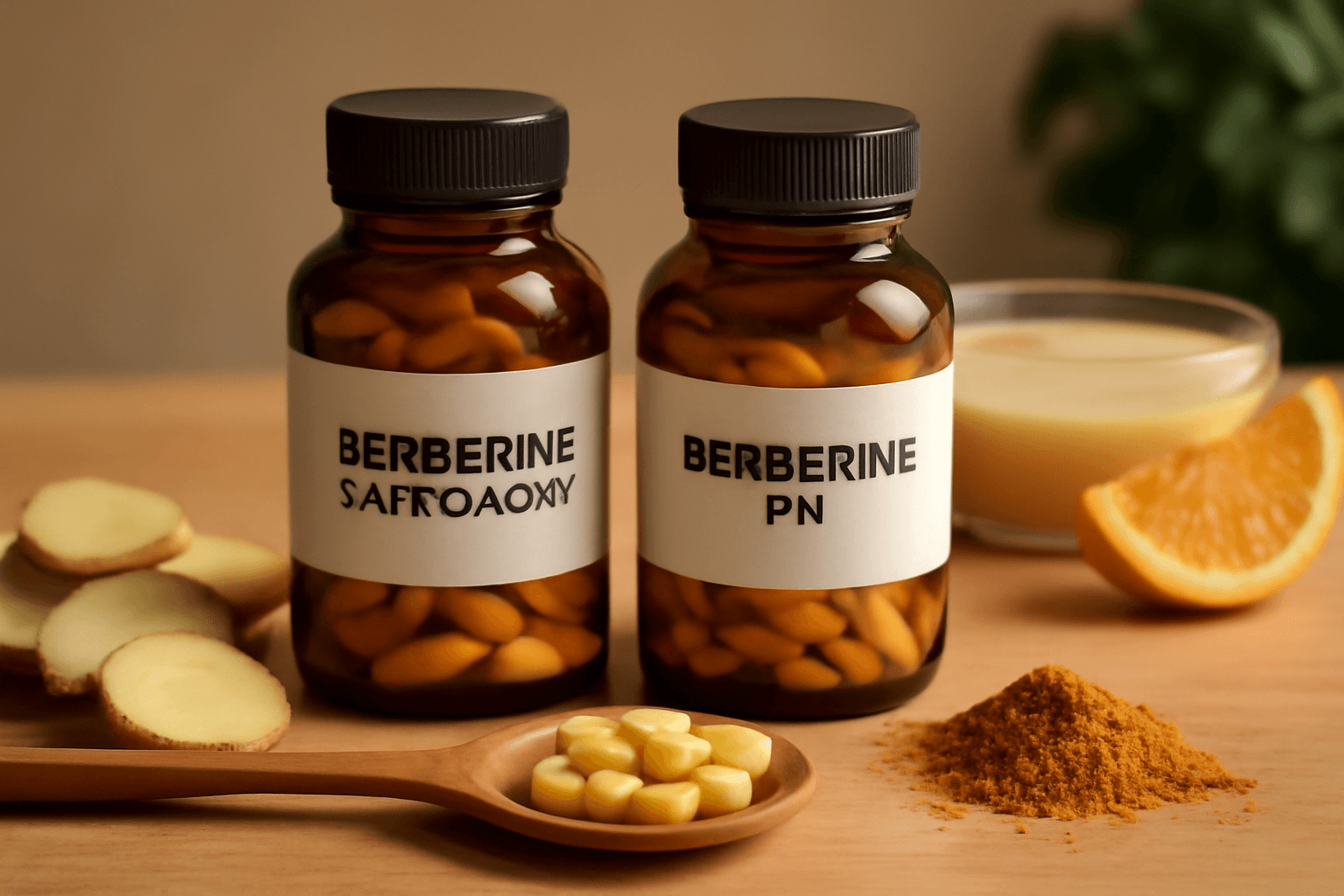
Berberine is a natural alkaloid compound extracted from several plants including goldenseal and Oregon grape, and is a powerful nutrient that has been used in traditional medicine for a long time. However, standard berberine HCl (hydrochloride) and advanced berberine phytosome with cutting-edge technology show significant differences in bioavailability and efficacy. This article explains in detail the characteristics and differences between these two forms of berberine, and which product you should choose.
Berberine: A Powerful Natural Nutrient
Berberine is known as a bioactive substance that has positive effects on several metabolic processes in the human body. In particular, various health benefits such as blood sugar management, cholesterol control, and improved heart health are documented in medical literature. Berberine activates an enzyme called AMPK (AMP-activated protein kinase), which promotes cellular energy metabolism, and helps maintain overall health through antioxidant and anti-inflammatory effects.
In preclinical studies, berberine has been reported to improve intestinal microbiota composition and promote digestive health. It has also been shown to be effective in maintaining hormonal balance and alleviating menstrual-related symptoms. However, berberine's relatively low bioavailability has been a key challenge in supplement development.
History and Mechanism of Action of Berberine
Berberine has been used in Chinese traditional medicine and Ayurvedic medicine for over 3,000 years. It was particularly widely used in the management of gastrointestinal disorders, infectious diseases, and diabetes. As modern science validated berberine's efficacy, a meta-analysis published in 2015 reported that berberine showed similar blood sugar-lowering effects to metformin (a diabetes medication).
The main mechanisms of action of berberine are as follows. First, it improves mitochondrial function through AMPK activation, thereby increasing cellular energy production. Second, it improves digestive health by regulating intestinal bacterial balance. Third, it inhibits LDL cholesterol oxidation and exerts anti-inflammatory effects. Due to these multiple mechanisms of action, berberine can simultaneously affect various aspects of metabolic health.
What is Berberine HCl?
Berberine HCl (hydrochloride) is the most basic and widely used form of berberine. Created by combining hydrochloric acid with berberine alkaloid, this form is chemically stable, inexpensive to produce, and easy to store long-term. Therefore, most berberine supplements are sold in this form.
However, the biggest disadvantage of berberine HCl is the bioavailability issue. Standard berberine HCl is known to have only about a 5% absorption rate in the small intestine after ingestion. This means that the berberine molecule is large and has low fat solubility, making it difficult to pass through intestinal epithelial cells. Additionally, rapid first-pass metabolism in the liver occurs, so the amount of active compounds that reaches the body is very limited.
To improve the absorption of berberine HCl, some manufacturers combine it with black pepper extract (piperine). Piperine can promote intestinal absorption and partially inhibit hepatic metabolism, thereby improving bioavailability by approximately 20%. However, this still represents room for improvement.
What is Berberine Phytosome?
Berberine phytosome is an advanced form of berberine developed using cutting-edge nanotechnology. "Phytosome" refers to a special technology that wraps plant compounds with phospholipid molecules. This encapsulated berberine, protected by a lipid shell similar to cell membranes, can be absorbed much more efficiently as it passes through the small intestine.
The key to phytosome technology is that it complements berberine's hydrophilic (water-loving) nature and improves fat solubility. The phospholipid shell has a structure similar to intestinal epithelial cells of the small intestine, allowing berberine molecules to be absorbed more efficiently. According to several clinical studies, the bioavailability of berberine phytosome is reported to be approximately 25 times higher than berberine HCl.
Due to this significant improvement in absorption rate, berberine phytosome can exert stronger effects even at lower doses. For example, there is research showing that 500mg of berberine HCl taken three times (1,500mg daily) and 250mg of berberine phytosome taken once can show similar effects. Additionally, the phytosome form causes less gastrointestinal irritation, allowing people with digestive sensitivity to take it relatively safely.
Comparison of Berberine HCl and Berberine Phytosome
Absorption Rate and Bioavailability
Berberine HCl typically has an absorption rate of 5-10%, and even when taken with piperine, it reaches only about 20-25%. In contrast, berberine phytosome has been confirmed in clinical studies to show an absorption rate of over 75%. This means that blood berberine concentration can be increased by up to 25 times, and consequently, the time to effect onset is greatly shortened.
Dosage and Efficacy
For berberine HCl, you need to consistently take 1,500mg daily (500mg three times) for 6-12 weeks to see blood sugar improvement effects. In contrast, berberine phytosome can produce similar effects at just 250-500mg daily, and the time to effect onset is relatively faster at 2-4 weeks. This not only reduces medication costs but also decreases hepatic burden from long-term use.
Gastrointestinal Safety
Due to its acidic nature, berberine HCl can cause mild digestive discomfort in people with sensitive stomachs. Especially when taken on an empty stomach, gastrointestinal irritation increases. Berberine phytosome is protected from stomach acid by the phospholipid shell, and irritation to intestinal epithelial cells is also minimized, making it safe for people with gastrointestinal sensitivity.
Cost-Effectiveness
When looking at the initial purchase price alone, berberine HCl appears cheaper. However, when considering the required dosage and long-term use period, berberine phytosome is more cost-effective. You can see results with smaller amounts more quickly, and the overall treatment period can be shortened.
Clinical Effect Comparison Table
- Blood Sugar Management: HCl requires 12 weeks vs Phytosome requires 3-4 weeks
- Cholesterol Improvement: HCl 5-10% monthly reduction vs Phytosome 15-20% monthly reduction
- Energy Improvement: HCl after 2-3 months vs Phytosome after 2-3 weeks
- Menstrual Cycle Normalization: HCl 6+ months vs Phytosome 2-3 months
- Antioxidant Marker Improvement: HCl moderate improvement vs Phytosome significant improvement
Choosing the Right Supplement
Selection Guide by Situation
When choosing a berberine product, you should consider your health goals, time availability, and budget. If blood sugar management is urgent—for example, if you've been diagnosed with prediabetes—quick effects are important, so berberine phytosome is recommended. Conversely, if you want to take it long-term for preventive purposes and cost is your priority, berberine HCl is sufficient.
For people with digestive sensitivity or those diagnosed with IBS (irritable bowel syndrome), it's wise to choose berberine phytosome. Also, if you're already taking multiple medications and want to minimize drug interactions, the phytosome form, which can be effective at lower doses, is advantageous.
Product Quality Verification Points
Regardless of which form of berberine you choose, you should verify the following:
- Purity Certification: Confirm it was manufactured in a GMP (Good Manufacturing Practice) certified facility
- Third-Party Testing: Verification of quality testing by independent organizations such as NSF or USP
- Berberine Content: Verify that the stated content is accurate (plant ingredient contamination is possible)
- Additive Verification: Check for unnecessary additives or allergens
- Packaging and Storage: Confirm moisture-resistant packaging and storage conditions
Usage Instructions and Precautions
Berberine HCl is typically taken at 500mg three times daily with meals. When taken with piperine (pepper extract) or alpha-lipoic acid rather than alone, absorption is improved. For berberine phytosome, take 250-500mg daily divided into 1-2 doses.
Since berberine is an ingredient with cumulative effects, you need to take it consistently for at least 3-4 weeks to feel the effects. Additionally, it can interact with the following medications, so you must consult with a healthcare professional if taking them together:
- Diabetes medications (metformin, insulin)
- Blood pressure medications
- Cholesterol medications (statins)
- Immunosuppressants
- Antibiotics (certain types)
If you are pregnant or nursing, you must consult with a healthcare professional before taking berberine. The same applies if you have liver dysfunction or renal failure.
Conclusion and Key Summary
Berberine is a powerful natural ingredient that helps manage health in multiple aspects including blood sugar, cholesterol, energy, hormonal balance, heart health, and digestion. However, even with the same berberine, the form makes a significant difference in effectiveness and efficiency.
Key Comparison Points:
- Berberine HCl: 5-25% absorption rate, 1,500mg daily required, 12+ weeks use, low cost, possible gastrointestinal irritation
- Berberine Phytosome: 75%+ absorption rate, 250-500mg daily required, 3-4 weeks to effect, moderate cost, gastrointestinal safe
If you want to see results quickly or have a sensitive stomach, it's wise to choose berberine phytosome. If you want to take it slowly over time and reduce costs, berberine HCl is also a good choice. Whichever product you choose, purchase from a trusted manufacturer, take it consistently for 3+ months, and regularly check blood sugar, cholesterol, and hormone levels to monitor effectiveness.
Finally, it's important to emphasize that berberine supplements alone are insufficient. Maximum benefits can be expected when combined with lifestyle improvements such as regular exercise, healthy eating habits, adequate sleep, and stress management. Particularly if you have existing conditions such as diabetes, high blood pressure, or high cholesterol, you must consult with a healthcare professional before deciding to take it.