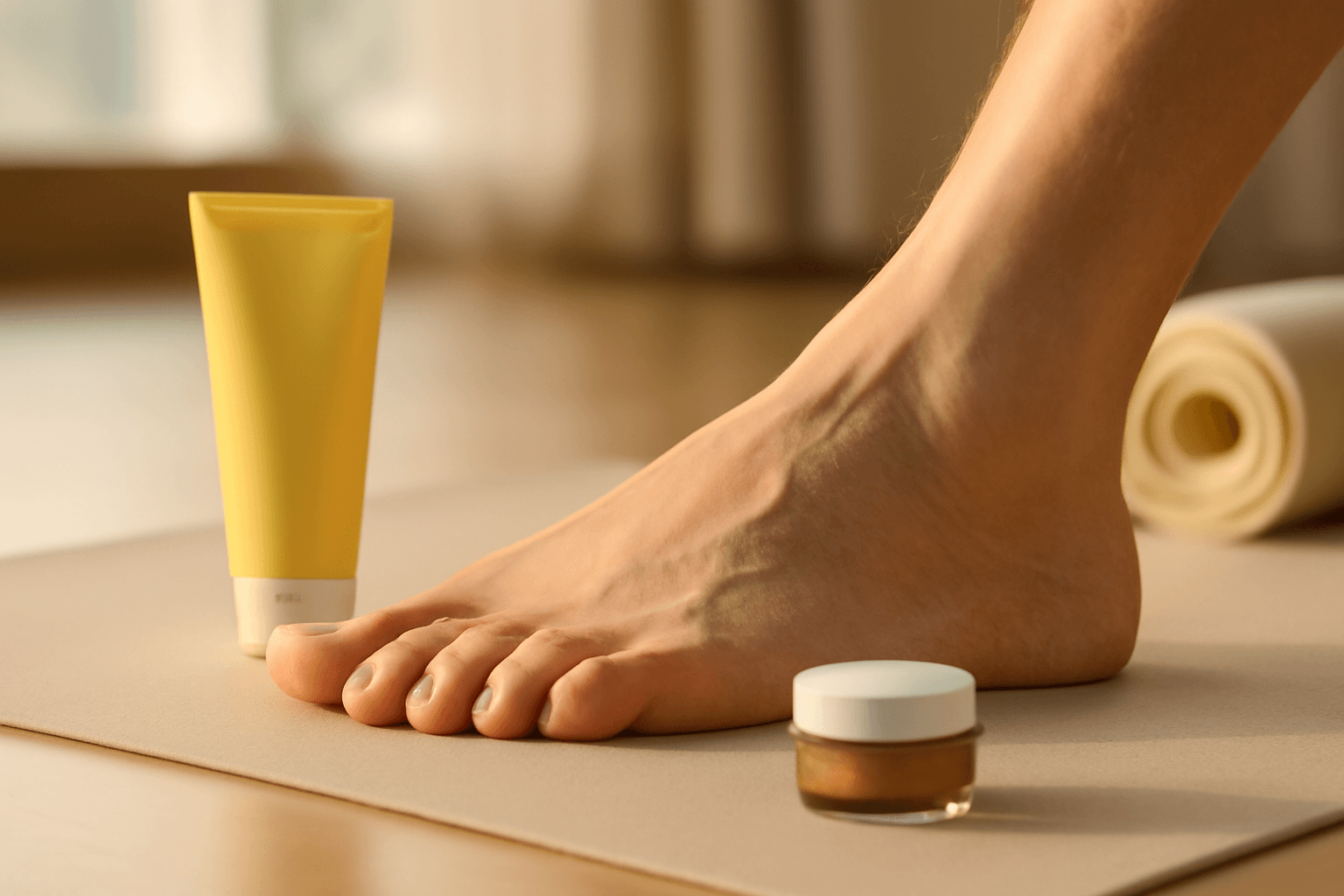
Our feet support our entire body and carry us through thousands of steps each day, yet many people neglect foot care. Issues like calluses, corns, sun damage, fungal infections, and shoe-related pain go far beyond cosmetic concerns and significantly impact quality of life. This guide systematically analyzes the most common foot problems and offers practical solutions including yoga and skincare. Feet are called the "second heart" because our health and daily life are built upon them.
Flaky and Dull Skin
Flaky feet occur when skin dries out and dead skin cells accumulate in thick layers. Feet have fewer oil glands, making natural moisturization difficult, and repeated friction and moisture from shoes worsen the condition. Summer air conditioning and winter heating accelerate foot flakiness.
The first step in managing foot flakiness is moisturizing. Every evening, soak your feet in warm water for about 10 minutes, then gently remove dead skin with a mild foot scrub product. Avoid harsh scrubbing as it can damage skin, so limit this to 2-3 times per week. After scrubbing, apply essence or emulsion suitable for your skin type generously to your feet.
Products containing vitamin E are highly effective for improving dry feet. Vitamin E is an antioxidant that prevents cellular damage and promotes skin regeneration. Apply a thick layer of vitamin E-rich foot cream or oil at night for better absorption, and your feet will feel much softer by morning. Especially for areas like heels with severe flakiness, apply vitamin E cream as a mask, put on socks, and sleep for even better results.
- Soak feet in warm water for 10 minutes
- Use gentle scrub 2-3 times per week to remove dead skin
- Apply vitamin E cream as a mask at night
- Use moisturizing essence morning and night daily
Calluses
Calluses are a protective mechanism the skin creates against pressure and friction. They typically form between toes, on heels, and on the sides of feet, worsening with prolonged wear of uncomfortable shoes or excessive walking. Calluses are not merely a cosmetic issue—if left untreated, they can cause pain and impair mobility.
Managing calluses involves reducing pressure and maintaining moisture. First, the fundamental solution is switching to comfortable shoes to reduce pressure. Medical-grade silicone pads or cushions can be applied to callus areas to prevent additional friction. Additionally, foot stretching poses in yoga help relieve foot tension and reduce callus formation.
In particular, yoga's "Mountain Pose" and "toe-spreading pose" relax foot muscles and ligaments, helping prevent calluses. Practicing these poses for about 10 minutes daily improves blood circulation in the feet, accelerating skin regeneration. After removing calluses, apply urea-containing cream to restore skin elasticity.
- Avoid uncomfortable shoes
- Use medical-grade silicone cushions to relieve pressure
- Practice yoga foot stretching for 10 minutes daily
- Apply urea-containing cream to restore skin elasticity
Sun Damage
Feet are among the most vulnerable body parts when it comes to UV protection. Many people apply sunscreen only to their face and arms, forgetting their feet. However, foot skin exposed to UV rays also experiences pigmentation, wrinkles, and increased dryness, plus elevated skin cancer risk. The tops of feet and toes are particularly susceptible to direct UV exposure.
To prevent UV damage to your feet, apply sunscreen with SPF 30 or higher daily. Apply it evenly to the tops of feet, toes, and sides 15-20 minutes before going outside, and reapply every 2 hours. When visiting beaches or swimming pools, use water-resistant sunscreen and reapply after drying off with a towel.
If you already have sun-induced pigmentation, using products containing both vitamin E and niacinamide helps. Vitamin E protects damaged cells through antioxidant action, while niacinamide inhibits melanin production, gradually improving pigmentation. During seasons with high outdoor activity, wearing socks or leggings that cover your feet is an effective preventive measure.
- Use sunscreen SPF 30 or higher daily
- Apply 15-20 minutes before going outside and allow to dry thoroughly
- Reapply every 2 hours
- Protect with water-resistant products when swimming
- Use vitamin E and niacinamide serums together
Toenail Fungus
Toenail fungus (onychomycosis) is a condition caused by fungal infection that discolors and thickens toenails. Nails may turn yellow or brown, becoming brittle or developing into ingrown toenails. Humid environments, damaged nails, and weakened immunity are major causes, with incidence rates significantly higher in people over 60.
The key to preventing toenail fungus is keeping feet consistently dry. After showering, thoroughly dry between toes, and always wear sandals at public facilities like bathhouses, swimming pools, and fitness centers. Keep toenails short and disinfect nail clippers with alcohol before each use. If already infected, consult a dermatologist for antifungal medication treatment—self-treatment without medical guidance can worsen the infection.
In early stages of toenail fungus, antifungal creams or essences can slow progression. Apply vitamin E-containing toenail essence daily to the nails and surrounding skin to support antioxidant action. Yoga poses that improve foot blood circulation also strengthen foot immunity. In particular, "legs-up pose" promotes circulation in the feet.
- Completely dry between toes after showering
- Always wear sandals at public facilities
- Keep toenails short and disinfect clippers before each use
- Use vitamin E essence for early-stage infections
- Persistent infections require dermatologist consultation
Pain from Ill-Fitting Shoes
Shoes are the most important factor determining foot health. Tight shoes compress toes, causing calluses, corns, and ingrown toenails, while loose shoes allow feet to shift, leading to ankle sprains and plantar fasciitis. High heels, particularly popular among women, concentrate pressure on the front of the foot, causing metatarsal pain.
The golden rule of shoe selection is "comfort". Buy shoes in the afternoon when your feet are slightly swollen from daily activities—this afternoon size best matches your actual needs. When selecting shoes, ensure about 1 cm of space between your big toe and the shoe's end, and verify that the widest part of your foot aligns precisely with the shoe's ball area.
If you already experience shoe-related pain, perform daily stretches like yoga's "mountain pose" and "cat pose" to relieve foot and ankle tension. For plantar fasciitis, use foot supports or custom insoles as prescribed by a professional. Additionally, reduce foot swelling by elevating your legs above heart level during evening rest, and massage your feet to improve circulation and reduce pain.
- Purchase shoes in the afternoon
- Ensure 1 cm space between big toe and shoe end
- Verify the ball of your foot aligns with the shoe's widest part
- Use yoga stretching to relieve foot and ankle tension
- Rest with legs elevated above heart level for 20 minutes in the evening
Feet Deserve Your Love and Care
Feet are the foundation supporting our bodies and simultaneously represent our mobility and independence. Yet modern people take feet for granted and overlook their importance. When feet are healthy, overall body health is maintained and quality of life improves. Foot pain causes postural changes that can trigger knee, hip, and lower back pain.
A comprehensive approach to foot care includes the following: First, daily skincare to remove dead skin and maintain moisture. Regularly use vitamin E-containing products to prevent skin damage. Second, sun protection to prevent UV damage, delay pigmentation and skin aging. Third, exercise like yoga to improve foot circulation and strengthen muscles.
Regular foot massage also helps tremendously. In the evening, soak feet in warm water for 10 minutes, then massage the arch with your thumb in a zigzag motion to effectively recover from fatigue and improve circulation. For toenail health, receive professional pedicures monthly, and see a dermatologist immediately if unusual symptoms appear. Caring for your feet is caring for your health and future.
Summary
Foot health is not merely a cosmetic issue but the foundation of overall body health. The essentials of foot health are exfoliation and moisturizing with vitamin E, using sunscreen SPF 30 or higher, preventing and managing toenail fungus early, choosing comfortable shoes, and improving circulation through yoga.
Action Checklist:
- Foot scrub and vitamin E mask treatment 2-3 times per week
- Use sunscreen and moisturizing cream morning and night daily
- Practice 10-minute yoga foot stretching daily
- Apply comfortable shoe selection criteria
- Professional pedicure or foot care once monthly
- Consult a dermatologist immediately if abnormal symptoms appear
Medical Precautions: Toenail fungus, severe pain, wounds that won't heal, and foot abnormalities in diabetic patients require consultation with a dermatologist or orthopedic specialist. Self-treatment can worsen symptoms.

