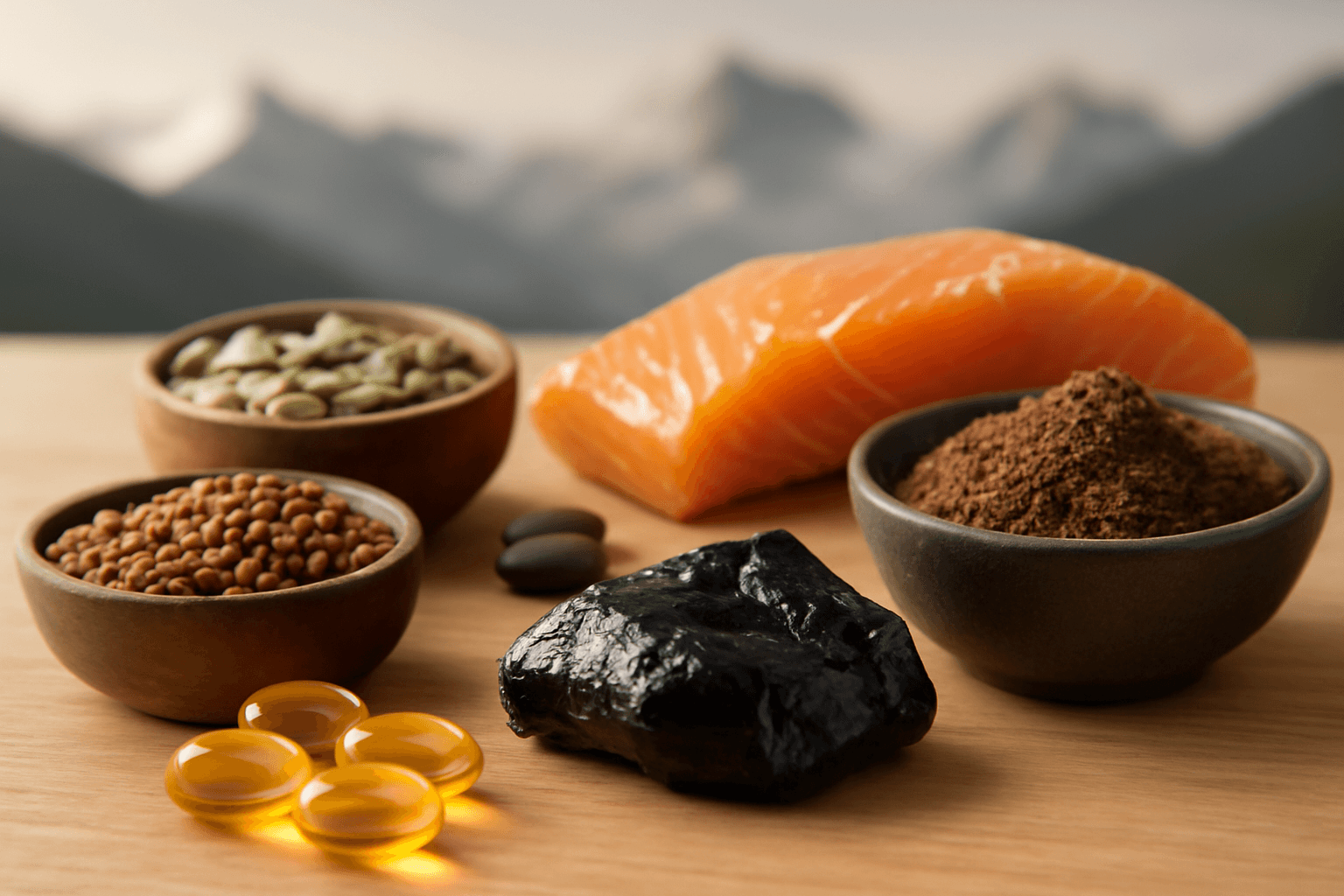
Shilajit is a natural substance harvested from high mountain regions such as the Himalayas and Altai Mountains, and is a powerful health supplement that has been used in Ayurvedic medicine for thousands of years. Shilajit, a black or brown sticky substance, contains over 70 minerals and trace elements, offering various health benefits including increased energy, stress relief, and antioxidant effects. As recent scientific research has validated the effectiveness of this substance used in traditional medicine, interest is growing worldwide.
What is Shilajit?
Shilajit is an organic material that slowly seeps out from rocks and soil in high mountain regions, the result of plant decomposition and microbial metabolites condensed over millions of years. It is primarily harvested from areas at altitudes of 1,000 to 5,000 meters above sea level, including the Himalayas (India, Pakistan, Nepal), the Altai Mountains (Russia), and the Caucasus Mountains.
Traditionally, Ayurvedic and Tibetan medicine called shilajit "Paras Mani," meaning "cure-all." This substance appears as a black or brown viscous resin-like material, and pure shilajit dissolves completely in water and has a pungent odor. In modern times, it is extracted and processed into supplements in powder, liquid, and capsule forms for sale.
The quality of shilajit varies greatly depending on the harvesting region and purification method. High-quality shilajit undergoes a rigorous purification process to remove impurities and concentrate active compounds, so when selecting a product, you must always check the country of origin and purification method.
Nutritional Content
The most notable component of shilajit is fulvic acid, which makes up 40-60% of its total composition. Fulvic acid is a powerful antioxidant and chelating agent that promotes the absorption of minerals in the body and removes harmful substances. This compound is the key ingredient responsible for shilajit's primary benefits.
The main minerals contained in shilajit are as follows:
- Iron: Promotes hemoglobin production to improve oxygen-carrying capacity and helps prevent anemia
- Zinc: Strengthens the immune system, accelerates wound healing, and is essential for hormone metabolism
- Magnesium: Plays an important role in muscle relaxation, nervous system stability, and energy production processes
- Calcium: Contributes to bone and tooth health and the secretion of neurotransmitters
- Potassium: Maintains electrolyte balance and regulates blood pressure
- Copper: Promotes iron absorption and is essential for connective tissue formation
In addition, shilajit contains humic acid, 18 types of amino acids, and bioactive compounds such as DBP (dibenzo-alpha-pyrones). The synergistic effect of these components creates shilajit's various health benefits.
Traditional Uses
In Ayurvedic medicine, shilajit is classified as "Rasayana," or rejuvenation therapy, and has been used for thousands of years. Traditional medicine practitioners believed that shilajit was a rare substance capable of correcting imbalances in all three doshas (Vata, Pitta, and Kapha).
Specific traditional uses include the following:
- Increased energy and vitality: Used to slow the aging process and restore vigor
- Improved sexual function: Prescribed to enhance reproductive health in both men and women
- Joint health: Applied to relieve arthritis and muscle pain
- Enhanced digestive function: Promotes the secretion of digestive enzymes to improve nutrient absorption
- Mental health: Relieves anxiety and depression and improves cognitive function
- Strengthened immunity: Enhances the body's natural defense mechanisms
In Tibetan medicine, shilajit was also regarded as a blood purifier and was used to eliminate "toxins," which were considered the root cause of various diseases. As these traditional uses began to receive scientific validation, scientific interest in shilajit increased significantly.
Improved Stress Response
Stress, one of the greatest health threats facing modern people, leads to excessive secretion of stress hormones such as cortisol. The fulvic acid and mineral components contained in shilajit help stabilize the nervous system and normalize stress hormones.
The stress-relief mechanism of shilajit is as follows:
- Neurotransmitter balance: Magnesium and calcium stabilize the nervous system and promote GABA receptor function to alleviate anxiety
- Antioxidant effects: Suppresses oxidative stress caused by stress to prevent cell damage
- Hormone regulation: Fulvic acid helps normalize cortisol levels
- Brain protection: The DBP component enhances energy production in nerve cells to improve brain function
In one study, 64 healthy men were given 250mg of shilajit twice daily for 8 weeks, resulting in significantly reduced anxiety and depression scores compared to the control group. In particular, fatigue and mental fog caused by chronic stress were reported to improve.
The stress-relieving effects of shilajit are not immediate and typically appear gradually through continued use over 4-8 weeks. The degree of effectiveness may vary depending on individual physical condition, stress levels, diet, and other factors.
Fatigue Relief
Shilajit enhances the production of ATP (the energy molecule) in mitochondria, promoting energy generation at the cellular level. This is the main reason shilajit is called an "energy supplement."
The specific mechanism of fatigue relief is as follows:
- Iron content: Promotes hemoglobin synthesis to increase oxygen-carrying capacity → improves cell respiration efficiency → raises energy levels
- Magnesium and calcium: Regulate muscle contraction and relaxation and serve as cofactors in the ATP production process
- Fulvic acid: Maximizes the bioavailability of nutrients to increase the body's nutrient absorption efficiency
- Antioxidant components: Prevent mitochondrial damage to optimize the energy generation system
In a study published in the Journal of the American Medical Association in 2012, 84 patients with chronic fatigue were given 400mg of shilajit twice daily for 12 weeks. As a result, the shilajit group showed an average 65% improvement in fatigue scores compared to the control group, and quality of life scores also increased significantly.
The fatigue-improving effects were particularly notable among middle-aged and older adults and those engaging in high-intensity exercise. However, if the cause of fatigue is an underlying condition such as thyroid disease, depression, or sleep apnea, shilajit alone is not sufficient for a fundamental solution, and diagnosis and treatment by a medical professional are essential.
Enhanced Athletic Performance
Shilajit has gained attention among athletes and fitness enthusiasts as a supplement that enhances athletic performance and recovery. Shilajit's effects on promoting energy generation and accelerating muscle damage recovery directly impact athletic improvement.
The specific mechanism of enhanced athletic performance is as follows:
- Increased oxygen-carrying capacity: Iron promotes hemoglobin production to optimize oxygen supply to muscles → improves aerobic endurance
- Accelerated muscle recovery: Zinc and magnesium accelerate protein synthesis and muscle rebuilding processes
- Reduced post-exercise inflammation: The powerful antioxidant effects of fulvic acid reduce exercise-induced oxidative stress → alleviates muscle soreness
- Normalized testosterone levels: Zinc content supports hormone development and muscle strength gains
In a 2016 study, 60 athletes were divided into two groups and given either 500mg of shilajit or a placebo daily for 8 weeks. The shilajit group showed an average 12% improvement in key performance indicators including grip strength, leg strength, and exercise duration compared to the control group. Additionally, post-exercise recovery time was reported to be shortened by 30%.
These effects are particularly pronounced in high-intensity interval training (HIIT), strength training, and endurance sports. However, shilajit is merely a supplement, and optimal results can only be expected when combined with balanced nutrition, adequate sleep, and planned training.
Summary
Shilajit is a natural health supplement where thousands of years of traditional medicine use meets modern scientific research. With over 70 minerals and bioactive compounds including fulvic acid, it works beyond simple nutritional supplementation to optimize the body's energy generation system.
Summary of Shilajit's Key Benefits:
- Stress relief: Alleviates anxiety and depression through nervous system stabilization and stress hormone normalization (requires 4-8 weeks of continuous use)
- Fatigue improvement: Promotes energy generation at the cellular level to improve chronic fatigue (65% improvement reported)
- Enhanced athletic performance: Increases oxygen-carrying capacity and accelerates muscle recovery for 12% improvement in athletic performance and 30% shorter recovery time
- Antioxidant effects: Prevents cell damage from oxidative stress and slows aging
- Strengthened immunity: Enhances natural defense mechanisms through zinc content
- Improved digestion: Enhances nutrient absorption efficiency to improve overall nutritional status
Precautions When Selecting and Using Shilajit:
High-quality shilajit undergoes a rigorous purification process to remove impurities and concentrate active compounds. When purchasing a product, you must verify the country of origin (Himalayas, Altai Mountains, etc.), fulvic acid content (at least 40% or higher), and third-party testing certification.
The recommended daily dose is generally 250-500mg and may be adjusted based on individual health conditions. In particular, professional medical consultation is essential in the following cases:
- If pregnant or breastfeeding
- If you have underlying conditions such as blood clotting disorders or iron overload (hemochromatosis)
- If you are taking medications such as blood thinners or iron supplements
- If allergic reactions or unusual symptoms occur
Shilajit aims for gradual improvement through long-term use rather than rapid results. It is recommended to take it consistently for at least 4 weeks and observe changes in your body, then consult with a healthcare professional if necessary to develop a personalized usage plan.