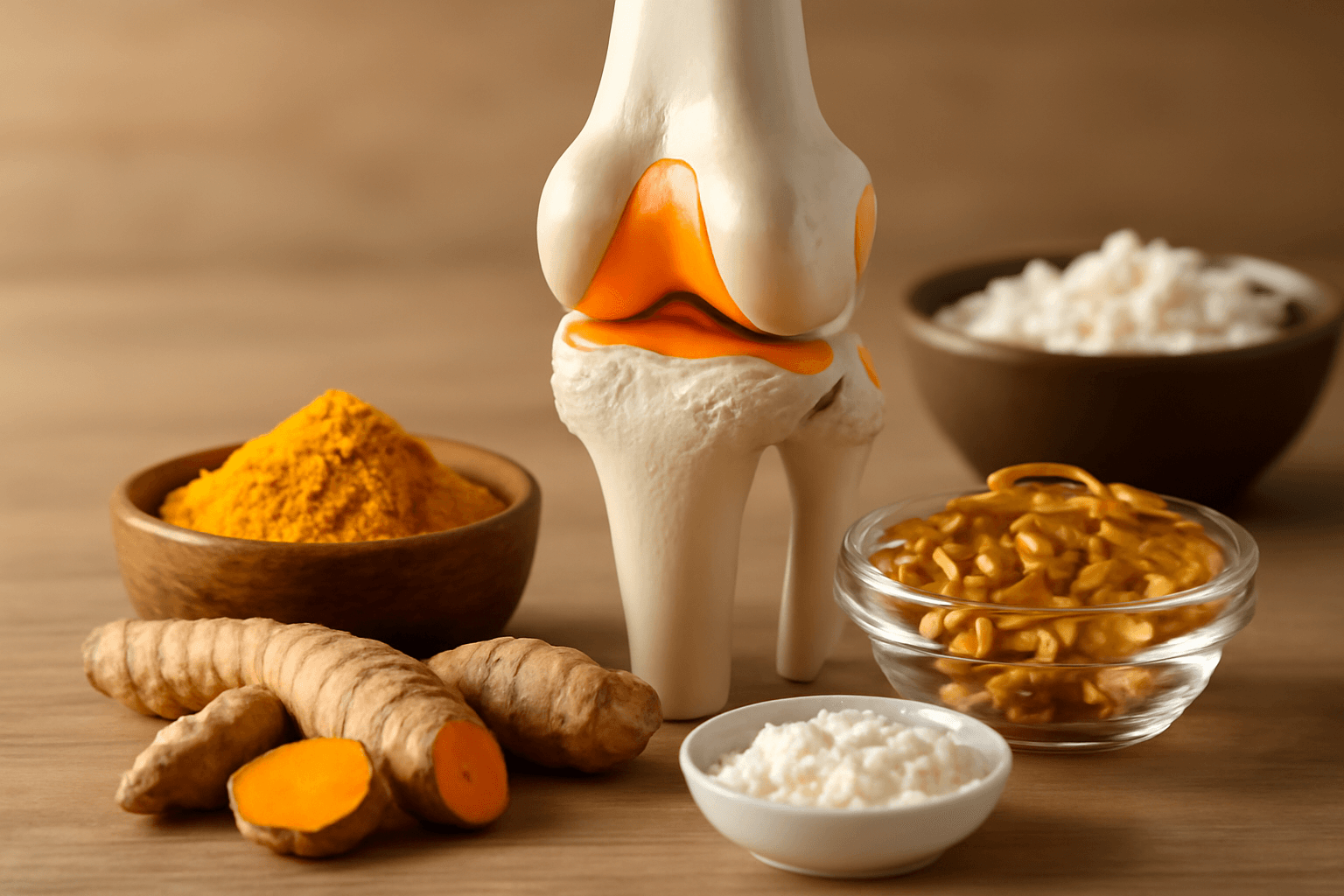
Turmeric is an ingredient that has been used in traditional medicine for thousands of years, and its effectiveness is now being validated through recent scientific research. In particular, curcumin, an active compound found in turmeric, provides various health benefits including alleviating joint inflammation, providing antioxidant effects, and promoting heart health. This article will explain in detail how polyphenols and curcumin, the main components of turmeric, affect the human body, as well as proper consumption methods and safe dosages.
What are Polyphenols?
Polyphenols are natural organic compounds found in plants and are powerful antioxidants. They protect cells from free radicals, unstable molecules, and are important factors that determine the color and taste of plants.
The main characteristics of polyphenols are as follows:
- Antioxidant capacity: Reduces oxidative stress that causes cell damage. The polyphenols contained in turmeric show antioxidant activity up to 4 times higher than the polyphenols in green tea.
- Anti-inflammatory action: Helps prevent the occurrence of chronic inflammation-related diseases.
- Vascular health: Improves the function of vascular endothelial cells and promotes blood circulation.
- Metabolic improvement: Helps stabilize blood sugar levels and improve insulin sensitivity.
Turmeric contains approximately 214mg of polyphenols per 100g, which is comparable to superfoods like blueberries and black beans. Since polyphenols have low water solubility, consuming them together with piperine found in black pepper increases the absorption rate by up to 2000% to enhance bioavailability.
What are the Benefits of Curcumin?
Curcumin is the main active component of turmeric, comprising approximately 2-8% of turmeric. It is one of the natural compounds undergoing the most research in modern science and has multifaceted effects on joint health and overall wellness.
Anti-inflammatory effects are curcumin's most important characteristic. In a 2019 clinical trial, arthritis patients who consumed 500mg of curcumin daily for 8 weeks experienced an average 45% reduction in joint pain and stiffness. Curcumin suppresses the NF-κB inflammatory signaling pathway, thereby reducing the production of inflammatory cytokines in joint tissue.
Support for neurological health is also noteworthy. Curcumin can penetrate the blood-brain barrier, reducing inflammation in the central nervous system. Animal model studies have shown that curcumin enhances neuroplasticity and helps slow the progression of neurodegenerative diseases.
Heart health promotion is another area where curcumin's effects have been proven. It improves the function of vascular endothelial cells, normalizes blood pressure, and prevents LDL cholesterol oxidation. In a study of 32 healthy adults aged 45 and over, those who consumed 150mg of curcumin daily for 12 weeks showed a 40% improvement in FMD (flow-mediated dilation), a measure used to assess vascular function.
Blood sugar management is also an important benefit. Curcumin protects the function of insulin-secreting cells and improves insulin resistance. In a 9-month randomized clinical trial of 240 prediabetic patients, those who consumed 750mg of curcumin daily experienced a 31% reduction in their risk of developing diabetes.
Stress and sleep improvement are additional benefits. Curcumin lowers cortisol levels and increases BDNF (brain-derived neurotrophic factor), enhancing stress resilience. These neurochemical changes are closely related to improved sleep quality.
How Inflammation Affects the Human Body
Inflammation is the body's defense mechanism, but when it persists chronically, it becomes the root cause of numerous diseases. Chronic inflammation is a common cause of cardiovascular disease, diabetes, cancer, and neurodegenerative diseases.
Understanding the biochemical mechanism of inflammation is the first step in prevention and management:
- Joint inflammation: Inflammatory mediators TNF-α and IL-6 damage joint cartilage and impair the lubricating function of synovial fluid. Chronic joint inflammation leads to progressive loss of joint cartilage, which is confirmed by elevated levels of CTX-II, a type II collagen degradation marker.
- Vascular inflammation: Promotes atherosclerosis, in which lipids accumulate in the arterial intima. High C-reactive protein (CRP) levels increase the risk of myocardial infarction by 2-3 times.
- Neuroinflammation: Activation of microglia releases neurotoxic substances, leading to nerve cell damage and cognitive decline.
- Metabolic inflammation: Induces insulin resistance, reducing blood sugar control capacity. Inflamed adipose tissue decreases adiponectin secretion while increasing inflammatory cytokine secretion.
- Sleep-inflammation vicious cycle: Insufficient sleep increases inflammatory markers, and conversely, chronic inflammation worsens sleep quality. Sleep of less than 6 hours per day increases IL-6, an inflammatory marker, by up to 50%.
It is particularly noteworthy that the relationship between inflammation and protein metabolism is significant. In chronic inflammatory states, protein breakdown increases, accelerating muscle loss. This can lead to reduced muscle mass (sarcopenia) and functional decline in the aging process. Therefore, adequate protein intake and inflammation management are simultaneously necessary strategies for musculoskeletal health.
The anti-inflammatory effects of curcumin simultaneously regulate these various inflammatory pathways. Particularly for joint health, curcumin protects joint cartilage and improves the quality of synovial fluid while reducing systemic inflammation.
How to Take Curcumin
To maximize the health benefits of curcumin, proper consumption methods are essential. Curcumin's bioavailability is very low, so without proper methods, most of it will pass through the digestive system without being absorbed.
Consumption through food is the most natural method:
- Direct turmeric powder consumption: Add 1/4 to 1/2 teaspoon daily (approximately 500mg to 1g) to golden milk, curry, soup, and other dishes. Going through a heating process increases the stability of curcumin.
- Together with black pepper: Piperine in black pepper increases curcumin absorption rate by 2000%. Maintain a turmeric to black pepper ratio of 1:0.05-0.1. For example, consume 1/4 teaspoon of turmeric with a pinch of black pepper.
- Consumption with healthy fats: Since curcumin is fat-soluble, consuming it with healthy fats such as olive oil, coconut oil, and nuts increases the absorption rate 5-8 times. Therefore, adding turmeric to oil-sautéed dishes is effective.
- Heat-treated foods: Heating turmeric improves absorption rate through micelle formation. Curry, soup, and egg dishes are good choices.
The Golden Milk recipe is a method optimized for curcumin absorption:
Add 1/4 teaspoon turmeric, a pinch of black pepper, 1 teaspoon honey, and a piece of ginger to 1 cup of milk and warm over low heat for 5 minutes. Consuming before sleep in the evening provides improved sleep quality along with nighttime anti-inflammatory effects.
Everyday consumption methods are also effective. Since curry powder is a main component of turmeric, consuming curry dishes 3-4 times per week provides sufficient curcumin. However, since curry powder contains approximately 8-16% turmeric, it is advisable to additionally consume turmeric powder if the goal is health promotion.
Combination with Omega-3 is also worth considering. Consuming Omega-3 foods such as fish, flax seeds, and walnuts together with turmeric enhances anti-inflammatory effects. This is because the anti-inflammatory effects of Omega-3 and curcumin work on different inflammatory pathways.
Dosage and Safety of Curcumin Supplements
Curcumin supplements provide high concentration and improved bioavailability, making them helpful when it is difficult to obtain sufficient amounts from food alone. However, you should understand dosage and selection criteria for safe and effective use.
Recommended dosages vary depending on the purpose:
- General health maintenance: 500-1,000mg per day (divided doses, 2-3 times)
- Improving joint health: 1,000-1,500mg per day (divided into 2-3 doses)
- Managing inflammatory diseases: 1,500-2,000mg per day (under medical professional supervision)
- Maximum safe dosage: Not exceeding 2,400mg per day
At least 4-8 weeks of consistent consumption is necessary to see results. Since curcumin does not accumulate in the body and is metabolized quickly, it must be taken regularly every day.
Key criteria for supplement selection:
- Bioavailability enhancement technology: Since standard curcumin has very low absorption rate, choose liposomal curcumin, formulas containing piperine, or phytosome forms. These forms have 5-10 times higher bioavailability compared to standard curcumin.
- Piperine content: Choose products containing 5-10mg of black pepper extract (95% standardized piperine).
- Third-party verification: Check for NSF Certified, USP, or ConsumerLab certification.
- Purity: Verify that the product contains 95% or higher pure curcuminoids.
Safety considerations are very important:
- General safety: No serious adverse effects were reported in clinical trials administering up to 2,400mg daily for 12 or more weeks. Turmeric is classified as GRAS (Generally Recognized as Safe) by the FDA.
- Gastrointestinal side effects: Some people may experience nausea, abdominal discomfort, and diarrhea. This improves by reducing the dosage or taking it with food.
- Drug interactions: Curcumin may affect the liver's P450 enzyme system, potentially altering the metabolism of certain medications. Consultation with a medical professional is essential, especially if taking anticoagulants (warfarin), antiplatelet agents, diabetes medications, or immunosuppressants.
- Gallbladder disease: Those with gallstones or gallbladder problems should consult a doctor before taking high-dose curcumin supplements.
- During pregnancy and breastfeeding: Avoid high-dose curcumin supplements and maintain only normal dietary intake.
Effect monitoring begins after 4 weeks. Periodically evaluate joint pain, sleep quality, energy levels, and digestive comfort to confirm individual response. If there are no effects or side effects persist, consider adjusting the dosage or changing the product.
Summary
Curcumin, the key active component of turmeric, is a versatile health-supporting substance backed by thousands of years of traditional use experience and modern scientific evidence.
Summary of key points:
- Anti-inflammatory mechanism: Curcumin suppresses the NF-κB pathway, reducing chronic inflammation in the joints, blood vessels, and nervous system.
- Multifaceted benefits: Supports joint health, heart health, blood sugar management, neurological health, stress reduction, and improved sleep quality.
- Optimal consumption method: Absorption rate is maximized when consumed with black pepper, healthy fats, and with heat.
- Dosage guidelines: General health maintenance starts with 500-1,000mg daily, while addressing health issues starts in the 1,000-2,000mg range.
- Safety: Generally very safe, but medical professional consultation is essential when taking specific medications such as anticoagulants or immunosuppressants.
- Duration: At least 4-8 weeks of consistent consumption is necessary to feel the effects.
Practical recommendations:
- First, incorporate turmeric into your diet to naturally establish consumption habits.
- To maximize effects, consume together with black pepper and healthy fats.
- When supplements are necessary, choose products with enhanced bioavailability.
- Consult with a medical professional in advance considering personal health status and current medications.
- After 4 weeks, evaluate the effects and adjust dosage as needed.
Turmeric and curcumin are effective and safe natural ingredients for not only joint health but also overall health promotion. However, if you have chronic diseases or are currently taking medications, using them under medical professional guidance can ensure maximum effectiveness and safety.