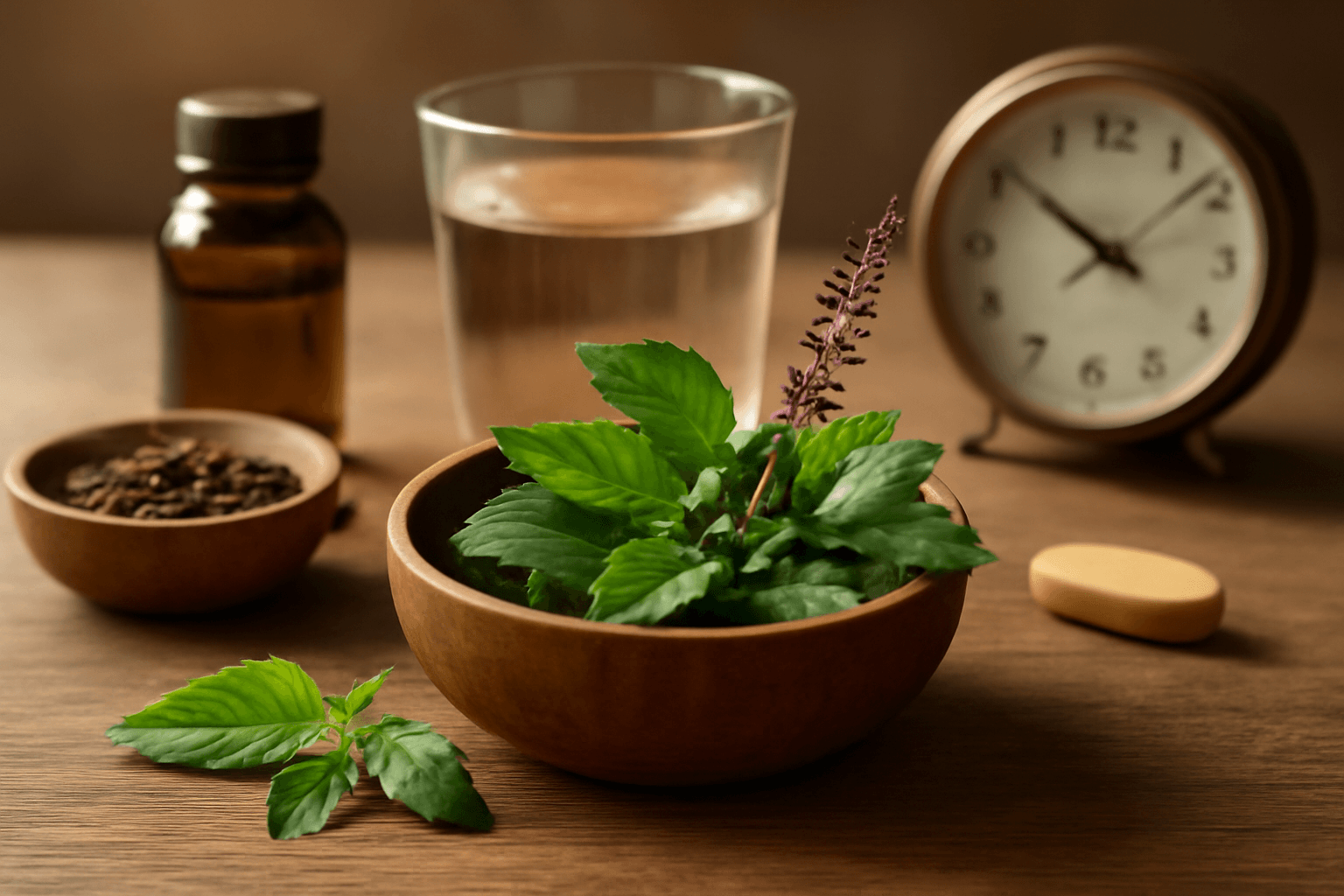
Modern life is filled with endless stress and fatigue. Work pressure, irregular living patterns, and sleep deprivation deplete the body's energy and weaken immunity. In this context, "adaptogens" have been gaining attention. Adaptogens are natural substances that regulate the body's stress response, aid energy recovery, and balance hormones. This article will explain what adaptogens are and how they work in our bodies, and introduce practical natural adaptogens that can genuinely help.
What Are Adaptogens?
Adaptogens are a collective term for substances that enhance the body's adaptive capacity to stress. Also called "adaptation agents," the concept of adaptogens was first defined by Soviet scientist Nikolai Lazarev in the 1950s. Adaptogens are defined as substances with three key characteristics.
- Increased stress resistance: They help the body better cope with physical, mental, and environmental stress.
- Non-toxic: They are safe with virtually no side effects at normal doses.
- Broad-spectrum action: They have positive effects on multiple body systems simultaneously.
Adaptogens are primarily plant-based and have been used for thousands of years in Eastern medicine, particularly in Traditional Chinese Medicine and Ayurveda. Modern science is now validating this traditional knowledge and researching their mechanisms of action. Common adaptogens include ginseng, rhodiola, ashwagandha, and reishi mushroom, each with unique biochemical properties.
The Benefits of Adaptogens
Adaptogens provide multifaceted health benefits. Let's examine the most significant effects.
Energy enhancement and fatigue recovery: Adaptogens improve mitochondrial function and promote cellular energy production. They increase the efficiency of energy production in the body during chronic fatigue syndrome or overwork conditions. In particular, by appropriately regulating cortisol levels, they alleviate afternoon energy dips.
Stress reduction and mental health: Adaptogens correct neurotransmitter imbalances. By normalizing GABA, serotonin, and dopamine levels, they reduce anxiety and improve mood. They restore the nervous system from fatigue caused by prolonged stress.
Immune system enhancement: The polysaccharides and polyphenols in adaptogens promote natural killer (NK) cell and macrophage activity. They help prevent infections and improve recovery speed.
Improved sleep quality: Adaptogens alter brain wave patterns to help maintain deep sleep stages. They normalize the sleep-wake cycle, alleviating insomnia.
Blood sugar stabilization: Some adaptogens regulate enzyme activity involved in glucose metabolism, preventing blood sugar spikes. Research shows they improve insulin sensitivity.
Improved digestive function: Adaptogens promote digestive enzyme secretion and maintain a healthy intestinal lining. They enhance intestinal microbial diversity, supporting gut health.
The 8 Best Natural Adaptogens
1. Ginseng (Panax Ginseng)
Native to the Korean Peninsula, ginseng is the oldest and most extensively researched adaptogen. It contains ginsenosides as key active compounds and includes more than 40 pharmacologically active substances. Ginseng is particularly excellent for energy recovery; according to Korean research, ginseng consumption reduced fatigue by 23% within 8 weeks. Benefits also include improved blood circulation, enhanced sexual function, and improved memory.
2. Rhodiola (Rhodiola Rosea)
Native to the mountainous regions of Northern Europe and Russia, rhodiola is also called "golden root." It contains rosavins and salidroside, and is particularly effective for mental stress and burnout syndrome. In a Swedish study, the group taking rhodiola supplements reduced mental fatigue by 50%. It helps alleviate depression symptoms, improve athletic performance, and enhance cognitive function.
3. Ashwagandha (Withania somnifera)
A cornerstone ingredient in Ayurveda, the traditional medicine of India, ashwagandha is called the "king of stress reduction." Its key active compounds are withanolides A and B, which reduce cortisol levels by an average of 27%. In Indian clinical trials, ashwagandha users showed a 56% reduction in anxiety and a 72% improvement in sleep quality. It is also effective for hormone balance, sexual function, and muscle strength.
4. Reishi Mushroom (Ganoderma lucidum)
Called the "mushroom of immortals" in Eastern medicine, reishi mushroom is rich in polysaccharides and triterpenoids. It balances the immune system, suppressing excessive inflammatory responses while enhancing immune response when needed. In Chinese research, reishi extract increased immune function by 35% in cancer patients. It has effects on anxiety relief, heart health improvement, and sleep induction.
5. Cordyceps (Cordyceps)
A fungus-like organism growing in the Himalayan highlands that directly supports ATP synthesis, essential for energy production. It contains adenosine and polysaccharides. A favorite among athletes, cordyceps improves VO2 max by an average of 8-10%. It is effective for chronic fatigue, coping with hypoxia, and improving sexual function.
6. Holy Basil (Ocimum sanctum)
Native to India, tulsi (Holy Basil) is rich in oleanolic acid and ursolic acid. It excels at blood sugar regulation; in Indian research, it lowered blood sugar by 21% in diabetic patients. Its anti-inflammatory action alleviates arthritis symptoms, and its antioxidant properties prevent cell damage. It improves digestive function, regulates blood pressure, and has antibacterial effects.
7. Sacranda (Rhodiola crenulata)
A Tibetan highlands adaptogen and relative of rhodiola that contains similar active compounds. Its powerful neuroprotective effects are drawing attention for preventing neurodegenerative diseases. It helps the body adapt to oxygen-deficient conditions and improves brain function through improved blood circulation. It is effective for enhancing adaptation in high-altitude residents and improving athletic performance.
8. American Ginseng (American Ginseng)
Native to North America, American ginseng has cooler and more calming properties than Asian ginseng. It is particularly excellent for immune enhancement; Canadian research showed American ginseng reduced the incidence of colds by 48%. It is effective for lung health, blood sugar regulation, and improved digestive function. It is suitable for those with warm body constitution or sensitive nervous systems.
The Mechanism of Adaptogen Action
The mechanism by which adaptogens work on the body is complex and occurs through multiple biochemical pathways.
Stress hormone regulation: The core mechanism of adaptogens is normalizing the hypothalamic-pituitary-adrenal (HPA) axis. They lower excessively elevated cortisol to appropriate levels during stress and restore depleted adrenal function from repeated stress. This helps the body move away from an oversensitive stress response.
Neurotransmitter balance: Adaptogens normalize the brain's chemical signaling system. They increase serotonin receptor sensitivity, enhance GABA (inhibitory neurotransmitter) activity, and promote dopamine production. These changes manifest as reduced anxiety, improved mood, and increased motivation.
Antioxidant and anti-inflammatory action: Polyphenols and flavonoids in adaptogens neutralize free radicals. They suppress chronic inflammation caused by prolonged stress while maintaining immune defense capabilities.
Improved mitochondrial function: Adaptogen active compounds directly act on mitochondria, the cell's energy production factory. They increase ATP synthesis efficiency and reduce oxidative stress. As a result, cellular energy increases and fatigue is alleviated.
Improved vascular function: Adaptogens strengthen vascular endothelial cell function and improve blood flow. They promote production of nitric oxide (NO), a vasodilator, and appropriately regulate platelet aggregation. This improves oxygen supply to the brain, heart, and muscles.
How Adaptogens Support Hormone Balance
Hormone imbalance is a major health concern for modern people. Adaptogens positively influence the hormone system in various ways.
Sexual hormone balance: Certain adaptogens act on the brain's central control of sexual hormone secretion. They stimulate testosterone production in men and optimize the estrogen-to-progesterone ratio in women. This results in alleviation of menopausal symptoms, increased libido, and improved reproductive function.
Thyroid hormone regulation: Adaptogens increase thyroid-stimulating hormone (TSH) receptor sensitivity and promote thyroid hormone conversion. They restore depleted metabolic function, improving weight management, energy, and temperature regulation.
Improved insulin sensitivity: Adaptogens activate insulin signaling pathways, maintaining blood sugar within normal ranges. They are particularly useful for people with insulin resistance and help prevent type 2 diabetes.
Promoted melatonin production: Adaptogens strengthen pineal gland function, normalizing the sleep-wake cycle. They improve sleep rhythm disorders from night shifts or jet lag and induce deep sleep.
Adrenal fatigue recovery: Recovering depleted adrenal function from chronic stress is the core role of adaptogens. They restore the adrenal's ability to secrete appropriate amounts of cortisol, DHEA, and epinephrine as needed.
Various Ways to Take Adaptogens
Powder form: The most common form of adaptogens. Mix with warm water or food for consumption. It has high absorption efficiency and allows easy dose adjustment. Ginseng, cordyceps, and reishi mushroom powders are widely available. It is typical to take 1-3g per day divided into 2-3 doses.
Capsules/tablets: High convenience with precise dosing. Good for carrying while traveling and avoids taste concerns. However, absorption may be slower than powder form.
Extracts/concentrates: In highly concentrated form, allowing for rapid effects. Mix with water or tea or consume directly. Typically 20-50ml per day is taken.
Tea form: Steeped whole adaptogens provide slow absorption and sustained effects. Red ginseng tea, reishi mushroom tea, and tulsi tea also offer excellent taste.
Food addition: Add adaptogen powders to yogurt, smoothies, soups, and cooking for natural daily consumption.
Combination products: Products combining multiple adaptogens are commercially available. While synergistic effects are possible, quality and ingredient ratios must be verified.
Dosage and duration: Adaptogen effects are not immediate. Changes can be expected after at least 4-8 weeks of consistent use, with maximum effects appearing after 3-6 months. Dosage should be adjusted based on individual health status, body constitution, and concurrent medication use.
Timing of consumption: The optimal time differs depending on the type of adaptogen. Energy-enhancing adaptogens are best taken after breakfast, while calming adaptogens are better after dinner.
Precautions: Adaptogens are not medications, and interactions can occur when taken with pharmaceuticals. Consultation with healthcare professionals is essential, especially when taking blood thinners, immunosuppressants, or hormone replacement therapy. Avoid if pregnant, nursing, or have known plant allergies.
Summary: Key Points on Adaptogens
What are adaptogens: Adaptogens are a collective term for natural substances that enhance stress adaptation and normalize body systems. Traditional herbs with verified safety and efficacy are primary ingredients.
Main benefits: Energy recovery, stress reduction, immune enhancement, improved sleep, blood sugar stabilization, and improved digestive function are the primary effects.
Superior adaptogens: Ginseng, rhodiola, ashwagandha, reishi mushroom, cordyceps, holy basil, sacranda, and American ginseng are eight scientifically-supported options.
Mechanism of action: They work through multiple mechanisms including stress hormone regulation, neurotransmitter balance, antioxidant action, improved mitochondrial function, and enhanced vascular function.
Hormone effects: They normalize major hormone systems including sexual hormones, thyroid hormones, insulin, melatonin, and adrenal hormones.
Effective consumption method: At least 4-8 weeks of consistent use is necessary, and they can be taken in various forms including powder, capsules, and tea.
Healthcare professional consultation: If taking existing medications, pregnant, or have specific conditions, always consult with a doctor or herbalist before consumption.
Adaptogens are not merely supplements but a lifestyle change. Maximum benefits can be expected when adaptogens are taken alongside regular exercise, adequate sleep, and stress management. By choosing adaptogens suited to your health status and taking them consistently, you can escape chronic fatigue and stress, reclaiming a vibrant life.