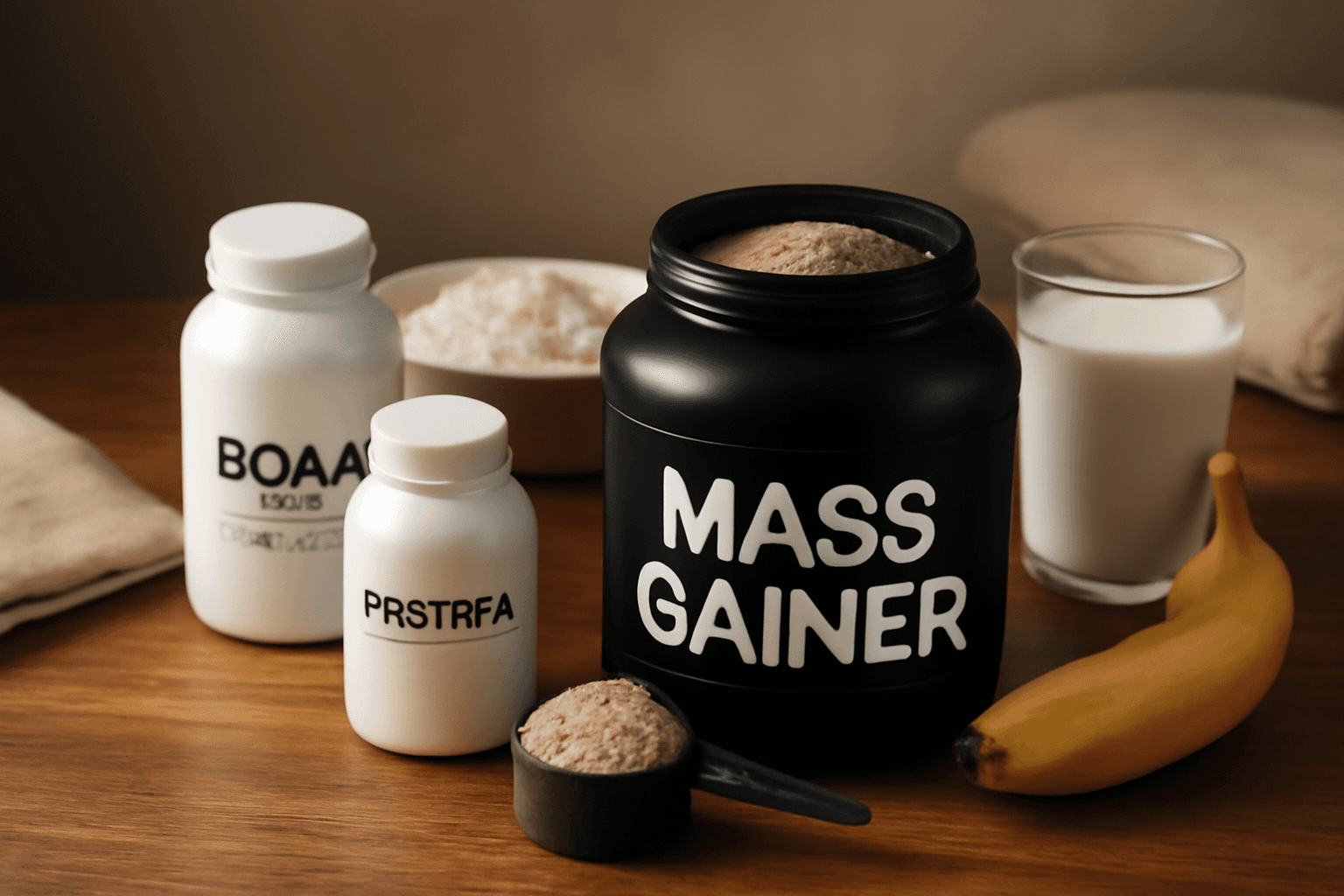
Mass Gain is a dietary strategy that involves intentionally consuming excess calories with the goal of increasing body weight. It's a method primarily used by athletes and bodybuilders looking to increase muscle mass, designed not simply for weight gain but to maximize muscle growth. In this article, we'll present a healthy and efficient muscle-building strategy through the principles of mass gain, effective implementation methods, and supplement utilization.
Determining Caloric Needs
The first step in mass gain is accurately understanding your Basal Metabolic Rate (BMR) and Total Daily Energy Expenditure (TDEE). BMR is the number of calories burned at rest without any activity, and it varies depending on sex, age, weight, and height. For example, a 30-year-old male weighing 75kg who maintains moderate activity levels would have a daily TDEE of approximately 2,400-2,600 calories.
The simplest way to calculate your TDEE is to multiply your body weight by an activity factor. If you exercise rarely, use weight × 14-15; if you exercise 3-4 times per week, use weight × 16-17; if you exercise 5 or more days per week, use weight × 18-19 as a baseline. For more accurate calculations, you can also maintain a typical diet for one week, record weight changes, and back-calculate your actual calorie expenditure.
- Weight Measurement: Measure at the same time each week under the same conditions (before breakfast in the morning)
- Food Tracking: Record all foods consumed over at least 3-5 days to calculate average calorie intake
- Adjustment: If your weight doesn't change, that calorie amount is your maintenance level—use it as your baseline
Increase Daily Caloric Intake by ~20% for Muscle Growth
Once you've identified your TDEE, the ideal approach to begin mass gain is to increase daily calories by 15-20%. This level of caloric surplus promotes muscle growth while minimizing excessive fat accumulation. For someone maintaining 2,500 calories, you would add 375-500 calories, targeting 2,875-3,000 calories.
Too small an increase in calories (5% or less) doesn't adequately support muscle growth, while excessive increases (30% or more) result in unnecessary fat accumulation. Research shows that a weight gain rate of 0.5-1kg per week optimizes the ratio of muscle to fat. Beginners should start at a slower rate (0.3-0.5kg per week) and gradually increase the rate of gain as experience builds.
The caloric increase should come primarily from protein and complex carbohydrates. Target protein at 1.6-2.2g per kilogram of body weight, carbohydrates at 4-7g per kg, and adjust fat to comprise 20-30% of daily calories. Distributing increased calories while maintaining these ratios optimizes the muscle growth environment.
Considering Mass Gain Supplements
Mass gain supplements (Gainers) are manufactured as high-calorie, high-protein powders and are a convenient option for those who struggle to consume adequate calories from regular food alone. A typical mass gain powder contains 300-600 calories, 15-50g of protein, and 40-80g of carbohydrates per serving (approximately 150-200g).
The main advantages of mass gain supplements are short preparation time, portability, and the ability to calculate exact nutritional values precisely. They're particularly useful for people with busy schedules who struggle to prepare high-calorie meals. However, there are important considerations when selecting a product:
- Sugar Content: Excessive added sugar (30g or more per serving) can cause blood sugar spikes and lead to unnecessary fat gain
- Additives: Excessive artificial flavors, thickeners, and emulsifiers can cause digestive discomfort, so carefully check the ingredient list
- Protein Quality: Products containing whey protein concentrate or isolate (WPC, WPI) have superior amino acid profiles
- Mineral Content: Verify that adequate amounts of magnesium, calcium, iron, and other minerals are included
Mass gain supplements should supplement meals, not replace them. The healthiest approach is to obtain primary nutrition from basic whole foods (rice, eggs, meat, fish, milk, nuts, etc.) and use supplements to fill nutritional gaps. If you can consume sufficient calories and protein from regular food alone, supplements are not essential.
How Mass Gain Supplements Support Muscle Growth
Mass gain supplements support muscle growth through several physiological mechanisms. First, adequate calorie supply. Muscle Protein Synthesis (MPS) is optimized by exercise stimulation and a sufficient energy environment. In a calorie-deficient state, muscle growth is limited regardless of exercise intensity, making stable calorie supply through mass gain supplements important.
Second, immediate provision of high-quality protein. Whey protein rapidly increases muscle protein synthesis after exercise due to its fast digestion rate and high leucine content. When protein is consumed 20-40 minutes after exercise, BCAAs (branched-chain amino acids) activate the mTOR signaling pathway, increasing muscle protein synthesis rates by up to 50%.
Third, insulin secretion from carbohydrates. The carbohydrates in mass gain supplements trigger insulin release after exercise, promoting protein and glucose uptake by muscle cells. They also rapidly replenish glycogen stores, maintaining intensity and endurance for the next workout. The optimal ratio of carbohydrates to protein post-exercise is 3:1 or 4:1.
Fourth, complete micronutrient supply. Many mass gain products contain added B vitamins, magnesium, zinc, iron, and other nutrients that support energy metabolism, hormone synthesis, and immune function. These micronutrients serve essential coenzyme roles in the muscle growth process.
Medical Caution: Excessive mass gain supplement consumption can strain the liver and kidneys. Especially if you have pre-existing liver or kidney disease, consult with a healthcare professional before use. Additionally, those with lactose intolerance should choose plant-based protein gainers instead of whey protein.
How to Use Mass Gain Effectively
1. Timing Optimization
The effectiveness of mass gain supplements is greatly influenced by timing of consumption. Taking them within 30-60 minutes after exercise allows you to leverage the peak window for muscle protein synthesis. Consuming a product containing both carbohydrates and protein during this window allows muscle recovery and glycogen replenishment to occur simultaneously. Taking supplements 2-3 hours before exercise or before bed is also effective. Consuming them as a breakfast replacement or between meals to reach daily calorie targets is also a useful strategy.
2. Synchronization with Training Program
Mass gain must be accompanied by appropriate resistance training. Muscle growth is maximized with 3-5 resistance training sessions per week, particularly focusing on compound exercises (squats, deadlifts, bench press, barbell rows). Without resistance training, mass gain alone simply converts stored energy into fat. Beginners should exercise 3 times per week, intermediate lifters 4 times, and advanced lifters 5-6 times per week. Each session should be 60-90 minutes long, with exercise intensity maintained at RPE (Rate of Perceived Exertion) 6-8 levels.
3. Importance of Sleep and Recovery
Muscles grow not during exercise but during rest. Growth hormone secretion peaks during deep sleep stages, making at least 7-9 hours of quality sleep essential. Insufficient sleep raises cortisol (stress hormone) levels, promoting muscle breakdown and hindering muscle growth. Consistent sleep times, a dark sleep environment, and limiting screen exposure 2 hours before bed improve sleep quality.
4. Progressive Overload
To maintain muscle growth during mass gain, you must continuously increase exercise intensity. Increase weight by 2-5% weekly, perform 1-2 more repetitions with the same weight, or shorten rest periods between sets. Without this progressive stimulus, muscles adapt to current stimulation and growth plateaus.
5. Blood Sugar Management and Digestive Health
When consuming large amounts of calories through mass gain, maintain stable blood sugar levels. Choose low glycemic index (Low GI) carbohydrates like brown rice, oats, sweet potatoes, and whole wheat flour instead of white rice, white bread, and refined sugar. Sudden blood sugar spikes can trigger insulin resistance, increasing fat accumulation.
Digestive burden is also a consideration. Excessive calorie consumption can cause digestive discomfort, abdominal bloating, and diarrhea. To prevent this, distribute mass gain supplement consumption across multiple times throughout the day, and consume adequate dietary fiber (25-35g daily) and water (3-4 liters daily). You might also consider digestive enzyme or probiotic supplements.
6. Regular Progress Monitoring
Throughout your mass gain journey, measure weight weekly under consistent conditions and assess body composition (muscle-to-fat ratio) monthly. If weight gain exceeds 0.5kg per week, fat accumulation is excessive—reduce calories. If weight plateaus for 3 weeks or more, add 100-150 calories. Also maintain training records to verify whether exercise performance is improving.
Summary
Mass gain is a strategy requiring systematic, science-based approaches. First, accurately determine your daily calorie expenditure and set caloric surplus at 15-20% above that baseline. Second, these additional calories should come primarily from protein and complex carbohydrates.
Third, mass gain supplements are tools that complement whole food consumption; when selecting products, carefully check sugar content, protein quality, and additives. Fourth, consumption within 30-60 minutes post-exercise, synchronization with high-intensity resistance training, and securing sufficient sleep determine results.
Fifth, maintain stable blood sugar, prioritize digestive health, and continuously increase exercise intensity. Finally, track weekly weight changes and monthly body composition changes, adjusting diet and training as needed.
Recommendation for Professional Consultation: If you have pre-existing health conditions (diabetes, hypertension, liver disease, kidney disease) or are taking specific medications, consult with a doctor or registered dietitian before starting mass gain. Optimal strategies vary depending on individual metabolic state, genetic factors, and health conditions.