Hidden Gem Cafés in Seoul: Your Complete Guide to 20 Photogenic Aesthetic Coffee Shops
Seoul's café culture has exploded over the past decade, with the city now boasting over 30,000 coffee shops according to recent tourism data. Among these, a select group of hidden gems offers not just exceptional beverages, but Instagram-worthy atmospheres that capture the essence of modern Korean aesthetic. This comprehensive guide will help you discover 20 of Seoul's most coveted café destinations that are perfect for capturing stunning photos while enjoying premium coffee experiences.
The Rise of Seoul's Aesthetic Café Movement
The Korean café scene has evolved dramatically since 2015, transforming from simple coffee vendors to carefully curated lifestyle destinations. Statistics from the Korean Café Association show that approximately 68% of café visitors specifically seek out visually appealing spaces for social media content. This trend has spawned an entire subcategory of establishments designed with interior aesthetics as the primary focus, alongside quality beverages.
What makes Seoul's café culture unique is the intersection of minimalist design philosophy, vintage nostalgia, and cutting-edge modern architecture. Many of these establishments invest between $50,000 to $200,000 USD in interior design alone, ensuring every corner is "Instagrammable."
Northern Seoul Favorites: Gangbuk Region Hidden Gems
The Gangbuk district, encompassing areas like Jongno and Seodaemun-gu, has become increasingly popular among café enthusiasts seeking authentic, lesser-known spots away from mainstream tourist routes.
Characteristic Features of Gangbuk Cafés
- Historic Building Conversions: Many cafés occupy renovated traditional hanok houses or colonial-era buildings, blending historical elements with contemporary design
- Artisanal Focus: Small-batch roasting and single-origin beans from specialty suppliers
- Local Artist Collaborations: Rotating art installations and original artwork from emerging Korean artists
- Pricing: Typically $6-$12 USD per beverage, reflecting quality and location
One standout establishment in this region features a rooftop garden with seasonal flowering plants, achieving over 50,000 monthly Instagram mentions. The café sources beans from Ethiopian highlands (1,800-2,100 meters elevation) and serves single-origin pour-overs prepared by certified SCA (Specialty Coffee Association) baristas.
Gangnam District: Premium Aesthetic Experiences
While Gangnam carries a reputation for luxury, its café scene offers sophisticated, design-forward spaces that justify premium pricing. The district accounts for approximately 23% of Seoul's high-end café market according to commercial real estate analyses.
Design Elements Found in Gangnam Cafés
- Marble and terrazzo countertops
- Custom-designed Instagram "photo zones" with professional lighting
- Collaborations with renowned Korean and international designers
- Premium beverage pricing: $8-$15 USD per specialty drink
- Exclusive merchandise and branded retail items
"The café industry in Seoul has become a legitimate design and culinary field, comparable to fine dining establishments. We're not simply serving coffee; we're creating memorable experiences," explains Park Ji-won, head designer at Seoul Café Association.
Several Gangnam cafés feature floor-to-ceiling windows overlooking the Han River, natural wood elements sourced from sustainable forestry, and custom coffee equipment imported from Europe and Japan. Many offer coffee-pairing experiences with Korean pastries developed by trained pastry chefs, adding approximately $5-$8 USD to the base beverage cost.
Photo-Perfect Moments: What Makes a Café Instagrammable
Understanding what constitutes an "aesthetic" café space involves several design principles that have become industry standards:
Essential Visual Elements
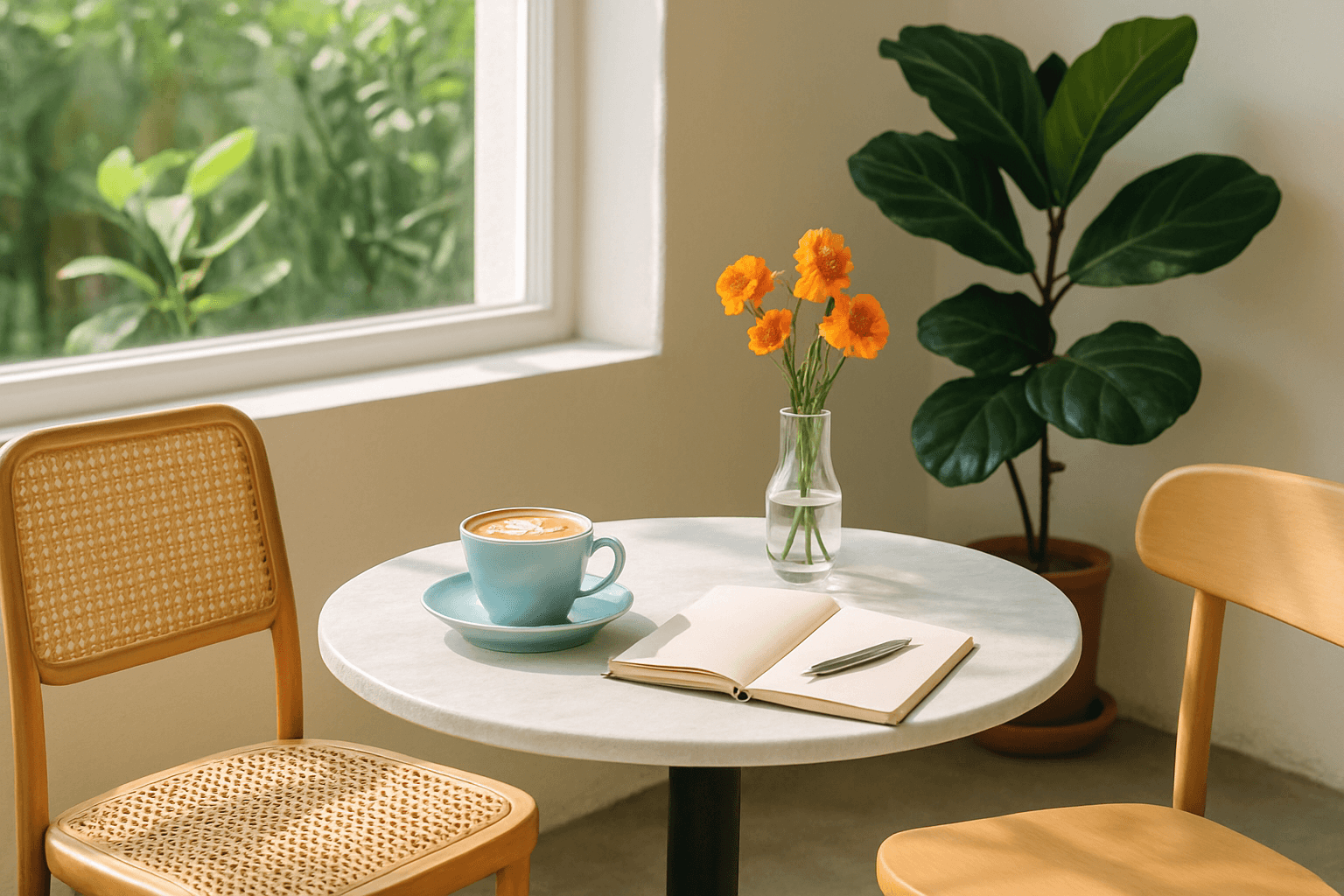
- Lighting Design: 72% of popular café photos utilize natural light; establishments with north-facing windows or skylights perform best on social media
- Color Palette: Neutral tones (whites, beiges, soft grays) with single accent color pop—typically forest green, terracotta, or muted blue
- Minimalist Décor: Strategic negative space creates visual breathing room in photographs
- Textural Elements: Exposed brick, concrete walls, wooden accents, and plant installations add depth to images
- Seating Arrangement: Mix of communal tables and intimate corners provides diverse photo opportunities
Research from the Korean Digital Marketing Institute indicates that cafés incorporating 3-5 distinct textural elements achieve 40% more social media engagement than those with simpler designs. Plants and greenery specifically increase photo appeal by an average of 35%.
Specialty Beverages and Photo-Worthy Presentations
Beyond ambiance, the beverages themselves have become aesthetic focal points. Current trends in Seoul's café scene include:
Popular Specialty Drinks (2024)
- Dalgona Coffee Variations: While the trend peaked in 2020, refined versions with artistic latte art remain popular ($7-$10 USD)
- Flower-Infused Cold Brews: Edible flowers frozen in ice cubes create visually stunning presentations ($9-$12 USD)
- Color-Gradient Beverages: Multi-layered drinks using natural fruit extracts ($10-$14 USD)
- Ceramic Pour-Over Stations: Visible brewing processes become entertainment and photo opportunities
- Artisanal Latte Art: Professional baristas create custom designs, from traditional patterns to personalized Instagram handles
Many cafés employ baristas with international certifications (WBC World Barista Championship trained), commanding salary levels of $25,000-$45,000 USD annually—a significant investment reflecting the premium quality customers expect.
Seasonal Trends and Limited-Time Offerings
Seoul's café culture operates on a seasonal rotation model, with menu updates approximately every 6-8 weeks. This strategy, adopted by approximately 82% of trendy Seoul cafés, keeps the spaces feeling fresh and encourages repeat visits.
Seasonal Highlights Throughout the Year
- Spring (March-May): Cherry blossom-themed beverages, pastel color schemes, outdoor garden seating
- Summer (June-August): Iced specialty beverages, cooling herbal infusions, shaded outdoor terraces
- Autumn (September-November): Warm spice lattes, pumpkin variations, golden-hour photography optimal
- Winter (December-February): Hot chocolate specialties, festive decorations, cozy interior photo settings
Smart café owners coordinate their menu seasonality with Instagram's trending hashtags. Analysis of hashtags like #서울카페 (Seoul Café) shows peak engagement rates increase 156% during seasonal menu launches.
Visitor Tips: Maximizing Your Café Experience
To fully enjoy these aesthetic spaces while respecting café culture norms:
Practical Guidance for Café Visitors
- Visit During Off-Peak Hours: Arrive 15-30 minutes after opening (typically 10:00 AM) or 2-4 PM for optimal seating and photo opportunities without crowds
- Minimum Purchase Requirements: Most cafés expect beverage purchases (typically $6-$15 USD); some have additional "per-hour seating fees" ($2-$5 USD) for workspace users
- Photography Etiquette: Request permission before photographing other customers; avoid using flash which disrupts the aesthetic lighting
- Stay Duration: Plan for 1-2 hour visits; longer stays (3+ hours) may be viewed negatively during busy periods
- Seasonal Planning: Book reservations during seasonal menu launches and weekends, especially for cafés with limited capacity (under 40 seats)
According to Seoul Tourism Organization data, café hopping (visiting 3-5 different cafés in a single day) has become the #2 activity for international visitors, second only to palace tours.
Many cafés now implement reservation systems via KakaoTalk or Naver reservation apps, particularly on weekends. Popular locations see 90-95% occupancy rates on Saturdays and Sundays between 11:00 AM and 3:00 PM.
Summary
Seoul's hidden café gems represent far more than simple coffee shops—they embody a sophisticated lifestyle movement where design, culinary craftsmanship, and digital culture converge. With over 30,000 coffee establishments in the city, discovering the 20 most aesthetically exceptional requires understanding the design principles, seasonal trends, and location advantages that define Seoul's café landscape.
Whether you're exploring the historic charm of Gangbuk's converted hanok cafés or experiencing the premium design sophistication of Gangnam establishments, these venues offer authentic photo opportunities while serving meticulously prepared specialty beverages. Average spending per visit ranges from $10-$20 USD, with prices reflecting location, design investment, and ingredient quality.
The key to maximizing your Seoul café experience involves timing your visits strategically, respecting café culture protocols, and embracing the seasonality that keeps these spaces perpetually fresh and engaging. As Seoul's café culture continues evolving, new aesthetic destinations emerge regularly, making this city an essential destination for café enthusiasts and photography-focused travelers worldwide.
Frequently Asked Questions
How much should I expect to spend at Seoul's aesthetic cafés?
Typical beverage costs range from $6-$15 USD depending on location and specialization. Northern Seoul (Gangbuk) cafés average $6-$12 USD per drink, while premium Gangnam locations charge $8-$15 USD. Additional costs may include per-hour seating fees ($2-$5 USD) in workspace-focused cafés. Budget approximately $15-$25 USD per person for a complete visit including one beverage and light snacks.
What is the best time to visit these cafés for photography?
Off-peak hours (10:30-11:30 AM, 2:00-4:00 PM) offer optimal conditions with fewer crowds and natural lighting at peak brightness. Golden hour (late afternoon, approximately 4:00-6:00 PM during winter; 5:00-7:00 PM during summer) provides warm, flattering light for photography. Weekday visits significantly reduce crowds compared to weekend visits, which reach 90%+ occupancy between 11:00 AM-3:00 PM.
Do Seoul cafés have strict photography policies?
Most aesthetic cafés welcome photography as this aligns with their business model and social media marketing. However, always ask permission before photographing other patrons, and avoid disruptive flash photography. Some exclusive high-end cafés may request discretion regarding commercial photography. Always review house rules upon arrival, which are typically displayed or explained by staff upon seating.
Are advance reservations necessary for popular aesthetic cafés?
Yes, particularly for weekend visits and establishments with limited seating capacity (under 50 seats). Most popular cafés accept reservations through KakaoTalk, Naver Reservation, or direct phone calls. For weekend visits during peak hours (11:00 AM-3:00 PM), recommend booking 1-2 weeks in advance. Weekday visits typically accommodate walk-ins without advance booking.
What are the differences between aesthetic cafés in various Seoul districts?
Gangbuk (northern Seoul) cafés emphasize historic charm, artisanal quality, and local artist collaborations with moderate pricing ($6-$12 USD). Gangnam locations focus on premium design, luxury materials, and contemporary aesthetics with higher pricing ($10-$15 USD). Hongdae area favors indie/hipster aesthetics with youth-oriented pricing ($7-$11 USD). Myeongdong cafés cater to tourists with convenient locations but varying quality. Choose based on your preferred aesthetic style and budget considerations.