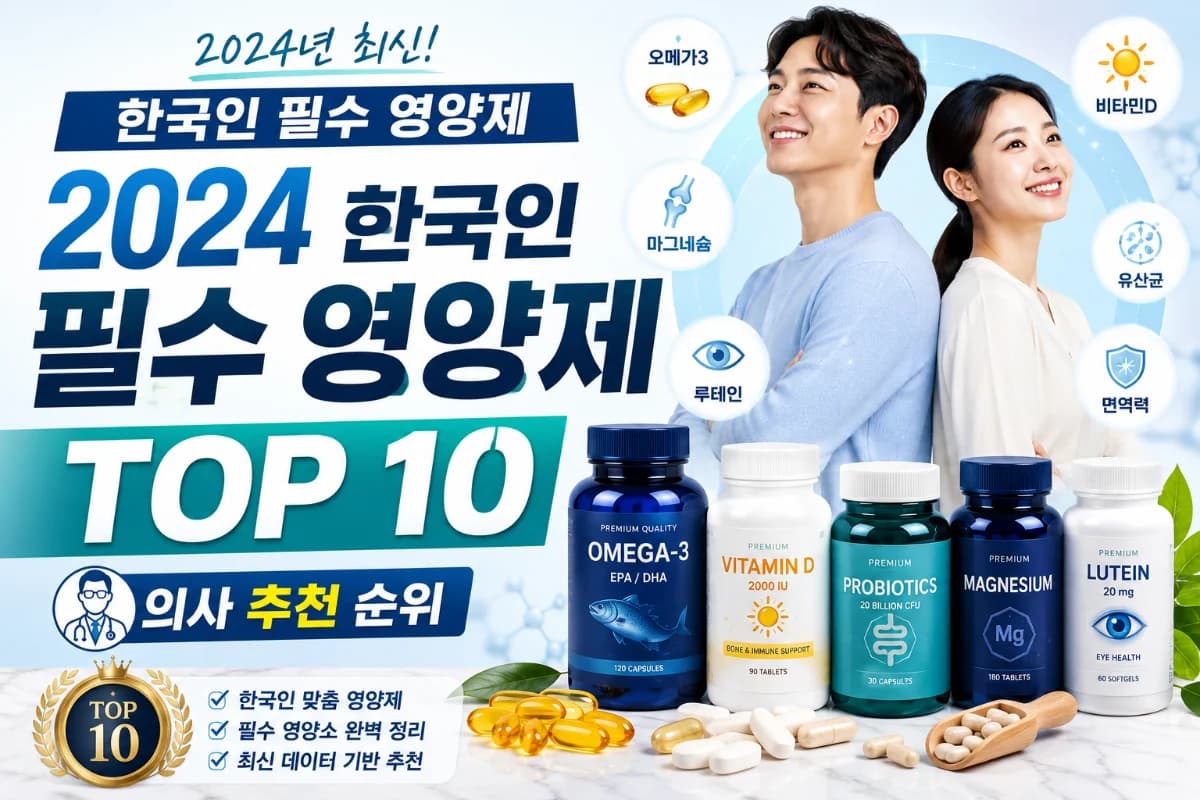
Essential Supplements for Koreans in 2024: Doctor's Recommended Rankings
Interest in health management among Koreans is at an all-time high. According to the 2023 statistics from the Korea Disease Control and Prevention Agency, 7 out of 10 Koreans regularly take supplements, and the annual supplement market size reaches approximately 3 trillion won. However, indiscriminate intake of supplements can actually harm health, raising concerns. This article introduces the top 10 essential supplements that Koreans must consider in 2024, based on recommendations from the Korean Medical Association and the latest nutritional research.
1st Place: Vitamin D - An Essential Nutrient for Osteoporosis Prevention
Vitamin D is the most noteworthy supplement for 2024. Research has shown that 9 out of 10 Koreans are deficient in vitamin D, leading experts to label it as a 'national essential supplement.'
- Recommended Intake: 400–800 IU (International Units) per day for adults
- Deficiency Symptoms: Osteoporosis, fatigue, decreased immunity, depression
- Representative Products: Jongno Pharmacy D Vitamin (approximately 12,000 won/month), NutriCore Vitamin D (approximately 18,000 won/month)
- Intake Tip: Absorption is 30% higher when taken after breakfast
Particularly in Korea, due to a high prevalence of indoor activities and low UV exposure, vitamin D deficiency is severe. The Korea Disease Control and Prevention Agency recommends vitamin D supplements containing at least 1,000 IU daily. Postmenopausal women and men over 50 are at higher risk for osteoporosis and should consider high-dose products after consulting a doctor.
2nd Place: Omega-3 - The Foundation of Cardiovascular Health
To prevent heart disease, the leading cause of death among Koreans, omega-3 intake is essential. According to a 2023 report from the Korean Society of Cardiology, the incidence of heart disease decreased by 23% in groups that consistently consumed omega-3.
- Recommended Intake: 500–1,000 mg of combined EPA and DHA per day
- Benefits: Reduces triglycerides, improves blood vessels, maintains brain health
- Representative Products: Norwegian Omega-3 (approximately 30,000–50,000 won/month), RTG Omega-3 (approximately 45,000 won/month)
- Selection Tip: rTG form (natural type) has a 40% higher absorption rate than the synthetic form (EE type)
Important Caution: Those taking blood thinners must consult a doctor before taking omega-3. The risk of bleeding may increase when taken with platelet aggregation inhibitors.
3rd Place: Lutein - An Essential Component for Eye Health
With the average daily smartphone usage exceeding 6 hours, the importance of lutein is becoming more pronounced. Statistics from the Health Insurance Review and Assessment Service show that the number of patients treated for eye diseases increases by 5% annually.
- Recommended Intake: 10–20 mg per day
- Benefits: Prevents macular degeneration, improves eye fatigue, enhances night vision
- Representative Products: Lutein Plus (approximately 25,000 won/month), Lutein + Zeaxanthin Complex (approximately 35,000 won/month)
- Additional Ingredients: Products containing zeaxanthin and anthocyanins are effective
The incidence of macular degeneration sharply increases in those over 40, so lutein intake is particularly recommended for this age group. While green vegetables like kale and spinach are rich in lutein, it can be challenging to consume sufficient amounts, making supplements effective.
4th Place: Vitamin B Complex - For Energy Metabolism and Nervous System Health
This is one of the most popular supplements among office workers and students. The B vitamins are essential for energy production and the synthesis of neurotransmitters in our bodies.
- Main Ingredients: B1, B2, B3, B5, B6, B12, folic acid
- Benefits: Reduces fatigue, enhances concentration, supports nervous system health
- Representative Products: Jongno Pharmacy B Complex (approximately 10,000 won/month), NutriCore B Energy (approximately 18,000 won/month)
- Special Caution: B12 deficiency is common among vegetarians and is essential for them
Particularly, B12 is found only in animal products, making it common for vegetarians and those over 50 to experience deficiencies. If experiencing neuropathy, anemia, or severe fatigue, it is advisable to check B12 levels first.
5th Place: Probiotics - The Foundation of Gut Health and Immunity
Since the COVID-19 pandemic, the importance of gut health has become widely recognized, leading to a growth of over 10% in the probiotic market. Gut microbiota is responsible for more than 70% of our immunity.
- Recommended Intake: At least 10 billion CFU (colony-forming units) per day
- Benefits: Improves gut health, boosts immunity, enhances digestion, alleviates allergy symptoms
- Representative Products: Lactofit (approximately 35,000 won/month), BioX (approximately 28,000 won/month), Yaliton (approximately 45,000 won/month)
- Selection Tip: Products containing diverse strains (6 or more) are effective
Expert Advice: "It's crucial for probiotics to reach the 'living state.' Products that are refrigerated have a higher survival rate than those stored at room temperature." - Gastrointestinal Nutrition Expert, Korean Society of Nutrition
Probiotic intake is particularly recommended for those who have taken antibiotics, suffer from frequent diarrhea, or have irritable bowel syndrome.
6th Place: Calcium - The Main Component of Bones and Teeth
Calcium is an essential nutrient for preventing osteoporosis, especially in postmenopausal women and the elderly. According to the National Health and Nutrition Survey, Korean women's calcium intake is only about 60% of the recommended amount.
- Recommended Intake: 1,000 mg per day for adults (1,200 mg for postmenopausal women)
- Absorption Rate Comparison: Citrate calcium 35% (synthetic calcium 25%), high absorption rate
- Representative Products: Jongno Pharmacy Calcium D (approximately 15,000 won/month), CalMag (approximately 22,000 won/month)
- Intake Tip: Taking with vitamin D and magnesium increases absorption by 50%
Caution: Excessive calcium intake can lead to kidney stones. Be careful not to exceed 2,000 mg per day, and those with kidney disease should consult a doctor.
7th Place: Magnesium - The Mineral for Stress Relief
With increasing stress levels in modern life, the number of people deficient in magnesium is rising sharply. Magnesium plays a key role in stabilizing nerves and relaxing muscles.
- Recommended Intake: 420 mg for men, 320 mg for women (daily)
- Benefits: Relieves stress, improves sleep quality, alleviates muscle cramps, regulates blood pressure
- Representative Products: Magnesium Plus (approximately 18,000 won/month), Now Foods Magnesium (approximately 25,000 won/month)
- Side Effects: Excessive intake can cause diarrhea, so checking the dosage is important
Those with insomnia or frequent muscle cramps (especially leg cramps) should suspect magnesium deficiency. Taking it in the evening can enhance sleep improvement effects.
8th Place: Vitamin C - Immunity and Antioxidant Action
This is a supplement many people take to prevent colds during seasonal changes and transitions. However, it is known that some of its benefits have limited scientific backing.
- Recommended Intake: 75–100 mg per day for adults (125 mg for smokers)
- Benefits: Boosts immunity, provides antioxidant action, aids collagen synthesis
- Representative Products: Vitamin C 1000 (approximately 8,000 won/month), High-Dose C1500 (approximately 12,000 won/month)
- Caution: High doses (over 2,000 mg) may increase the risk of kidney stones
People with kidney disease should avoid excessive vitamin C intake. For general cold prevention, the recommended amount is sufficient, and remember that high doses are not necessarily more effective.
9th Place: Iron - An Essential Nutrient for Specific Groups
Iron deficiency is common among women, especially those menstruating, and vegetarians. According to a survey by the Korean Medical Association, over 25% of women of childbearing age are iron deficient.
- Recommended Intake: 8 mg for adult men, 18 mg for menstruating women (daily)
- Symptoms: Fatigue, shortness of breath, dizziness, pallor
- Representative Products: Iron Generic (approximately 10,000 won/month), Iron Plus C (approximately 15,000 won/month)
- Intake Tip: Taking with vitamin C increases absorption by 300%
Medical Advice: "Iron supplements should only be taken after confirming deficiency through blood tests. Excessive intake can lead to toxicity." - Korean Society of Internal Medicine
Especially those with heavy menstrual flow, vegetarians, and pregnant women should decide on iron intake after consulting with healthcare providers.
10th Place: Multivitamins - Basic Nutritional Supplementation
As a choice to supplement basic nutritional deficiencies in a busy lifestyle, balanced multivitamins remain a popular option.
- Representative Products: Jongno Pharmacy Multivitamin (approximately 12,000 won/month), NutriCore All-in-One (approximately 28,000 won/month)
- Advantages: Allows intake of various nutrients at once
- Caution: If high doses of specific nutrients are needed, separate single products may be more effective
- Selection Criteria: It's important to choose products that match age, gender, and lifestyle patterns
Tips to Know When Choosing Supplements
1. Choose FDA-Certified Products
When purchasing supplements, always check for the 'Health Functional Food' label certified by the Ministry of Food and Drug Safety (MFDS). This indicates that the product's safety and functionality have been scientifically proven.
2. Importance of Personalized Supplement Selection
Even the same supplement may require different dosages and types depending on an individual's health status, age, and gender. It is advisable to consult a doctor or pharmacist before making a selection.
3. Check for Interactions
Always check for interactions between currently taken medications and supplements. Some supplements may hinder the absorption of medications or reduce their effectiveness.
4. Synthetic (EE) Form vs. Natural (rTG) Form
Fat-soluble nutrients like omega-3 and vitamin E have higher absorption rates in their natural form (rTG), but they are more expensive. Generally, synthetic forms are also effective, so consider your budget when choosing.
5. Storage Method
Most supplements are sensitive to moisture and heat, so they should be stored in a cool, dark place. Refrigeration is essential for probiotics.
Age-Specific Supplement Selection Guide
20s-30s: Vitamin D, Omega-3, Vitamin B Complex
40s-50s: Lutein, Calcium, Magnesium, Omega-3
60s and above: Vitamin D, Calcium, Magnesium, Probiotics, Multivitamins
For women, it is important to adjust iron and calcium intake based on menstrual cycles and menopause status.
Conclusion
The top 10 essential supplements for Koreans in 2024 should be selected based on individual health status and lifestyle habits. It is not necessarily better to take a large number of supplements.
The most important principles are as follows:
- The foundation is a balanced diet. Supplements are meant to fill in the gaps.
- Confirm actual deficiency through blood tests before selecting supplements.
- It is safest to consult with a doctor or pharmacist before taking supplements.
- Set a monthly budget and start with essential supplements based on priority.
- To expect effects, it is important to take them consistently for over three months.
Especially for those with underlying health conditions or taking multiple medications, as well as pregnant and breastfeeding women, it is essential to choose supplements under the guidance of healthcare professionals. Make wise choices in supplements to effectively manage your health for a healthy 2024.