Menopause: Korean Women Struggling with Hormonal Changes
The average age of menopause for Korean women is around 50, with a significant increase in women experiencing menopausal symptoms starting in their late 40s. According to recent data from the National Statistical Office, about 70% of women over 40 report discomfort due to menopausal symptoms, with over 30% indicating that these symptoms have a substantial impact on their daily lives.
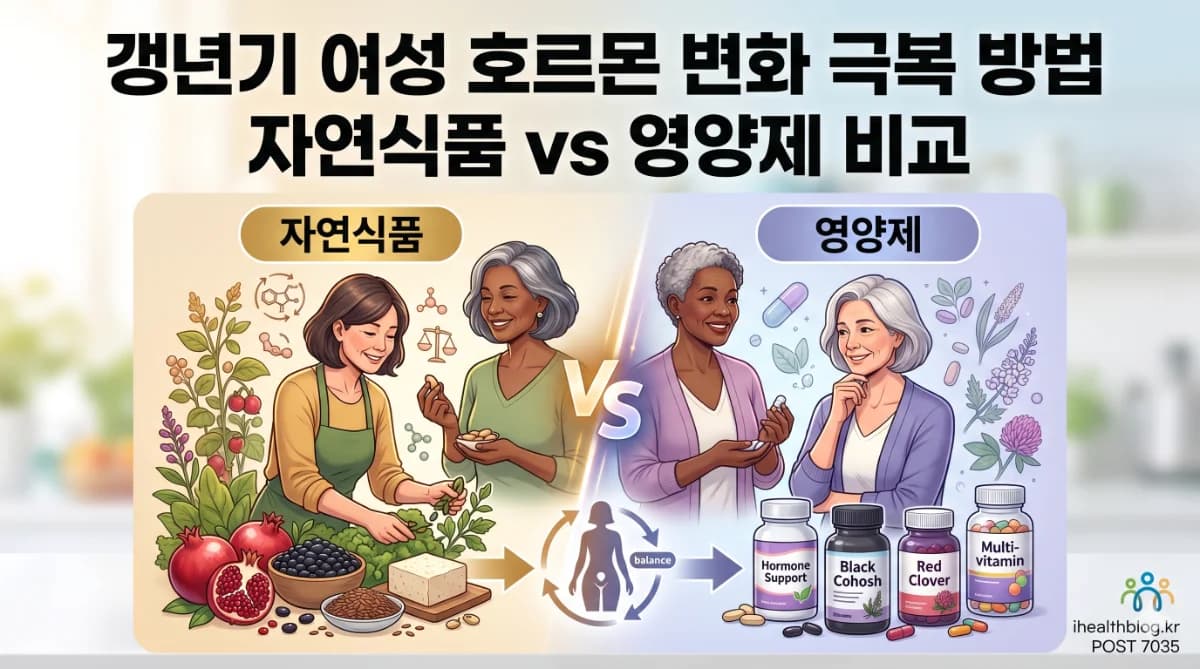
Menopausal symptoms extend beyond simple physical changes and can affect mental health, leading to feelings of depression, anxiety, and sleep disturbances. As a result, many women are curious about which natural foods or supplements are more effective. Today, we will compare these two methods in depth using evidence-based information.
Physiological Understanding of Hormonal Changes During Menopause
Menopause is characterized by a rapid decline in estrogen and progesterone hormones over approximately 10 years before and after menopause. As estrogen levels drop by more than 90%, the body undergoes various adaptation processes.
The main symptoms include:
- Hot flashes and night sweats: Experienced by about 80% of women
- Sleep disturbances: Experienced by about 60% of women
- Mood swings and depression: Experienced by about 50% of women
- Vaginal dryness and discomfort in sexual activity: Experienced by about 40% of women
- Joint and muscle pain: Experienced by about 35% of women
- Bone density loss: Decreases by 2-3% per year for the first 5 years after menopause
Hormonal deficiency also leads to a decrease in metabolism, resulting in weight gain (an average of 2-3 kg). Let’s explore how natural foods and supplements can address these symptoms.
Overcoming Menopause with Natural Foods
1. Soy-Based Foods - A Source of Phytoestrogens
The isoflavones found in soy are phytoestrogens that bind to human estrogen receptors, partially compensating for hormonal deficiencies. According to a 2023 study by the Seoul National University Medical Research Institute, menopausal women who consumed 40-50 mg of isoflavones daily experienced a 25% reduction in the frequency of hot flashes compared to the placebo group.
Effective ways to consume soy products:
- Soy milk: 1-2 cups daily (about 200-400ml), unsweetened products cost around 2,500-4,000 won per pack
- Tempeh and miso: Consume 3-4 times a week, one bowl of miso soup (contains about 10mg of isoflavones)
- Tofu: Recommended daily intake of half a block (about 150g), costs about 1,500-2,000 won
- Black beans: 2-3 times a week, one bowl of black bean rice (about 30mg of isoflavones)
However, women with thyroid disorders or those taking certain medications should consult with healthcare professionals before consumption.
2. Pomegranates and Berries - Antioxidant Components
The ellagic acid in pomegranates and the anthocyanins in blueberries help reduce oxidative stress that increases during menopause. According to a 2023 study published in the journal Menopause, women who consumed 250ml of pomegranate juice daily for 12 weeks saw about a 20% improvement in vaginal dryness and a 23% increase in sexual satisfaction.
Recommended consumption methods:
- Pomegranate juice: 150-250ml daily (about 6,000-8,000 won per bottle), preferably unsweetened
- Frozen blueberries: One handful daily (about 30g), consumed with yogurt
- Fresh pomegranate: 3-4 times a week, one piece (about 3,000-5,000 won)
3. Nuts and Seeds - Essential Fatty Acids
Omega-3 fatty acids and lignans found in flaxseeds, chia seeds, and walnuts promote serotonin production in the brain, which can improve mood. According to a 2023 publication in the Korean Journal of Nutrition, menopausal women who consumed 25g of flaxseeds daily for 8 weeks experienced an average 31% reduction in depression scores.
Recommended daily intake:
- Flaxseed powder: 15-25g daily (about 15,000 won for 500g, costing about 4,500 won per month)
- Walnuts: One handful daily (about 30g), costing about 2,000-3,000 won
- Chia seeds: 15ml daily (about 10g), costing about 20,000 won for 500g
4. Leafy Greens - Calcium and Magnesium
During menopause, when hormonal decline leads to rapid bone density loss, kale, broccoli, and spinach are excellent sources of calcium and magnesium. According to the Ministry of Food and Drug Safety's nutrient standards, 100g of raw kale contains 254mg of calcium and 33mg of magnesium.
Weekly intake plan:
- Kale smoothie: 4-5 times a week, about 5,000 won per serving or around 3,000-4,000 won per pack if purchased directly
- Broccoli: 3 times a week, about 2,000-3,000 won per piece
- Spinach: 4 times a week, about 1,500-2,000 won per pack
Overcoming Menopause with Supplements
1. Isoflavone Supplements - Conditions for Quick Effect
If it is difficult to achieve the necessary isoflavone intake through natural foods, standardized isoflavone supplements ensure consistent dosing. According to products certified by the Ministry of Food and Drug Safety, the effects of products containing 40-50mg of isoflavones daily have been clinically proven.
Main products and price ranges:
- Major domestic brands (e.g., Jongkundang, Dong-A Pharmaceutical): 30,000-60,000 won per month for a 30-day supply
- Red ginseng + isoflavone combination: 50,000-80,000 won per month
- Premium imported products: 80,000-120,000 won per month
When choosing, it is essential to check for approval as a health functional food by the Ministry of Food and Drug Safety. Individuals should ensure their liver health is good, and consulting a doctor before taking is essential.
2. Magnesium - A Solution for Sleep and Muscle Pain
About 60% of menopausal women experience sleep disturbances, and magnesium supplementation is a scientifically proven solution. According to a 2022 meta-analysis published in the American Journal of Clinical Nutrition, daily supplementation of 300-400mg of magnesium improved sleep quality by about 30% and reduced night sweats by about 15%.
Recommended products and dosages:
- Magnesium glycinate: 25,000-45,000 won per month (highest absorption rate)
- Magnesium malate: 20,000-35,000 won per month (energy-boosting effect)
- Magnesium L-threonate: 40,000-70,000 won per month (additional brain health benefits)
Taking 300-400mg 1-2 hours after dinner or before bed is optimal. Caution is needed as excessive intake can cause diarrhea.
3. Omega-3 Fish Oil - Cardiovascular Health and Mood Improvement
The risk of cardiovascular disease rises sharply after menopause, and omega-3 fatty acids can prevent this while also improving mood. According to the 2023 recommendations from the Korean Society of Cardiology, menopausal women are advised to consume 1,000-2,000mg of combined EPA and DHA daily.
Product selection and prices:
- Molecular distilled fish oil (impurity-free): 30,000-50,000 won per month
- Alaskan wild salmon oil: 50,000-80,000 won per month
- Krill oil (excellent absorption): 60,000-100,000 won per month
If taking blood thinners, consult with healthcare professionals before consumption.
4. Calcium + Vitamin D - Essential for Osteoporosis Prevention
Bone density decreases by an average of 10-15% in Korean women during the first 5 years after menopause, which can lead to osteoporosis. According to data from the Korea Disease Control and Prevention Agency, 1 in 5 women over 50 has osteoporosis.
Effective supplement composition:
- Calcium citrate + vitamin D3 combination: 25,000-45,000 won per month (1,000mg calcium, 1,000IU vitamin D daily)
- Micellar vitamin D3 (3 times better absorption): 35,000-60,000 won per month
- Calcium + magnesium + vitamin K2 triple combination: 45,000-70,000 won per month
Recent studies indicate that vitamin K2 enhances calcium absorption in bones by 45%, making products that include it more effective.
5. Probiotics - Gut Health and Hormonal Recycling
The diversity of gut microbiota plays a crucial role in estrogen recycling (the enterohepatic cycle). A study published in the International Journal of Microbiology in 2023 found that women who consumed specific probiotic strains (Lactobacillus and Bifidobacterium) for 12 weeks experienced an average 33% reduction in hot flashes.
Recommended products:
- Women-specific probiotics (over 50 billion CFU): 35,000-55,000 won per month
- Prebiotics + probiotics synergy products: 40,000-65,000 won per month
- Refrigerated probiotics (high survival rate): 50,000-80,000 won per month
Taking them on an empty stomach can destroy them due to stomach acid, so it is effective to take them during meals or within 30 minutes after eating.
Natural Foods vs. Supplements: Effectiveness Comparison and Selection Criteria
Speed of Effect
Victory for Supplements: Standardized and concentrated forms of supplements begin to alleviate symptoms within 3-4 weeks, while natural foods generally take 8-12 weeks. If immediate relief from hot flashes or sleep disturbances is needed, supplements are advantageous.
Cost-Effectiveness
Victory for Natural Foods:
- Monthly cost for natural foods (basic diet): Approximately 150,000-200,000 won (additional to existing food expenses)
- Monthly cost for supplements (combined intake): Approximately 200,000-400,000 won
In the long run, natural foods are more economical and provide additional health benefits.
Side Effects and Safety
Victory for Natural Foods: Natural foods have minimal side effects and a very low risk of drug interactions. In contrast, supplements must consider individual health conditions, medications being taken, and potential allergic reactions.
- Excessive isoflavone intake: Possible thyroid dysfunction
- Excessive magnesium intake: Diarrhea, abdominal cramps
- Excessive omega-3 intake: Delayed blood clotting
Sustainability
Draw: Natural foods can be enjoyed deliciously and sustained, but it may be challenging to consume them consistently due to a busy lifestyle. Supplements are easy to take, but psychological resistance can lead to higher discontinuation rates (about 30-40% sustainment rate beyond 6 months).
Overall Health Improvement
Victory for Natural Foods: Natural foods not only alleviate menopausal symptoms but also simultaneously improve cardiovascular health, weight management, gut health, and blood sugar control. About 60% of Korean adult women currently have chronic diseases (hypertension, diabetes, hyperlipidemia), so consuming natural foods can help manage these conditions.
Optimal Integrated Strategy for Korean Women
Step 1: Build the Foundation (Weeks 1-4)
First, assess the severity of your symptoms. Utilizing the self-diagnosis chart for menopausal symptoms provided by the Korea Institute of Oriental Medicine allows you to calculate your Menopause Rating Scale (MRS) score.
Mild (MRS 9-16 points): Start with natural foods
- 1-2 cups of soy milk daily
- One handful of nuts daily
- Leafy greens 4 times a week
- Additional monthly cost: Approximately 150,000 won
Moderate (MRS 17-24 points): Natural foods + selective supplements
- Maintain the basic natural food diet
- 300mg of magnesium in the evening (for sleep improvement)
- Probiotics in the morning
- Additional monthly cost: Approximately 250,000-350,000 won
Severe (MRS 25 points and above): Consult healthcare professionals + integrated management
- Gynecological consultation is essential
- Determine the need for hormone therapy
- Combine natural foods + supplements
- Additional monthly cost: Approximately 350,000-500,000 won (excluding consultation fees)
Step 2: Intensive Management (Months 2-3)
Implement customized approaches based on symptoms.
If hot flashes are the main symptom:
- Daily intake of soy products (40-50mg isoflavones)
- Or isoflavone supplement 40mg
- If quick effects are desired, choose supplements
If sleep disturbances are the main symptom:
- Evening intake of 300-400mg of magnesium
- Add 20g of flaxseed to dinner
- Drink chamomile tea 1 hour before bed
If mood changes and depression are the main symptoms:
- Daily intake of 1,500mg of omega-3
- Probiotics with over 50 billion CFU
- Essential stress management (add meditation, exercise)
If vaginal dryness and discomfort in sexual activity are the main symptoms:
- Daily intake of 150ml of pomegranate juice
- Daily intake of 400IU of vitamin E
- Recommended to use medical lubricants
Step 3: Maintenance and Optimization (After 3 Months)
Continue the effective therapies while paying attention to the following:
- Reassess symptoms every 3 months
- Adjust supplement dosages as needed
- Flexible management according to seasons and stress levels
- Women's health check-ups (utilize the national cancer screening program): Free breast cancer screening every 2 years, free cervical cancer screening every 5 years
Recommendations from Korean Experts and Institutions
Korean Society of Obstetrics and Gynecology: "Management of menopausal symptoms should prioritize lifestyle improvements and dietary changes over medication."
Korean Nutrition Society: "Supplements should only be recommended when sufficient nutrients cannot be obtained from natural foods."
Ministry of Food and Drug Safety: "Health functional foods are not medications and should only be used for nutritional supplementation, not for disease treatment." Additionally, personalized prescriptions require consultation with healthcare professionals.
Conclusion
Menopause is an inevitable process in a woman's life, but symptoms can be significantly alleviated with proper management. Natural foods and supplements are complementary rather than opposing.
Final Recommendations:
- The foundation for all women: Consume natural foods centered around soy products, nuts, and leafy greens (minimum additional cost of 150,000 won/month)
- Additional based on symptom severity: Mild cases can be managed with natural foods alone, while moderate to severe cases may require selective supplements like magnesium or probiotics.
- If quick effects are needed: Isoflavones or omega-3 supplements can provide rapid improvement.
- For severe symptoms: Always consult a gynecologist to determine the need for hormone therapy and, if necessary, combine supplements under medical supervision.
- Long-term health: Natural foods are effective not only for menopause but also for cardiovascular health, weight management, and chronic disease prevention.
Realistic budget: A monthly investment of 150,000-200,000 won for basic natural food intake and 300,000-350,000 won if essential supplements are added is sufficient. This is a wise investment in preventing medical costs associated with disease treatment in the long run.
Don’t view menopause negatively. By appropriately responding to the physical changes during this period, you can lead a healthier and more vibrant life in the next 50 years. Start today with the right combination of foods and supplements for you.