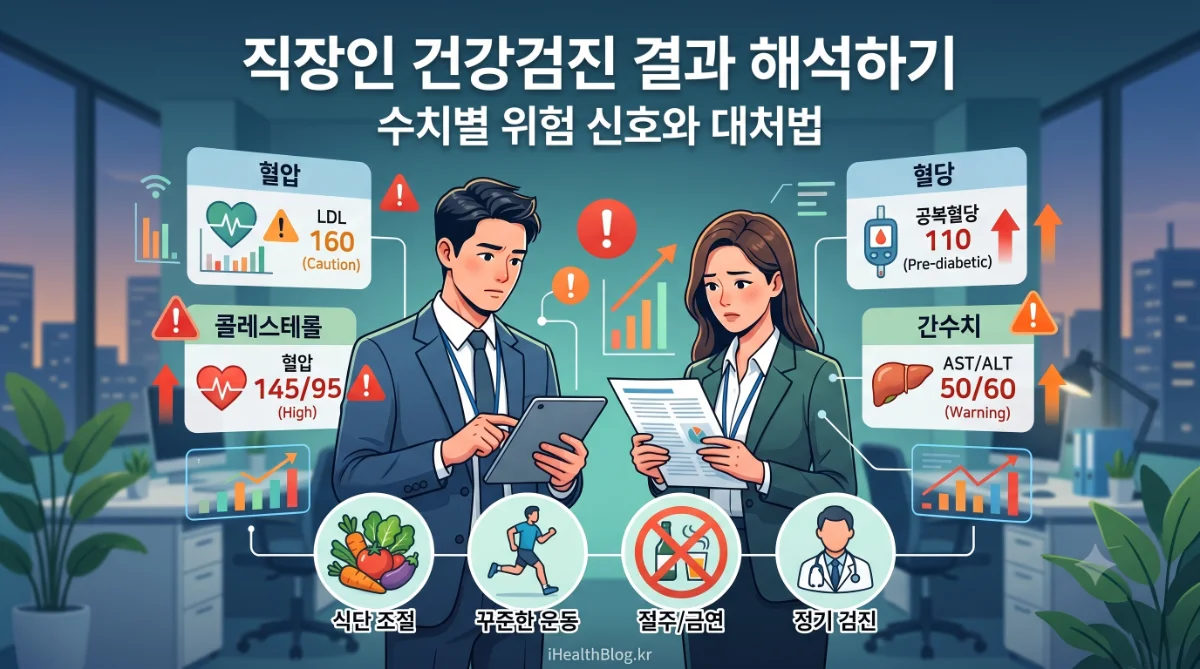
Why is Interpreting Health Checkup Results Important for Office Workers?
Every year, office workers receive health checkups supported by the National Health Insurance, but many do not know which numbers indicate danger or how to respond after receiving their results. According to recent statistics from the Korea Disease Control and Prevention Agency, 6 out of 10 Korean office workers reported that they do not fully understand their health checkup results. Particularly, the prevalence of metabolic syndrome among workers aged 30 and over has increased from 24.3% in 2019 to 27.8% in 2023, highlighting the growing importance of personalized result interpretation.
This article summarizes the normal ranges, warning signs, and immediate responses for the health checkup metrics that office workers frequently encounter. If you have received your health checkup results, take the time to understand the significance of each metric with this article and take necessary actions.
Blood Sugar Levels: The First Signal for Diabetes Risk Assessment
Fasting blood sugar is the most fundamental indicator for diagnosing diabetes. How should you interpret the fasting blood sugar level indicated on your health checkup results?
- Normal: Below 100mg/dL - No additional tests needed, maintain current lifestyle
- Impaired Fasting Glucose: 100~125mg/dL - Pre-diabetes, lifestyle changes are essential
- Diabetes: 126mg/dL or higher - Visit a hospital for further tests (HbA1c, Oral Glucose Tolerance Test) required
Particularly noteworthy is the HbA1c level. This shows the average blood sugar control over the past three months. A level of 5.7% or higher indicates pre-diabetes, while 6.5% or higher can confirm diabetes. For Koreans, irregular eating habits due to alcohol, fatty foods, and late-night work are major causes of elevated blood sugar, so if your level is between 100-110mg/dL, you should immediately start improving your lifestyle.
🔴 Warning Sign: Fasting Blood Sugar above 115mg/dL
It is recommended to visit an endocrinologist. You may need a prescription for diabetes medication (such as Metformin). By registering for the National Health Insurance metabolic syndrome management program, you can receive nutritionist consultations and exercise programs for a low monthly fee of around 20,000 won.
Cholesterol: The Key to Cardiovascular Disease Prevention
The most frequently flagged abnormal value in recent health checkups is cholesterol. According to the 2023 National Health and Nutrition Survey, the prevalence of dyslipidemia among Korean adults reached 20.7%. When interpreting cholesterol levels, it is important to consider not only total cholesterol but also the ratio of LDL cholesterol (bad cholesterol) to HDL cholesterol (good cholesterol).
- Total Cholesterol: Below 200mg/dL - Normal
- LDL Cholesterol (Bad Cholesterol)
- Below 100mg/dL: Normal
- 100~129mg/dL: Borderline
- 130~159mg/dL: High (lifestyle changes needed)
- 160mg/dL or higher: Very high (medication needed)
- HDL Cholesterol (Good Cholesterol)
- Above 40mg/dL (men), above 50mg/dL (women): Normal
- Below these levels: Increased risk of cardiovascular disease
It is also important to consider triglycerides. Levels above 150mg/dL indicate hypertriglyceridemia, which is common among office workers who consume a lot of alcohol and carbohydrates. If LDL is above 130, HDL is below 40, and triglycerides are above 150 simultaneously, you may be diagnosed with metabolic syndrome, so caution is needed.
🟡 Caution Sign: LDL above 160mg/dL and triglycerides above 200mg/dL
It is recommended to visit a cardiologist or internal medicine specialist. There is a high likelihood that you will need to take statin medications (such as Atorvastatin). The cost of medication is typically around 5,000 to 15,000 won per month with health insurance coverage. Additionally, it is essential to engage in aerobic exercise (such as brisk walking or jogging) at least three times a week and limit saturated fat intake.
Blood Pressure: Early Detection of the Silent Killer
Blood pressure often goes unnoticed by many office workers due to a lack of symptoms. However, high blood pressure is the biggest risk factor for stroke and myocardial infarction. One in three Korean adults has high blood pressure.
- Normal: Below 120/80mmHg
- Elevated: 120~139/80~89mmHg - Begin lifestyle changes
- Stage 1 Hypertension: 140~159/90~99mmHg - Consider medication after visiting a hospital
- Stage 2 Hypertension: 160/100mmHg or higher - Start medication immediately
A common pattern among office workers is 'office hypertension'. This occurs when blood pressure is normal during health checkups but rises only at work. In such cases, it is necessary to measure blood pressure at home in the morning and evening to obtain an accurate average. Blood pressure monitors can be purchased at pharmacies for around 30,000 to 50,000 won.
To manage blood pressure, it is essential to limit sodium intake (below 2,300mg per day), exercise for more than 30 minutes at least five days a week, and limit alcohol consumption. Due to the high salt content in Korean cuisine (such as ramen, soybean paste soup, and kimchi), many people consume excessive sodium without realizing it.
🔴 Warning Sign: Systolic Blood Pressure above 150mmHg or Diastolic Blood Pressure above 95mmHg
Visit a cardiologist or internal medicine specialist immediately. Prescription for antihypertensive medication (such as ACE inhibitors or ARBs) is necessary. The cost of medication is typically around 3,000 to 10,000 won per month with health insurance coverage.
Liver Function Tests: Checking for Alcohol and Fatty Liver
The AST (GOT), ALT (GPT), and gamma-glutamyl transferase (γ-GTP) levels on your health checkup results are important indicators of liver health. Particularly, issues related to alcohol consumption due to the drinking culture among Korean office workers often lead to liver diseases.
- AST, ALT: Below 40IU/L - Normal
- AST, ALT: 40~100IU/L - Borderline, possible fatty liver
- AST, ALT: Above 100IU/L - Possible hepatitis or severe fatty liver
- γ-GTP: Below 70IU/L (men), below 30IU/L (women) - Normal
- γ-GTP: Above these levels - Suspected alcohol-related liver damage
Particularly, the AST/ALT ratio is important. If AST is higher than ALT (AST/ALT > 1), it suggests alcoholic liver disease, while the opposite indicates a higher likelihood of viral hepatitis or non-alcoholic fatty liver disease (NAFLD).
About 20-30% of modern office workers have non-alcoholic fatty liver disease, which occurs due to overeating, high-fat diets, and lack of exercise rather than alcohol consumption. If your ALT is above 50, you must undergo an abdominal ultrasound to check for fatty liver.
🟡 Caution Sign: AST or ALT above 80IU/L, γ-GTP above 150IU/L
It is recommended to visit a gastroenterologist or liver disease specialist. Abstaining from alcohol or complete cessation is essential. An abdominal ultrasound (costing about 100,000 to 200,000 won, not covered by health insurance) or a FibroScan (approximately 150,000 won) should be performed to assess the degree of liver fibrosis.
Kidney Function Tests: Hidden Signals of Chronic Disease
Kidney function is assessed through creatinine and estimated glomerular filtration rate (eGFR). One in nine Korean adults suffers from chronic kidney disease, but symptoms are often minimal in the early stages, making it easy to overlook.
- Creatinine: 0.7~1.3mg/dL (men), 0.6~1.1mg/dL (women) - Normal
- eGFR: Above 90mL/min/1.73m² - Normal
- eGFR: 60~89 - Early stage of kidney function decline
- eGFR: 45~59 - Moderate decline in kidney function
- eGFR: Below 30 - Severe decline in kidney function (dialysis imminent)
If creatinine suddenly rises above 1.5, the main causes are diabetes, high blood pressure, and alcohol consumption. Many office workers neglect high blood pressure, leading to deteriorating kidney function. If eGFR is 60 or below, consultation with a kidney specialist is necessary.
🟡 Caution Sign: Creatinine above 1.3, eGFR below 60
It is recommended to visit a nephrologist. Blood pressure management, protein intake regulation (0.8~1.0g/kg body weight per day), and sodium restriction are essential. Follow-up tests should be conducted every three months to monitor the rate of kidney function decline.
Blood Tests: Reading Signals of Anemia, Inflammation, and Infection
The Complete Blood Count (CBC) test during health checkups helps detect anemia, infections, and blood cancers early through blood cell counts.
- Hemoglobin
- Men: 13.5~17.5g/dL, Women: 12.0~15.5g/dL (Normal)
- Men below 13, Women below 12: Anemia
- White Blood Cells (WBC): 4,500~11,000/μL (Normal)
- Elevated White Blood Cells (> 11,000) - Infection, inflammation, stress
- Platelets: 150,000~400,000/μL (Normal)
Particularly, the issue of anemia among female office workers is increasing. Menstruation, irregular eating habits, and iron deficiency due to dieting are contributing factors. If hemoglobin is 12 or below, additional iron tests (serum iron, ferritin) should be conducted.
If platelets drop below 150,000, the risk of bleeding increases, and if they exceed 400,000, the risk of thrombosis rises. This is especially important for office workers who sit for long periods to prevent thrombosis.
Summary: Action Checklist After Health Checkup Results
If you have received your health checkup results, proceed in the following order:
- Step 1: Classify Your Numbers - Categorize your numbers according to the normal/borderline/risk ranges presented in this article.
- Step 2: Assess Combined Risk - If multiple numbers are abnormal, the risk level is high. For example, if you have blood sugar of 110 + blood pressure of 140 + LDL of 150 + abdominal obesity (waist circumference over 90cm for men, over 85cm for women), you are likely to be diagnosed with metabolic syndrome.
- Step 3: Decide to Visit a Hospital
- If there is one or more warning signs: Consult with the relevant specialist (costing about 20,000 to 30,000 won)
- If there are two or more borderline signs: It is recommended to consult with a general hospital's internal medicine department
- If the combined risk is high: Utilize the post-consultation service provided by the health checkup center (costing about 10,000 to 15,000 won)
- Step 4: Improve Lifestyle - You can start immediately while waiting for your hospital visit:
- Diet: Reduce processed foods, limit sodium intake, avoid late-night snacks
- Exercise: Engage in aerobic exercise for more than 30 minutes at least 3-5 times a week
- Alcohol: Set days for abstaining from alcohol for at least three days a week
- Sleep: Go to bed before midnight every day, aiming for more than 7 hours of sleep
- Stress: Practice yoga, meditation, or walking 2-3 times a week
- Step 5: Schedule Follow-Up Tests - If there are warning signs:
- Borderline level: Re-test after 6 months
- Risk level: Re-test after 1-3 months
- After starting medication: Check for side effects and effectiveness after 4-8 weeks
Finally, it is important to note that health checkup numbers are not 'absolute standards' but 'relative indicators.' The interpretation can vary based on age, gender, and pre-existing conditions, even for the same number. For instance, a blood sugar level of 110 means something different for someone in their 40s compared to someone in their 70s. Therefore, it is crucial to always consult with a healthcare professional to develop a personalized management plan.
The National Health Insurance in Korea offers hypertension and diabetes management programs (costing around 20,000 to 30,000 won per month) and provides nutritionist consultations and exercise programs for metabolic syndrome management. If you received abnormal findings in your health checkup, actively utilize these public health services. A small amount of attention and improvement at the early stages can save you millions in treatment costs and even your life. Start managing your health checkup metrics today for a healthier work life.